An air fryer can turn a busy-night dinner into a crisp, quick meal. The hard part is knowing where to start. This air fryer cooking times chart gives you a clear starting point for temperature, time, preparation, and turning.
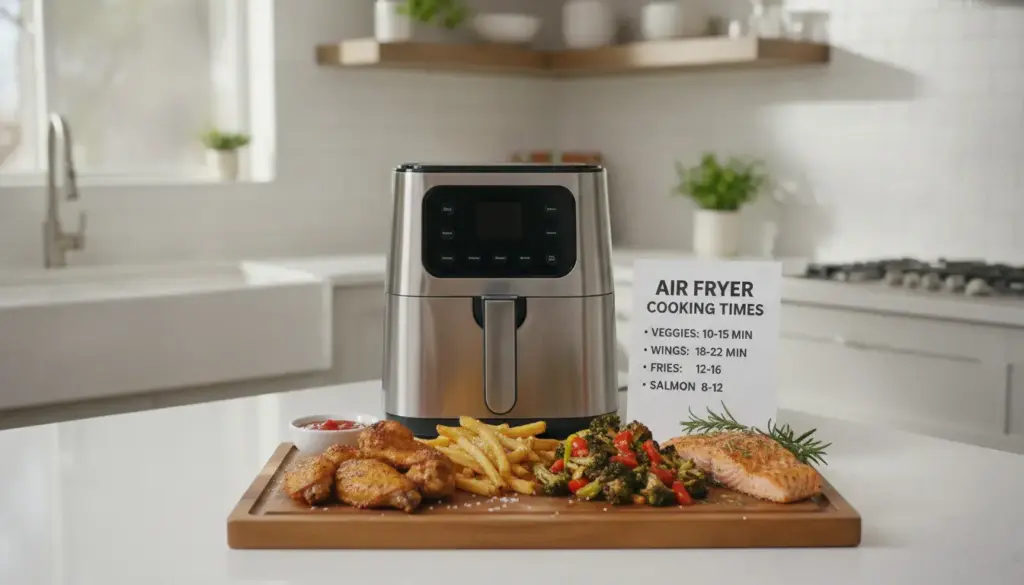
Use the chart with your appliance manual and always check food for doneness.
Why an Air Fryer Cooking Times Chart Helps
Air fryers cook with circulating hot air. That heat can brown food fast, but not every fryer cooks at the same rate. Basket shape, wattage, food thickness, and quantity all matter.
Think of each time as a guide, not a promise. Start checking early when trying a new food. This simple habit helps prevent dry centers and burnt edges.
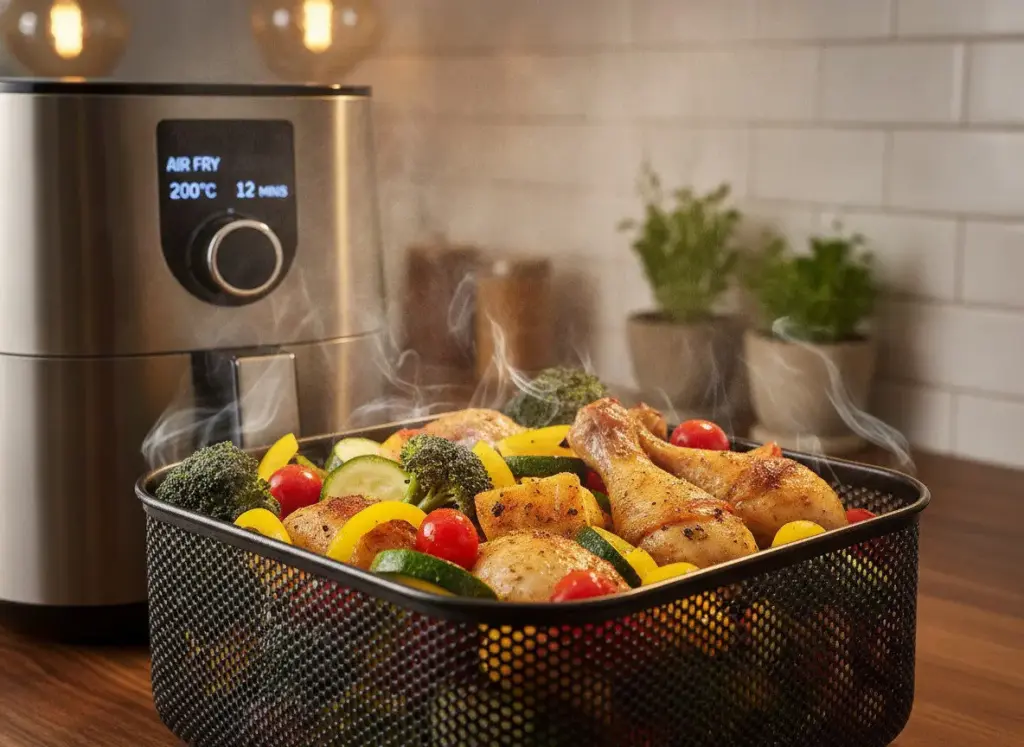
How to Use This Cooking Chart
- Read the food type, temperature, and starting time.
- Prepare food in a single layer when possible.
- Preheat air fryer if your model or recipe calls for it.
- Shake the basket or turn larger pieces at the suggested point.
- Check texture and safe internal temperature before serving.
For oven recipes, reduce the stated oven temperature only when your appliance guide recommends it. An oven recipe may also need a smaller batch in the fryer basket.
Keep the chart handy
Open the printable air fryer cheat sheet before your next grocery trip.
Adjust Time for Food, Baskets, and Models
Fresh and frozen foods do not always need the same treatment. Frozen foods often cook well without thawing, but they may need extra time if packed tightly. Fresh foods can brown sooner because they contain less surface ice.
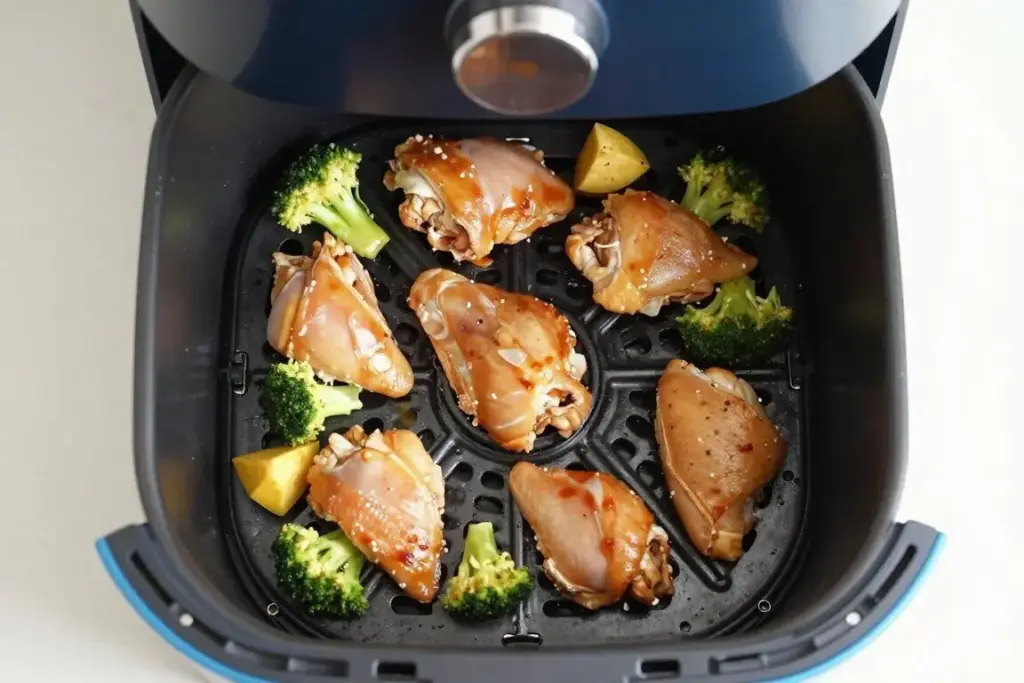
Thick chicken breasts, large potatoes, and dense meat need more time than thin strips. A crowded basket blocks airflow. Cook food in batches rather than stacking it deeply.
Adjustment rule: General adjustments in this section are practical guidance, not source-specific timings. Check your model manual when directions differ.
Master Air Fryer Cooking Times Chart
The following tables organize the reference PDF by common food groups. Use the listed settings as a starting point. Food size and appliance performance can change the final result.
Save this fryer cooking chart
Print the reference PDF and keep it near your air fryer basket.
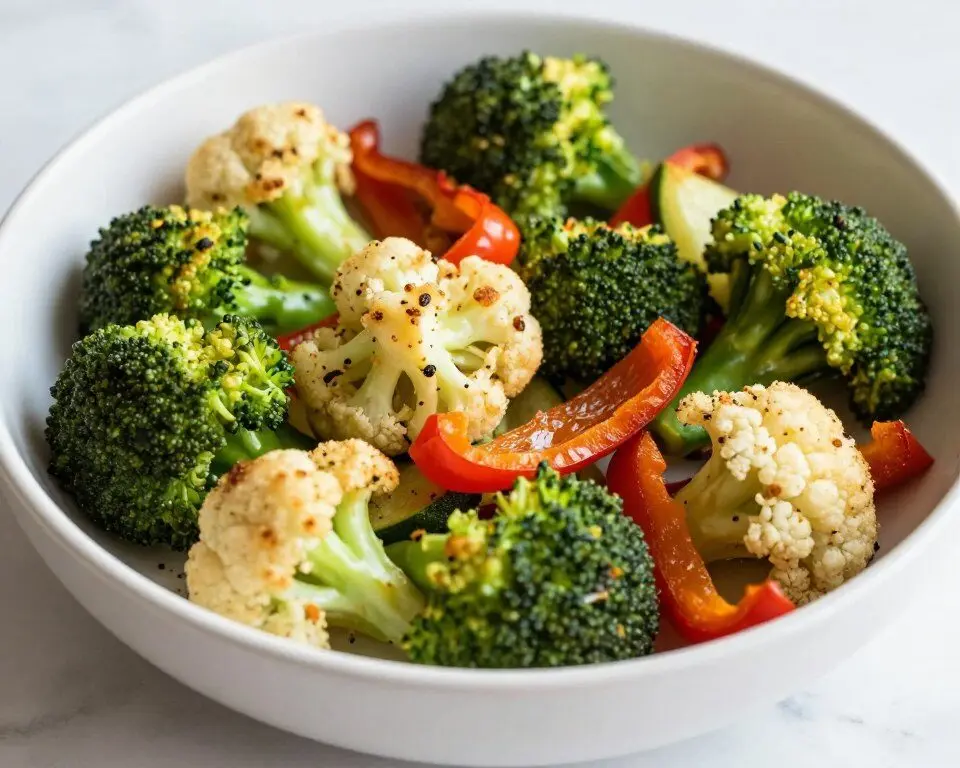
Vegetables: Time, Temperature, and Preparation
| Food | Temperature | Time | Preparation and action |
| Broccoli | 375°F | 8–12 minutes | Cut evenly; shake basket. |
| Cauliflower | 375°F | 10–15 minutes | Use small florets; shake basket. |
| Zucchini | 375°F | 8–12 minutes | Slice evenly; turn once. |
| Green beans | 375°F | 8–10 minutes | Trim ends; shake basket. |
Potatoes and Root Vegetables
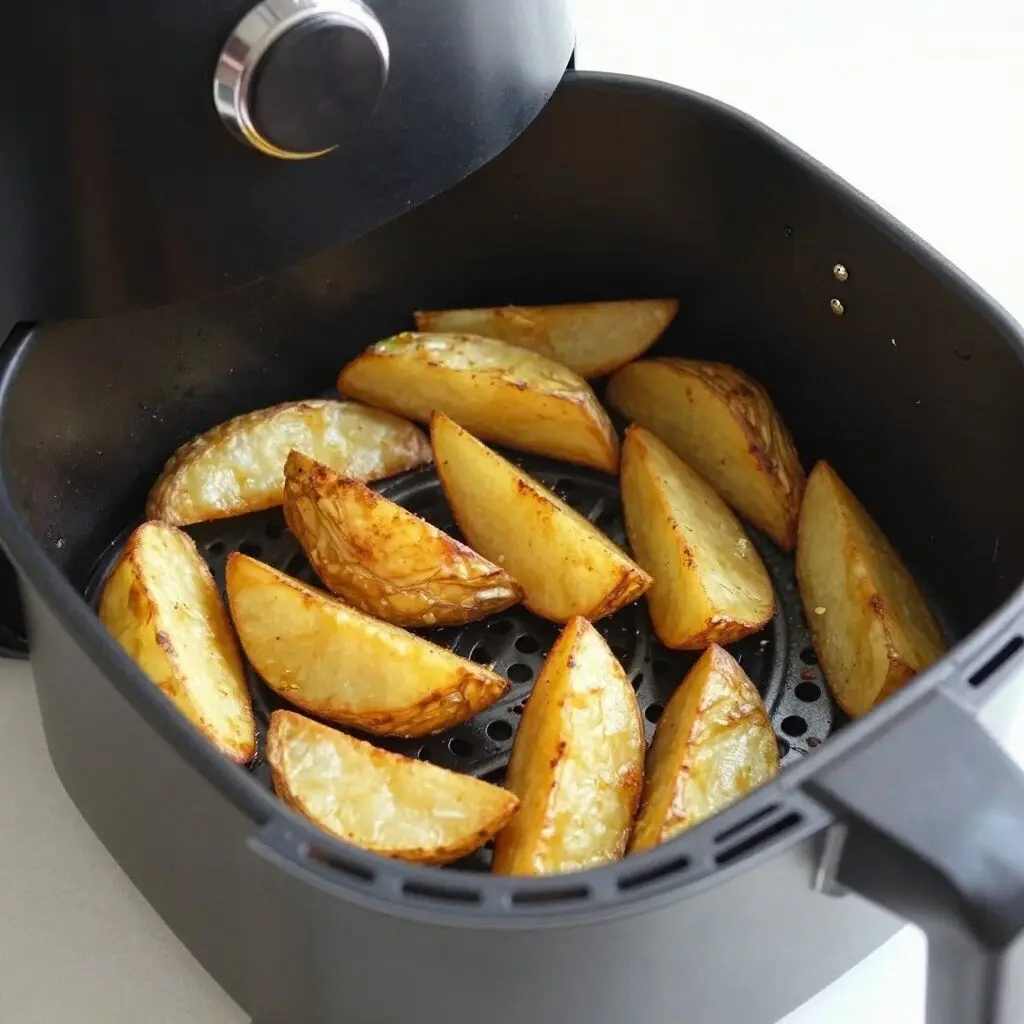
Dry cut potatoes before cooking. A light coating of oil can help browning, but too much oil may make the basket smoky. Leave room for air to move around each piece.
| Food | Temperature | Time | Preparation and action |
| French fries | 400°F | 15–20 minutes | Shake basket several times. |
| Potato wedges | 400°F | 18–25 minutes | Cut evenly; turn halfway. |
| Baked potato | 400°F | 35–45 minutes | Pierce skin; turn once. |
| Sweet potato fries | 400°F | 12–18 minutes | Use one layer; shake basket. |
Meat Cooking Guide
Pat meat dry before seasoning. The chart can guide time, but thickness controls doneness. Use a meat thermometer in the thickest center.
| Food | Temperature | Time | Preparation and action |
| Steak | 400°F | 8–14 minutes | Turn halfway; check preferred doneness. |
| Pork chops | 380°F | 12–16 minutes | Turn once; check center. |
| Bacon | 350°F | 8–12 minutes | Arrange strips flat; check early. |
| Meatballs | 400°F | 10–14 minutes | Shake basket carefully. |
Poultry and Safe Doneness
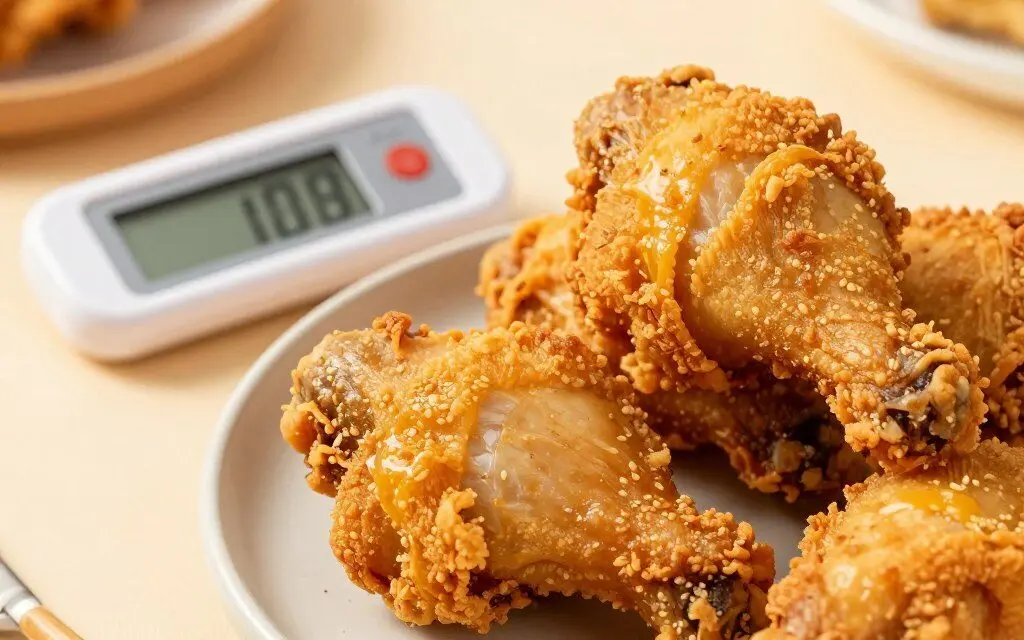
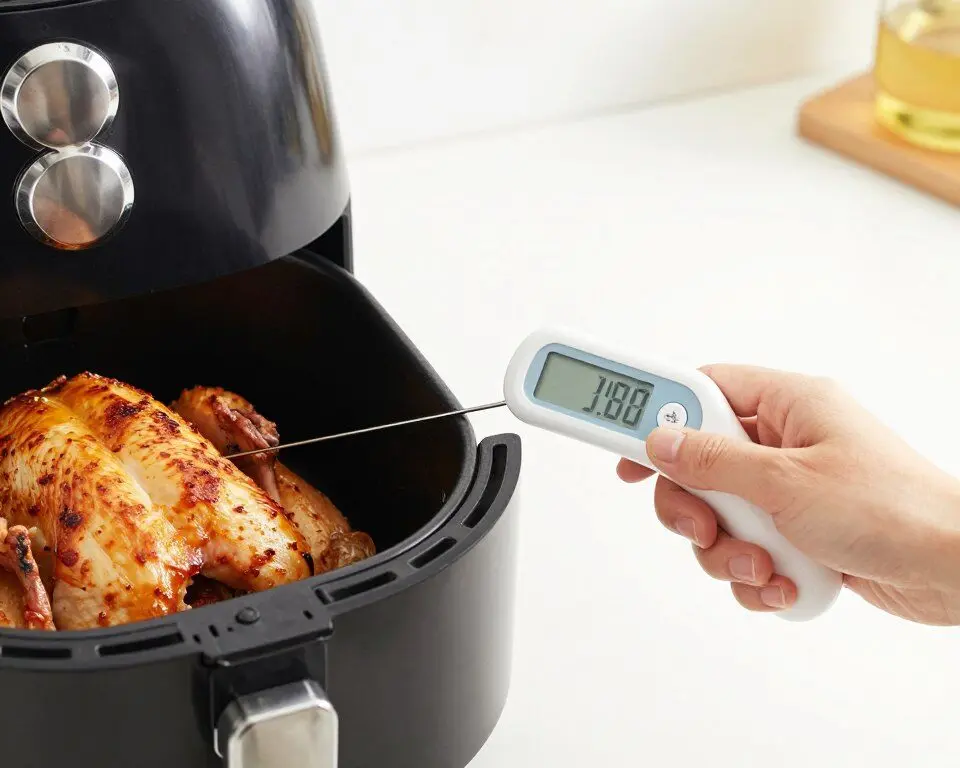
For poultry, make sure the thickest part reaches 165°F. Avoid touching bone with the thermometer because it can change the reading.
| Food | Temperature | Time | Preparation and action |
| Chicken wings | 400°F | 20–25 minutes | Shake basket twice. |
| Chicken breast | 375°F | 18–25 minutes | Use even thickness; turn once. |
| Chicken thighs | 380°F | 20–25 minutes | Turn halfway; check doneness. |
Seafood: Keep It Moist
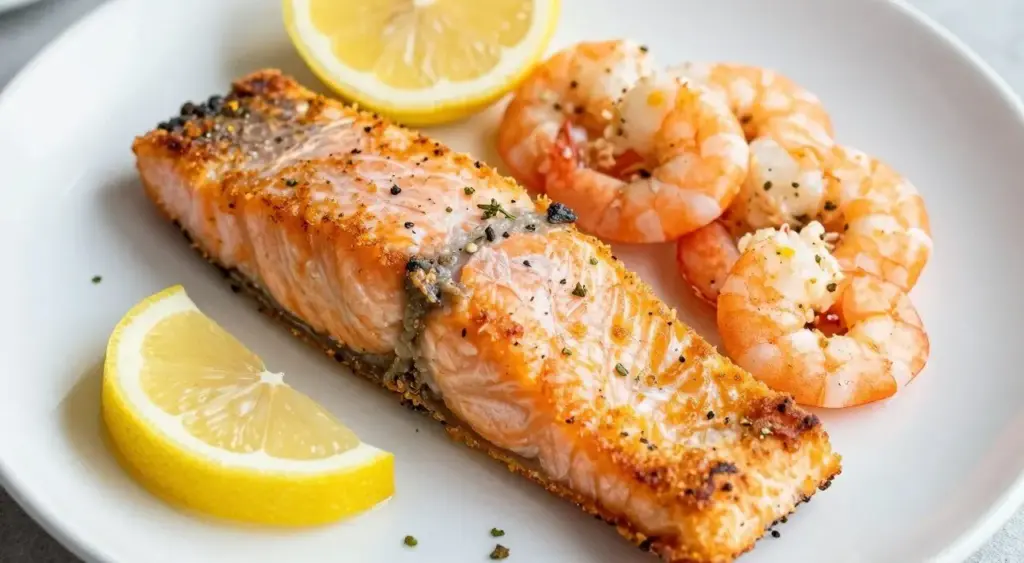
Seafood can dry quickly. Brush lightly with oil or use a marinade that suits the recipe. Check early, especially with thin fillets.
| Food | Temperature | Time | Preparation and action |
| Salmon fillet | 400°F | 7–10 minutes | Place skin-side down; check early. |
| Shrimp | 400°F | 6–10 minutes | Shake basket once. |
| Fish fillet | 400°F | 8–12 minutes | Turn gently if needed. |
Frozen Foods and Snacks
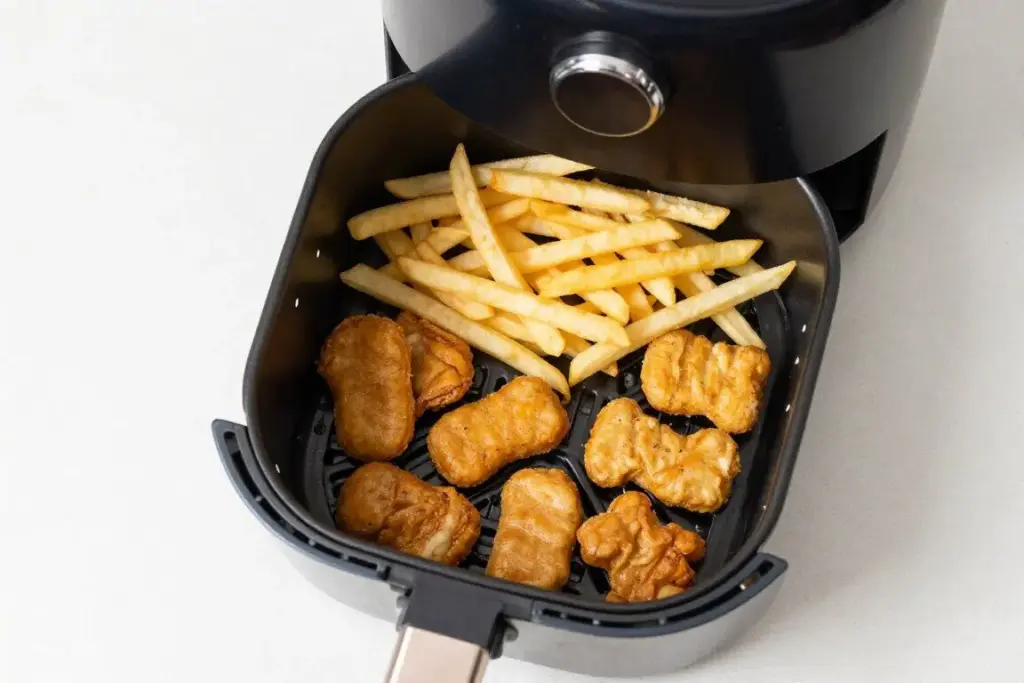
Frozen foods are often designed for fast fryer cooking. Do not thaw unless the package or recipe says to do so. Arrange pieces with space between them.
| Food | Temperature | Time | Preparation and action |
| Chicken nuggets | 400°F | 8–12 minutes | Shake basket halfway. |
| Mozzarella sticks | 390°F | 6–8 minutes | Watch closely to prevent leaks. |
| Frozen fries | 400°F | 15–20 minutes | Shake basket often. |
| Pizza rolls | 380°F | 7–10 minutes | Let stand briefly before eating. |
Should You Preheat an Air Fryer?
Preheating can help food begin cooking at the intended temperature. It may also support more even browning. Some air fryers heat quickly, while others have a dedicated preheat setting.
If the reference directions do not specify preheating, treat it as a model-dependent adjustment. Reduce the first check time when using a hot basket.
When to Shake or Turn the Basket
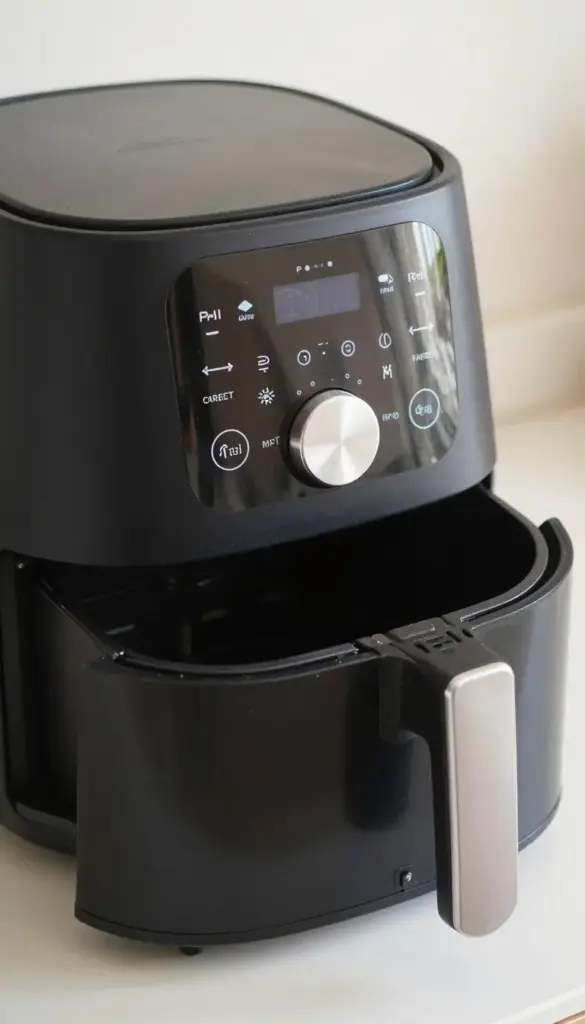
Small foods, such as fries and nuggets, benefit from a shake basket motion. Hold the handle firmly and move the food in a short, safe motion.
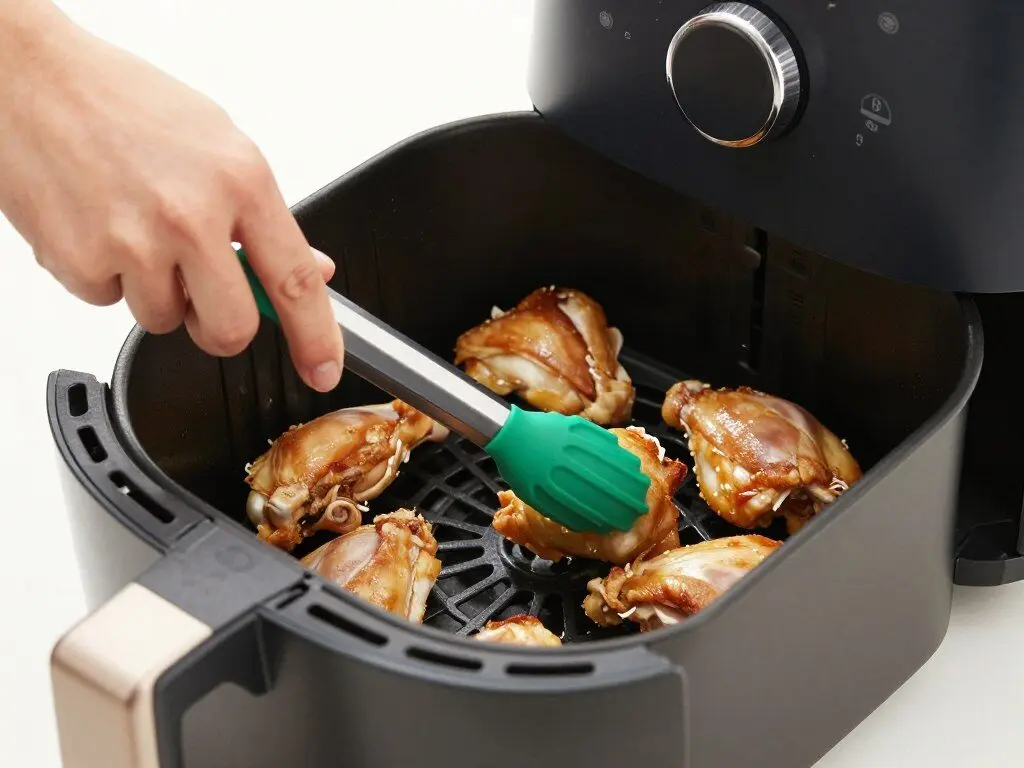
Turn larger items with tongs. Keep the basket level. Do not shake delicate fish or soft foods too hard.
Check Doneness With a Meat Thermometer
Color alone cannot prove that meat is safe. Insert a meat thermometer into the thickest portion. For poultry, use 165°F as the safe target. Follow current USDA guidance for other meats and seafood.
Rest meat for a short time before cutting when appropriate. Carryover heat may finish the center while juices settle.
Use a clean meat thermometer between foods. Wash hands, utensils, and surfaces after handling raw meat.
Air Fryer Cooking Troubleshooting
Undercooked
Cook in short additions. Check the thickest piece. Lower the batch size if airflow is poor.
Overcooked
Check several minutes early next time. Thin cuts and preheated baskets need close attention.
Uneven or dry
Use an even layer. Shake basket foods and lightly oil dry vegetables when suitable.
Turn the Chart Into Easy Air Fryer Recipes
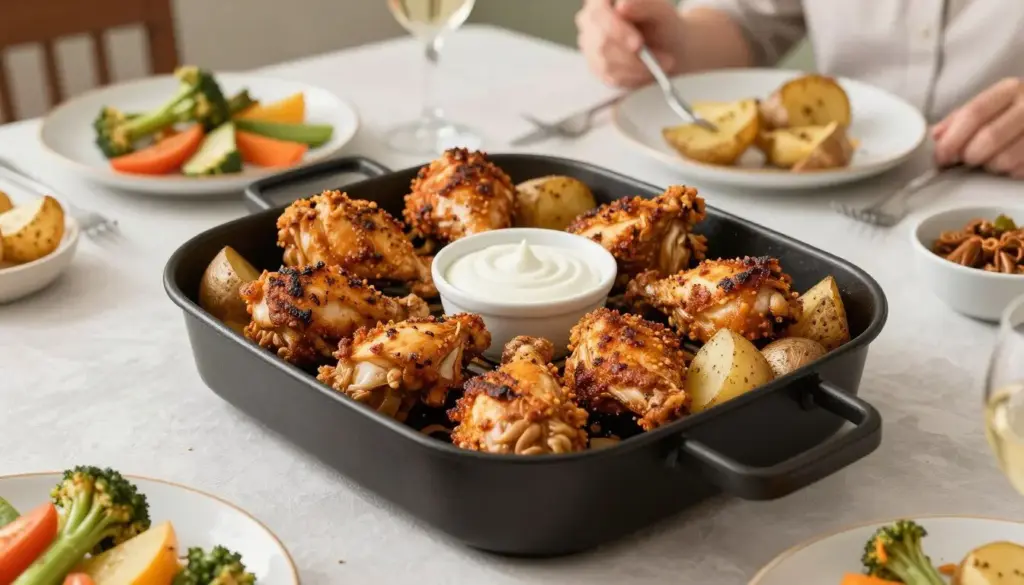
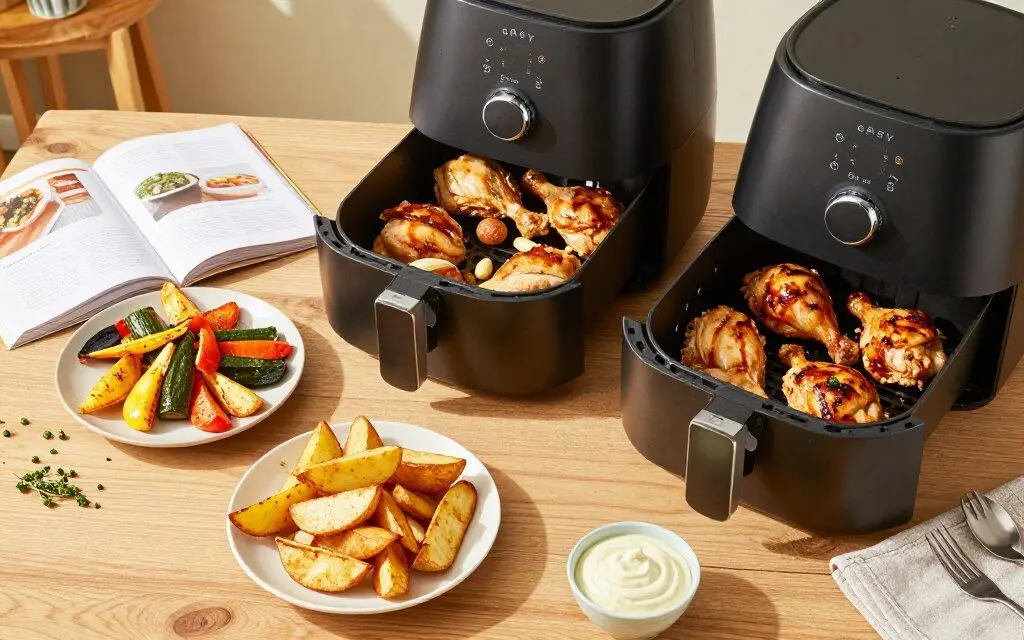
Once you know the basic time, build simple air fryer recipes around it. Pair roasted vegetables with chicken, add seasoning to potato wedges, or serve salmon with a fresh salad.
Keep notes about your own air fryers. Record the basket size, batch amount, temperature, and final time. Your notes become a personal fryer cooking chart.
Get practical recipe ideas
Receive simple air fryer recipes and cooking reminders by email.
Use the Chart as Your Starting Point
This air fryer cooking times chart removes much of the guesswork, but your appliance remains part of the recipe. Start with the listed temperature and time. Then adjust for food thickness, frozen foods, batch size, and basket airflow.
Preheat air fryer settings when useful, avoid overcrowding, shake basket foods, and check meat with a meat thermometer. With a few notes, you will learn exactly how your fryer cooks.
Keep your cheat sheet close
Use the reference chart whenever you cook a new food or try a new fryer.