
The first three months of a baby’s life represent an incredible period of growth and discovery. While newborns may seem too young for “play,” they’re actually absorbing their environment and developing crucial neural connections. Montessori toys for 0-3 months focus on simplicity, natural materials, and purposeful design that respects your baby’s innate developmental timeline. This guide explores fifteen carefully selected Montessori-aligned toys that support your newborn’s blossoming visual, auditory, tactile, and motor abilities.

Visual Development Toys for Newborns
In the earliest weeks, babies are developing their visual focus and tracking abilities. High-contrast patterns are particularly engaging for newborns whose vision is still developing. These Montessori-aligned visual toys provide just the right level of stimulation without overwhelming your baby’s developing senses.
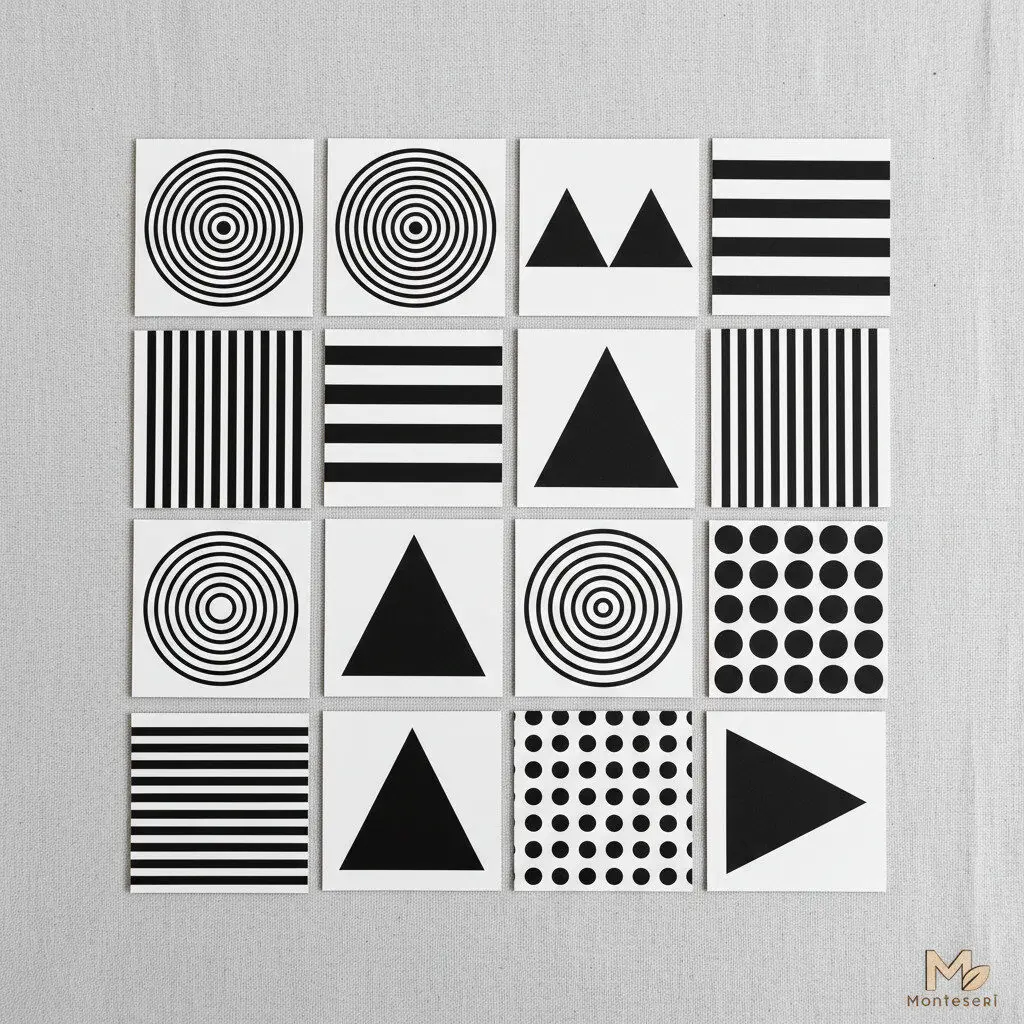
1. Black & White Contrast Cards
These simple yet powerful cards feature bold, high-contrast geometric patterns that naturally draw your newborn’s attention. Their developing visual system can perceive these stark contrasts more easily than colors or subtle patterns. Hold these cards 8-12 inches from your baby’s face during alert periods, slowly moving them horizontally to encourage visual tracking. These cards support concentration, visual focus, and early pattern recognition—foundational skills for cognitive development.
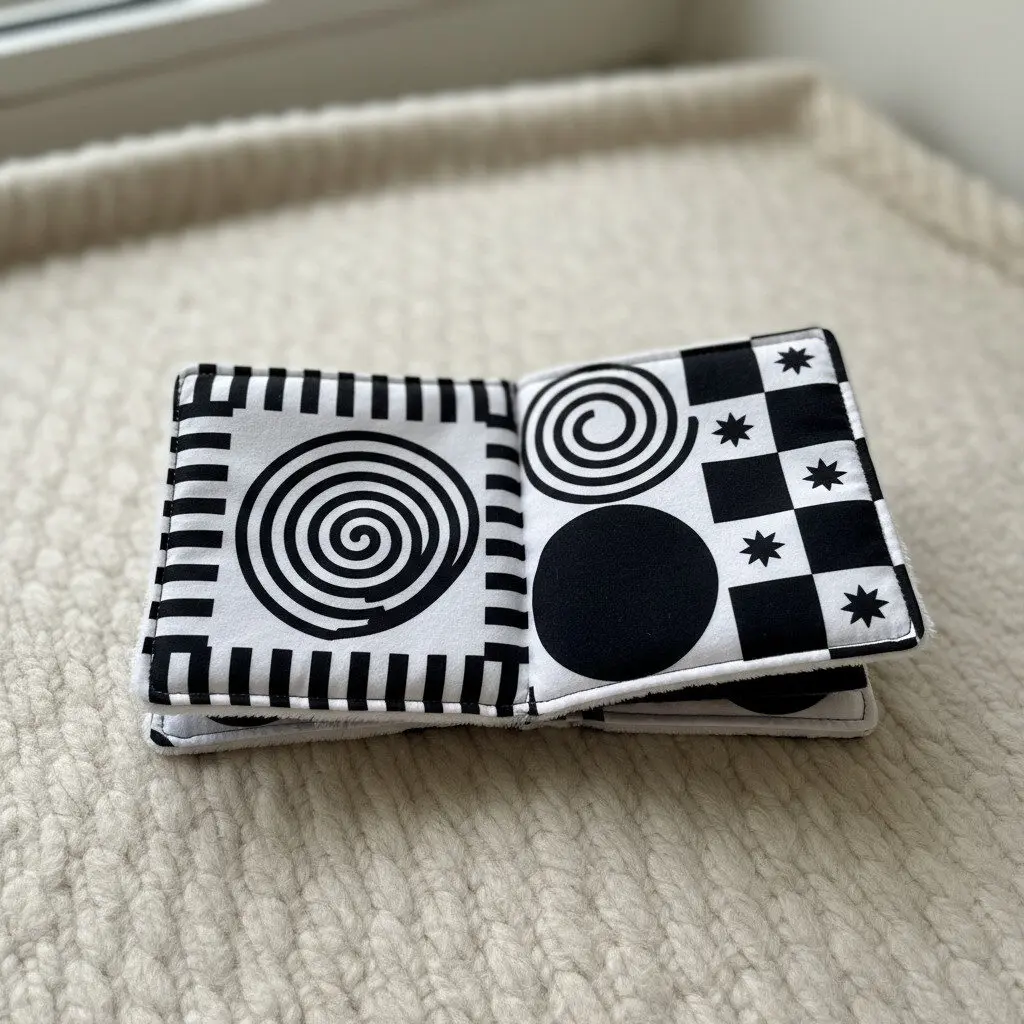
2. High-Contrast Soft Books
These fabric books combine tactile exploration with visual stimulation through simple black and white patterns on soft, washable pages. Unlike traditional books, these are designed specifically for newborn vision with bold, uncomplicated images. Prop these books open during tummy time or hold them during quiet alert periods. The soft construction means babies can safely mouth them as they begin to explore with their hands and mouths—supporting both visual development and early tactile exploration.
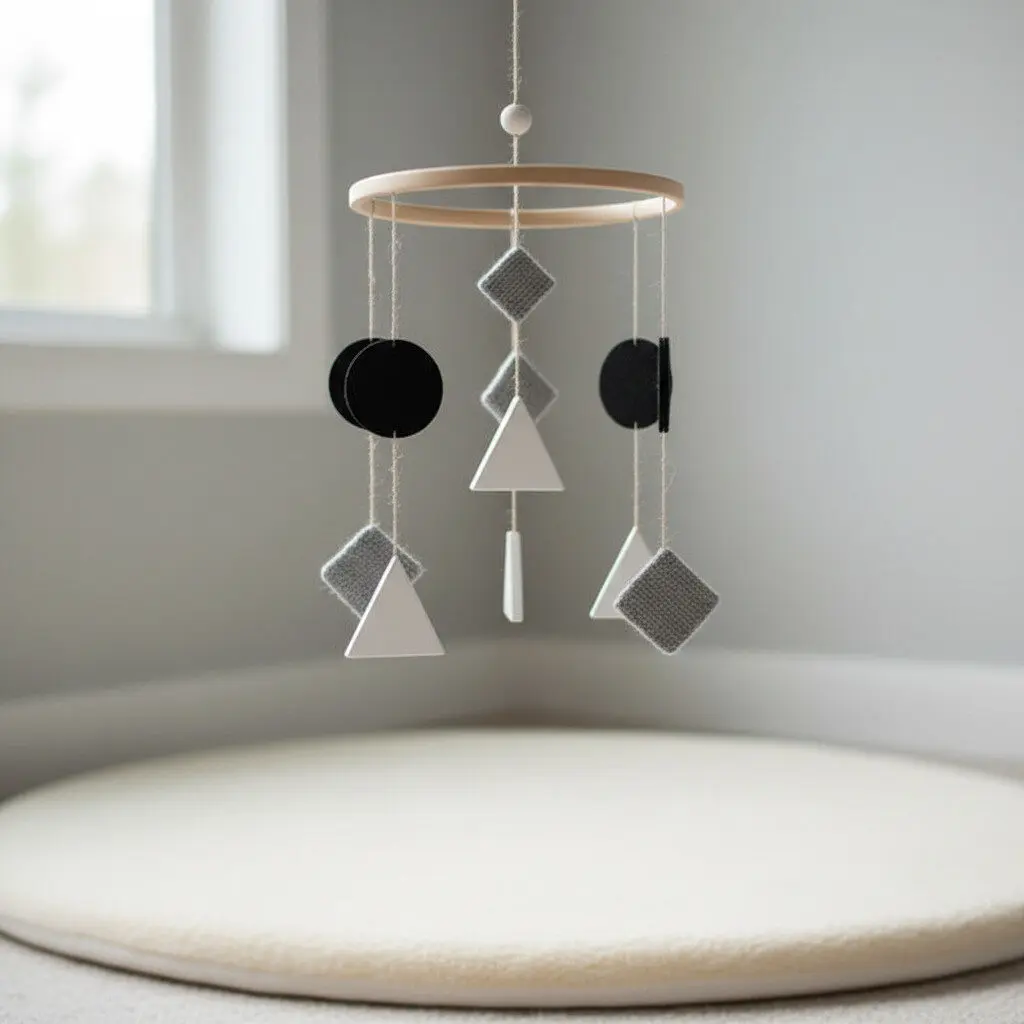
3. Mobile with Natural Shapes
This classic Montessori tool features simple shapes in neutral tones hung at a height where baby can clearly see them while lying on their back. Unlike flashy commercial mobiles, these are designed with newborn visual development in mind—offering just enough movement and contrast without overstimulation. Position the mobile about 12 inches above where baby typically lies, allowing them to observe the gentle movements as shapes rotate naturally with air currents. This supports visual tracking, depth perception, and concentration.
Support Your Baby’s Visual Development
Download our free guide with week-by-week visual development milestones and simple activities to support your newborn’s emerging vision.
Tactile Exploration Toys for Sensory Development
While newborns don’t yet have precise control of their hands, they’re beginning to experience different textures and surfaces through incidental touch. These tactile Montessori toys introduce gentle sensory experiences that prepare babies for more intentional exploration in coming months.
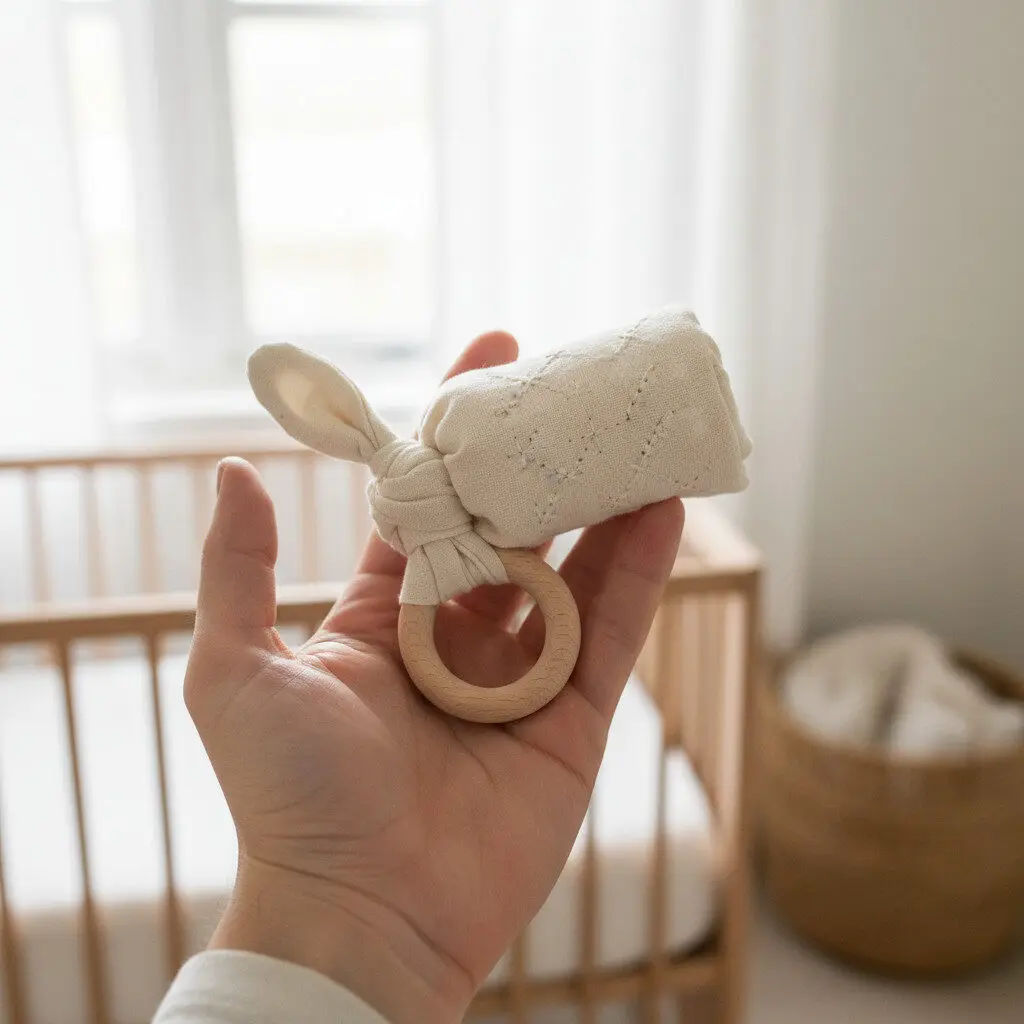
4. Soft Unbleached Cotton Rattle
This gentle introduction to sound features natural, unbleached cotton with a subtle rattle enclosed. The soft material and light weight make it perfect for newborns who are just beginning to discover cause and effect. When baby’s hand accidentally brushes against it, the gentle sound provides auditory feedback without being startling. Place it near baby during floor time where occasional contact might occur, or gently brush it against their hand to demonstrate the connection between movement and sound.
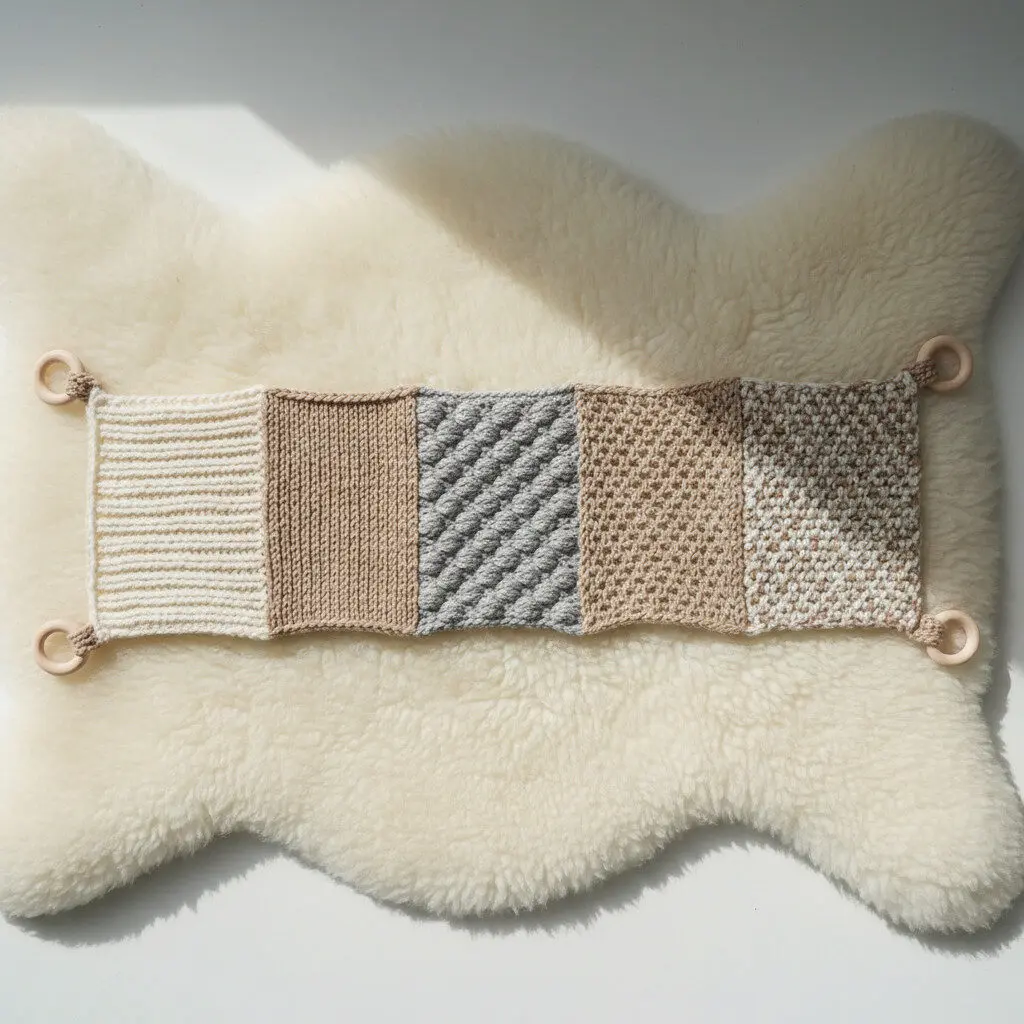
5. Knitted Sensory Strip Toy
This thoughtfully crafted strip features different textures along its length, providing varied tactile experiences for sensitive newborn skin. The knitted construction offers natural fibers that are gentle enough for delicate exploration. During alert times, gently brush different sections against baby’s hands, feet, or cheeks, naming each texture as you go. This early sensory exploration builds neural pathways for discriminating between different tactile inputs—a foundation for future fine motor development.
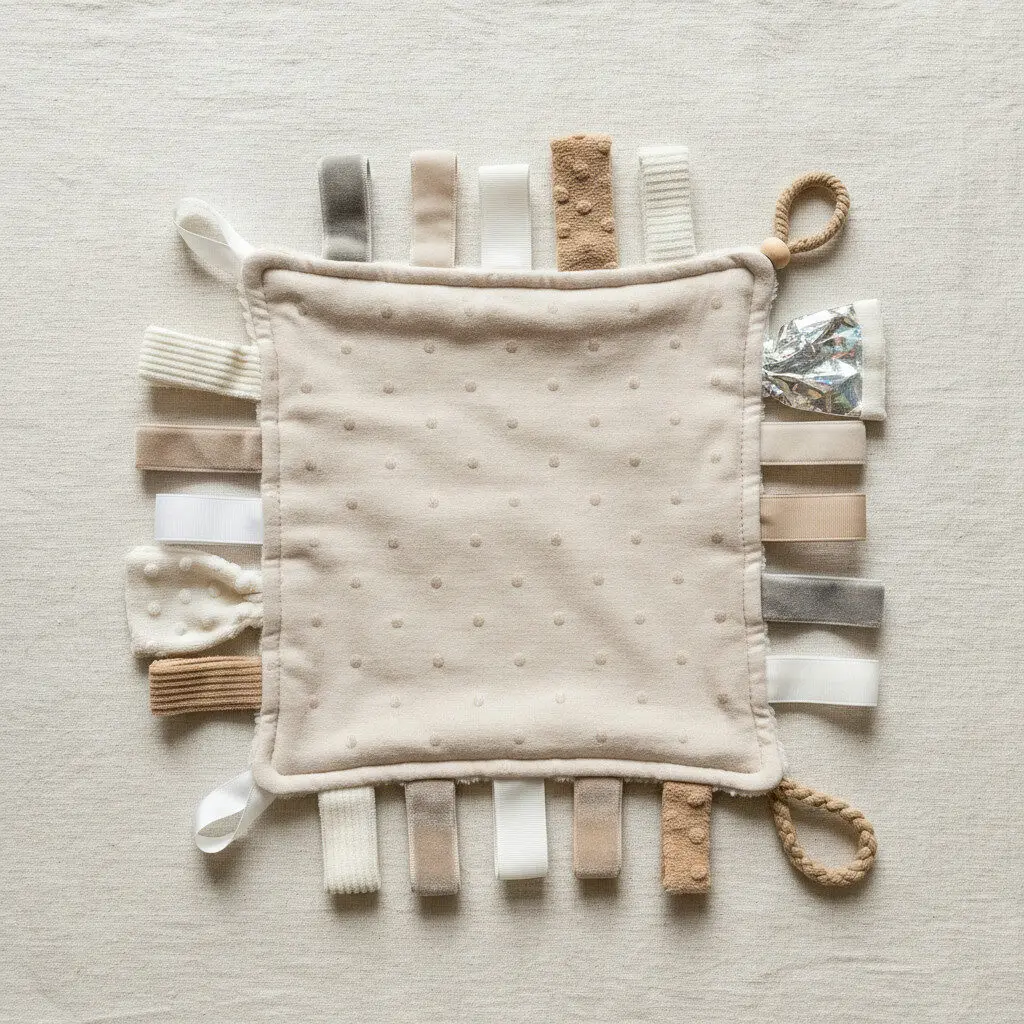
6. Soft Sensory Tag Blanket
This simple square of soft fabric features various textured tags and ribbons around its perimeter, creating opportunities for accidental discovery as baby moves. The different textures provide varied sensory input that helps develop tactile discrimination. Place this blanket under baby during tummy time, or lay it across their lap during supported sitting. As their hands randomly encounter the different tags, they receive diverse tactile feedback—supporting sensory processing development and eventually encouraging more purposeful exploration.
Enhance Your Baby’s Sensory Experience
Download our comprehensive guide to age-appropriate sensory play for the first three months, with weekly activities tailored to your baby’s development.
Early Motor Development Toys
While fine motor control is still developing in the first three months, these Montessori toys provide opportunities for babies to begin experiencing cause and effect through movement. They support the natural progression from reflexive to more intentional interactions with objects.
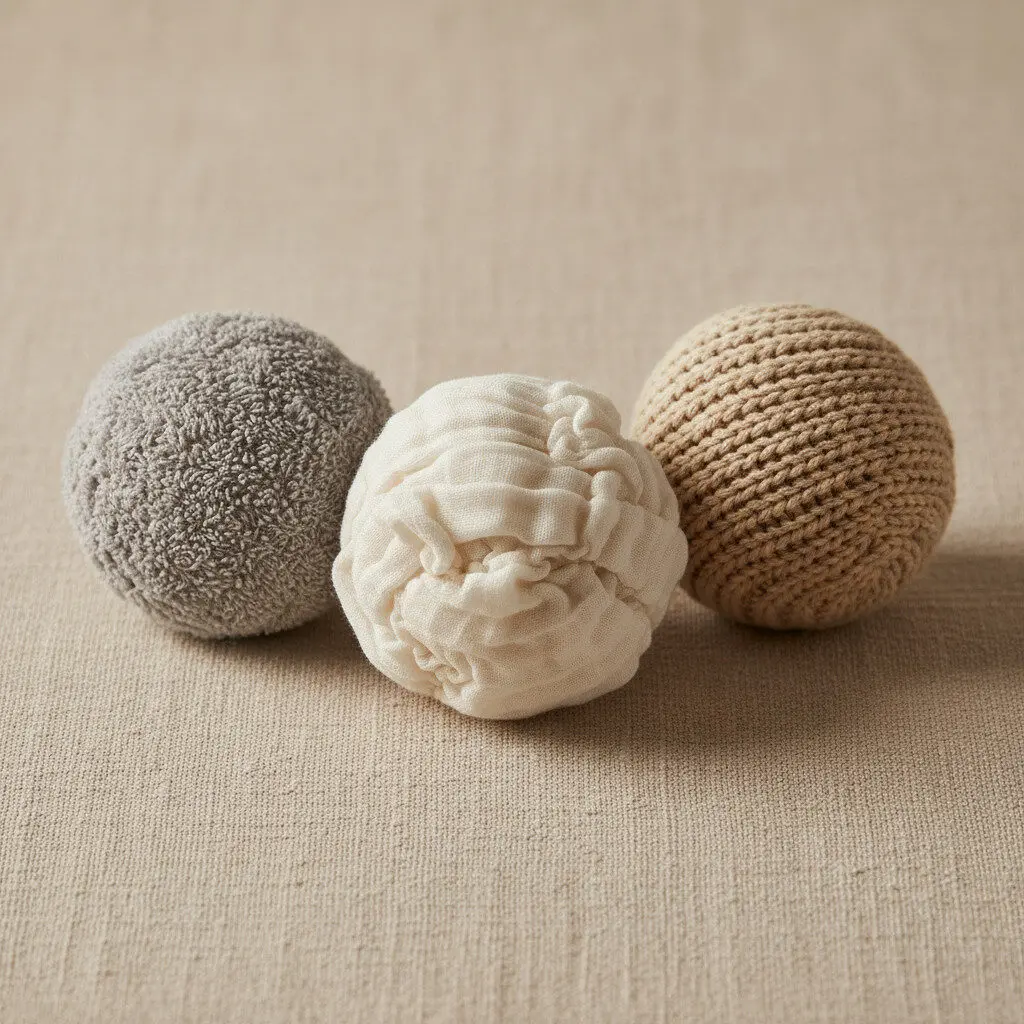
7. Organic Cloth Balls (set of 3)
These lightweight, soft fabric balls are perfectly sized for newborn hands that are just beginning to grasp reflexively. Made from organic, unbleached materials in different textures, they provide varied tactile experiences as baby accidentally encounters them. Place these balls near baby during floor time where they might brush against them, or gently touch one to baby’s palm to trigger the grasp reflex. As baby develops, these balls become perfect first objects for intentional grasping practice.
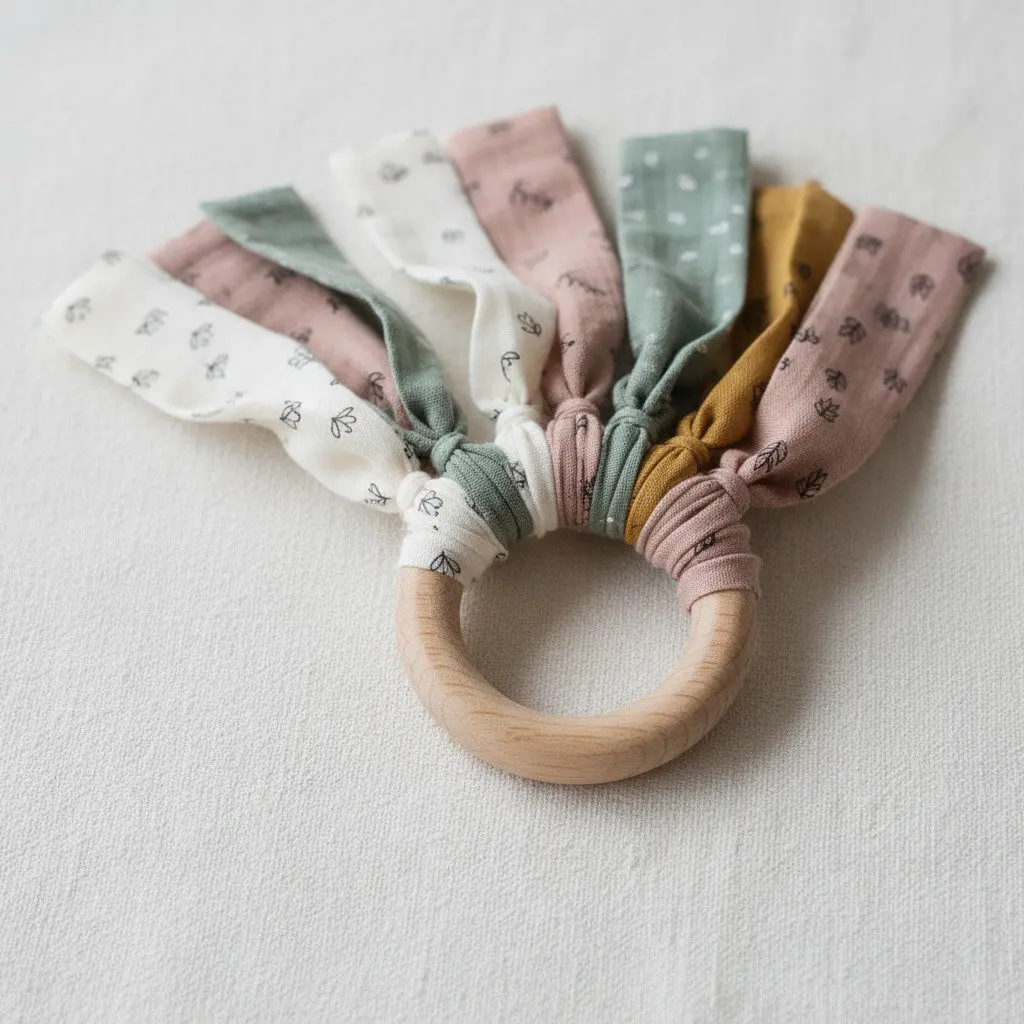
8. Wooden Ring with Fabric Streamers
This classic Montessori toy combines a smooth wooden ring with attached fabric streamers in muted colors. The natural wood provides a different temperature and texture from fabric toys, while the streamers create gentle movement that encourages visual tracking. Hold this toy where baby can see it, slowly moving it to encourage eye following. As baby begins to swipe and reach, the ring provides an easy target for grasping attempts, while the streamers create interesting sensory feedback when touched.
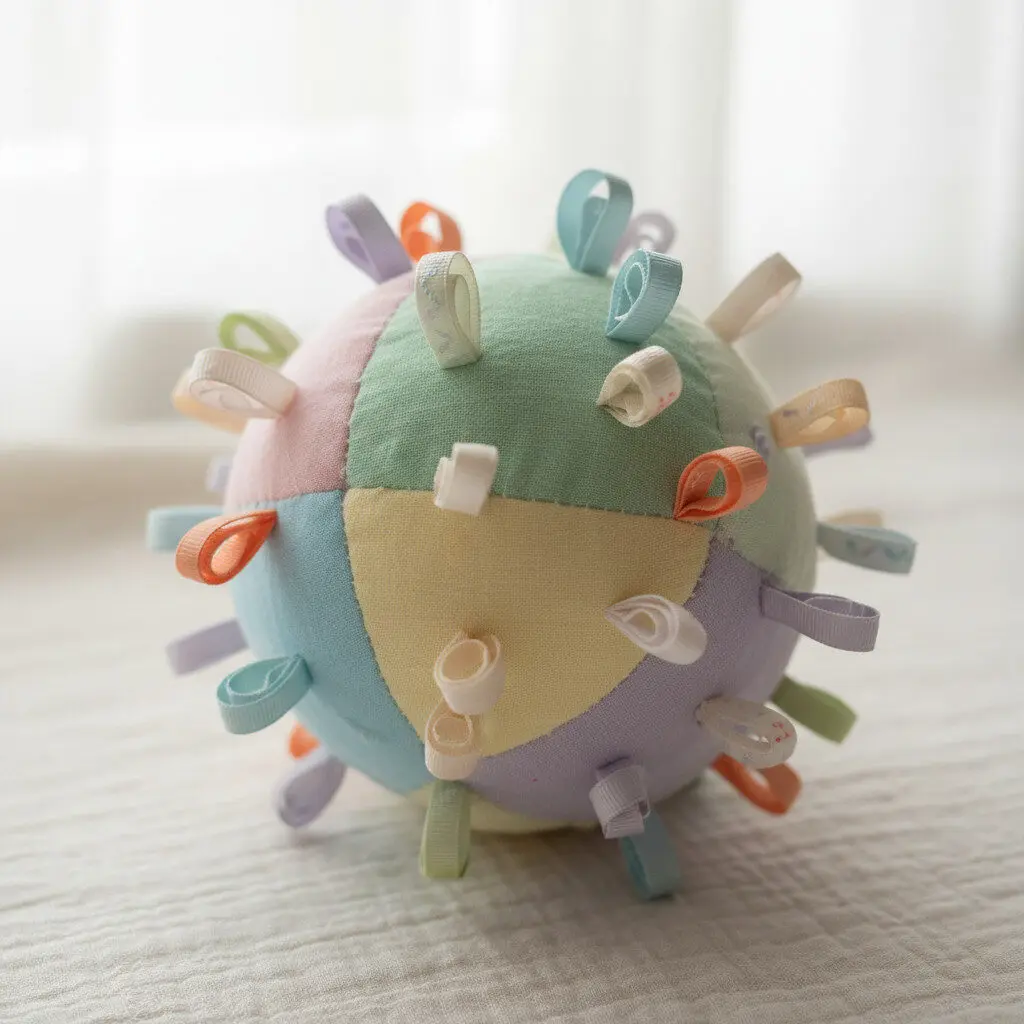
9. Fabric Ball with Ribbons
This soft ball features attached ribbons that create visual interest and additional tactile experiences. The lightweight design makes it accessible for newborns just beginning to discover their ability to affect objects. Place this ball within view during alert times, occasionally moving it to demonstrate how the ribbons flow and change position. As baby begins making more deliberate movements, the ribbons provide immediate visual feedback to their actions—supporting the development of cause-and-effect understanding.
Support Your Baby’s Motor Development
Get our printable motor development tracker with age-appropriate milestones and simple activities to encourage your baby’s natural movement progression.
Gentle Auditory Stimulation Toys
Newborns are sensitive to sounds and are particularly attuned to gentle, natural noises. These Montessori-aligned toys provide subtle auditory experiences that engage baby’s hearing without overwhelming their developing sensory system.
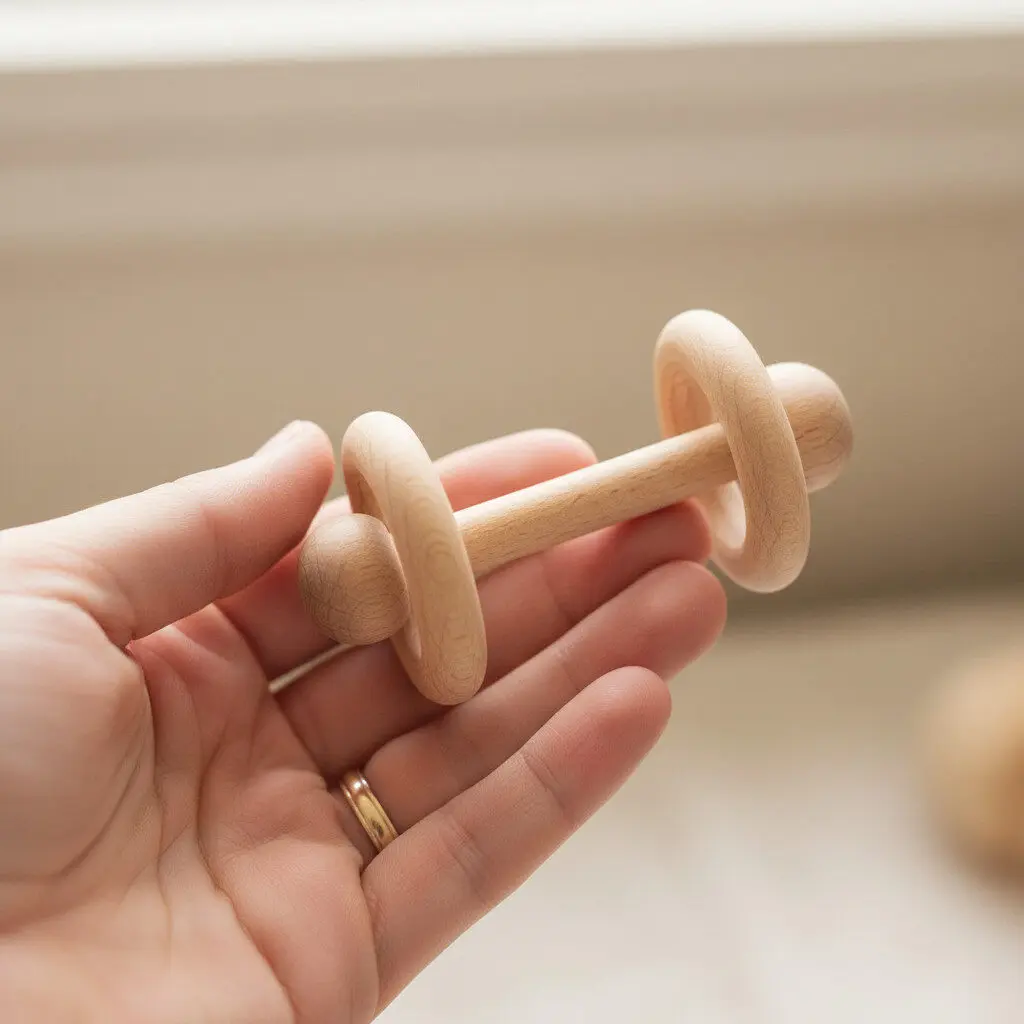
10. Simple Wooden Rattle
This minimalist rattle embodies the Montessori principle that “less is more.” Made from smooth, natural wood with a gentle sound when moved, it provides just enough auditory feedback without overwhelming newborn senses. The weight and texture of wood offer a natural material experience different from plastic toys. Gently shake this rattle within baby’s hearing range but not too close to their ears. The subtle sound helps develop auditory discrimination while the natural material introduces an important sensory experience.
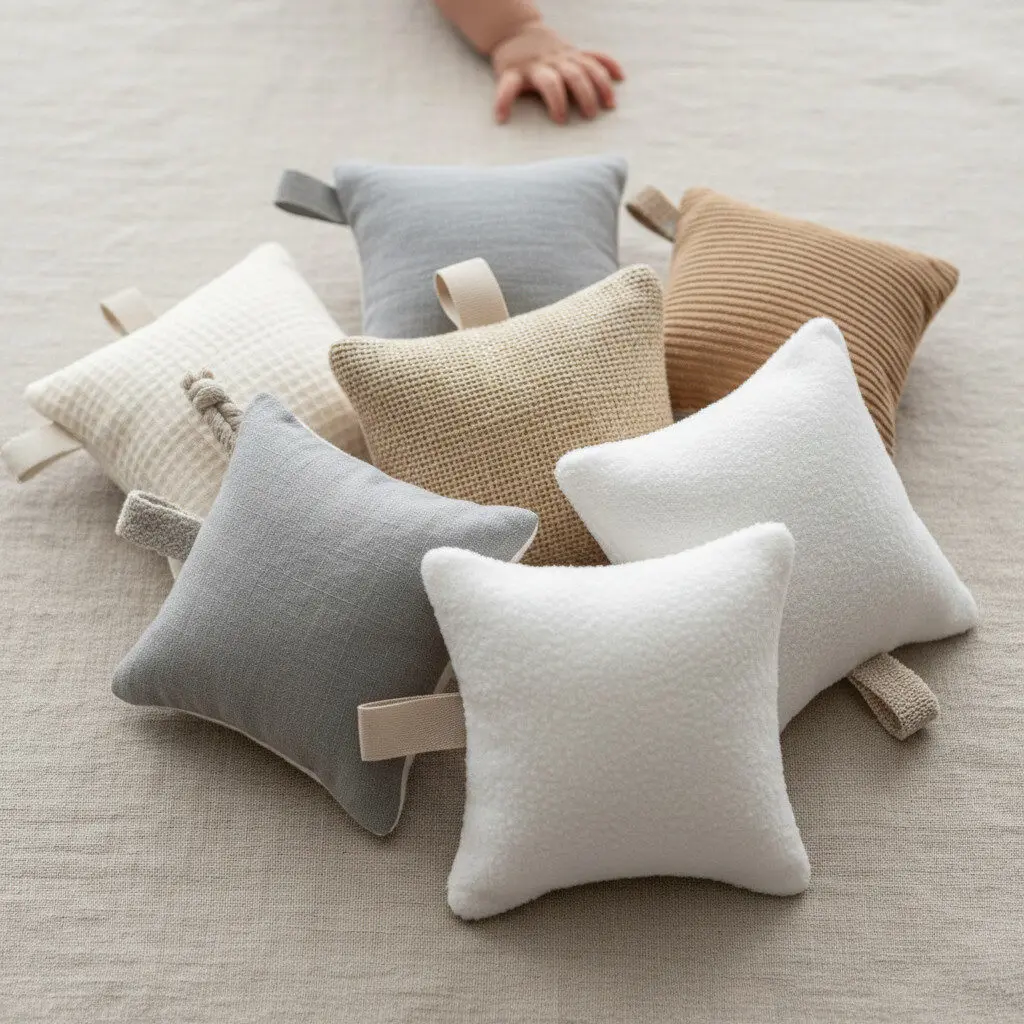
11. Crinkle Fabric Squares
These soft fabric squares contain a special material that creates a gentle crinkling sound when touched or moved. Unlike loud plastic toys, these provide subtle auditory feedback that’s appropriate for sensitive newborn hearing. The soft construction means they’re safe for mouthing as baby begins to explore. Place these squares where baby might accidentally touch them during movement, or gently crinkle them near baby during alert times. This introduces cause-and-effect learning as baby begins to connect their movements with the resulting sounds.

12. Silk Scarf for Gentle Waves
While primarily a visual toy, this lightweight silk scarf creates a subtle rustling sound when moved through the air. This introduces baby to very gentle auditory stimulation paired with visual tracking. Hold the scarf about 12 inches from baby and move it slowly, creating both visual movement and soft sounds. The gentle rustling introduces baby to subtle sound discrimination while the flowing movement supports visual tracking development—combining two sensory experiences in one simple object.
Nurture Your Baby’s Auditory Development
Download our guide to age-appropriate sound activities for newborns, including gentle music recommendations and everyday sound exploration ideas.
Early Self-Awareness Toys
Around 2-3 months, babies begin developing a sense of themselves as separate from their environment. These Montessori toys support this emerging self-awareness through appropriate sensory experiences.
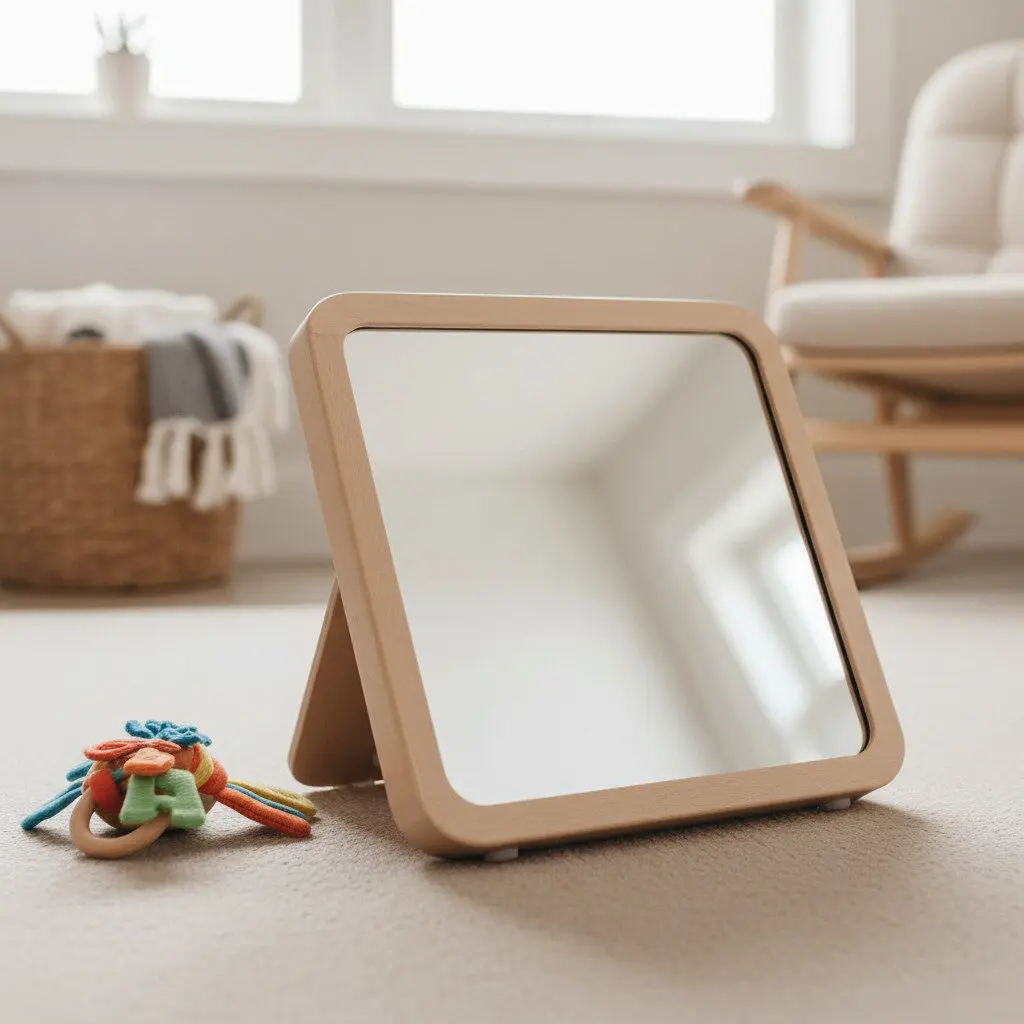
13. Montessori Tummy Time Mirror
This break-resistant mirror is designed specifically for floor placement during supervised tummy time. Unlike hanging mirrors, it’s positioned where baby can actually see their reflection while developing crucial neck muscles. The wooden frame provides a natural material element consistent with Montessori principles. Place this mirror about 8-10 inches in front of baby during short tummy time sessions. As they work to lift their head, they’re rewarded with their own reflection—supporting both physical development and early self-recognition.
14. Natural Rubber Teething Ring
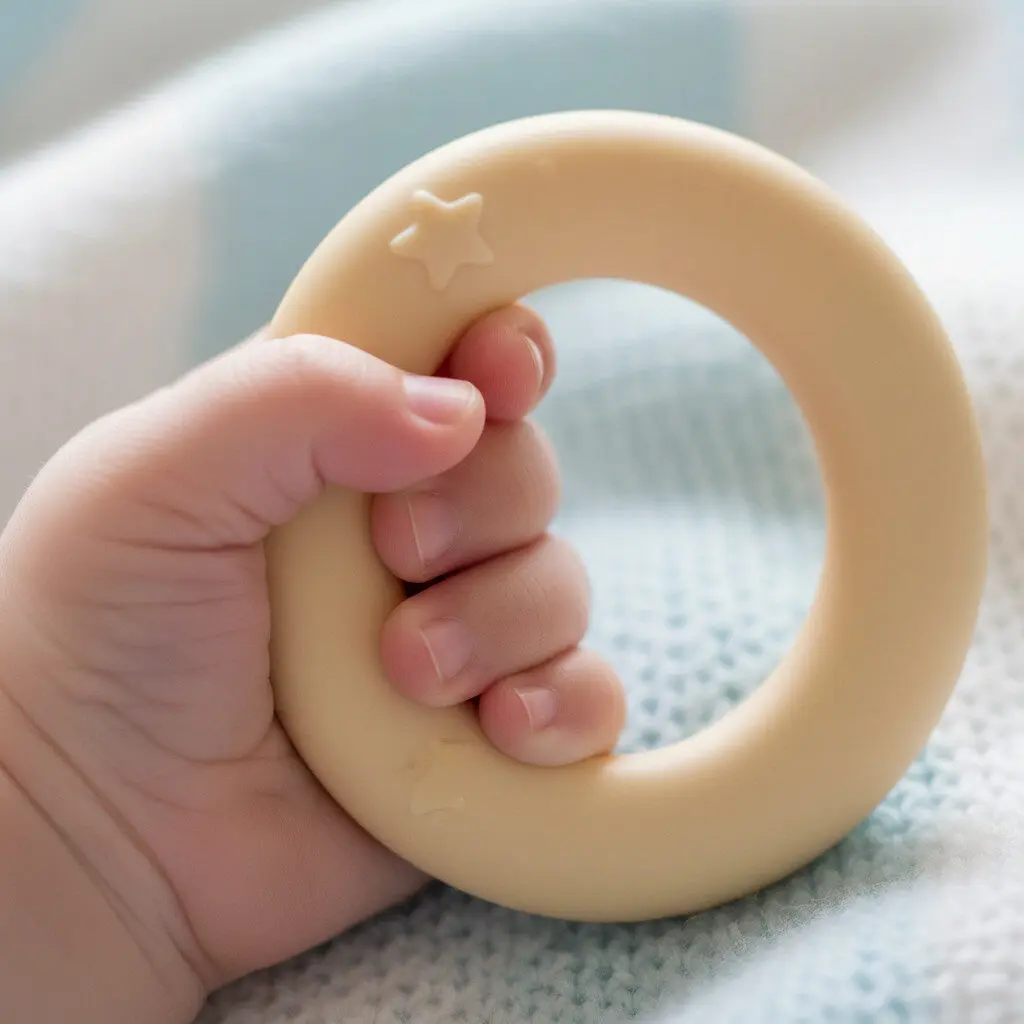
While most active teething happens later, this natural rubber ring provides appropriate oral exploration for newborns beginning to discover their mouths. The texture offers gentle stimulation for sensitive gums and introduces a new sensory experience. The lightweight design makes it accessible even before intentional grasping develops. Hold this ring where baby might encounter it during natural hand movements, or gently touch it to their lips during alert times. This supports oral development and helps baby begin mapping their own facial features.
15. Ribbed Wooden Cylinder
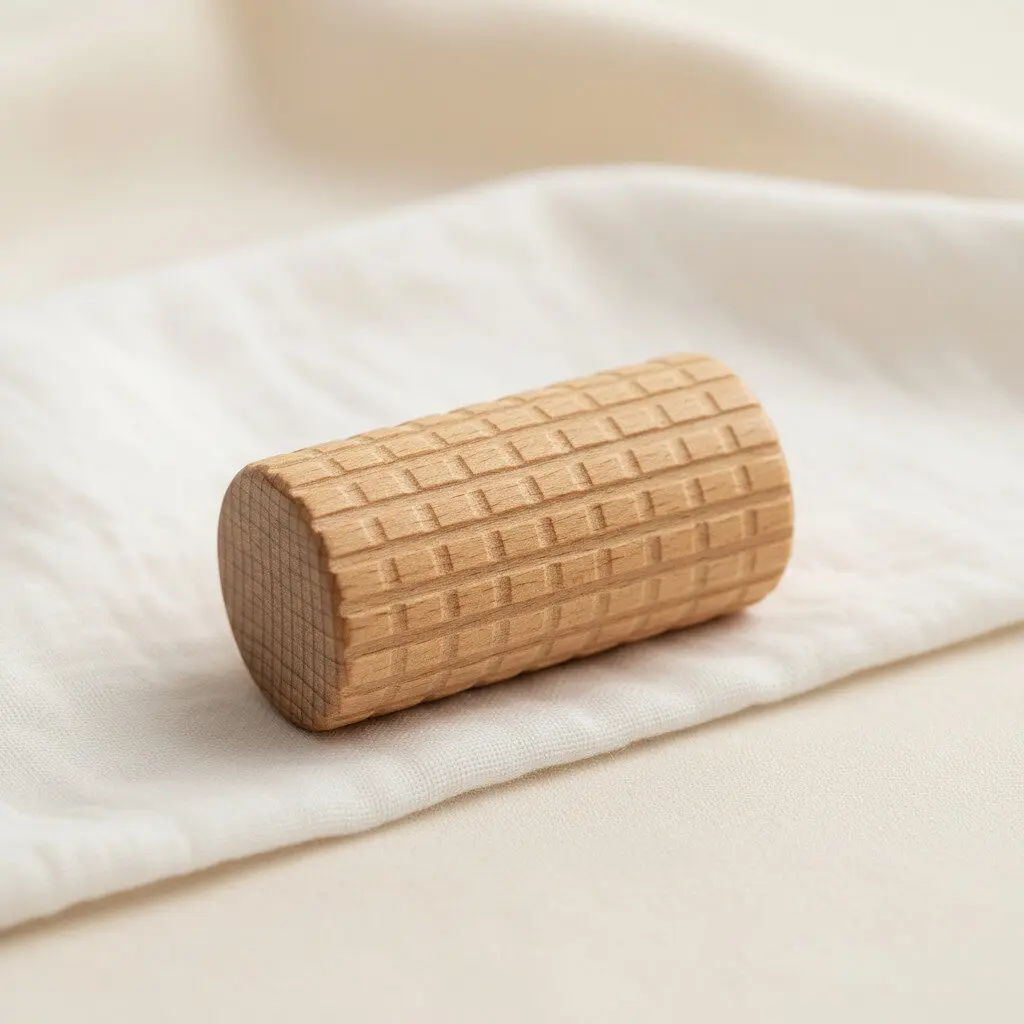
This simple wooden cylinder features subtle ribbing that provides tactile variation without overwhelming newborn senses. The lightweight design means even accidental contact can move it slightly, introducing early cause and effect. The natural wood offers temperature and texture experiences different from fabric toys. Place this cylinder where baby might touch it during natural movements, or gently roll it against their palm. This supports proprioception—the awareness of one’s body in space—as baby begins to sense how their movements affect objects.
Support Your Baby’s Self-Discovery
Get our comprehensive guide to supporting healthy self-awareness in the first three months, with week-by-week activities and observation prompts.
Key Montessori Principles for Newborns
- Respect for the child as a complete human being capable of concentration and learning from birth
- Simplicity in toy design—fewer features actually support deeper engagement
- Natural materials provide authentic sensory experiences that plastic cannot replicate
- Following the child’s lead rather than imposing stimulation when they’re not receptive
- Creating a prepared environment with developmentally appropriate opportunities for exploration
Supporting Your Newborn’s Development Through Montessori Toys
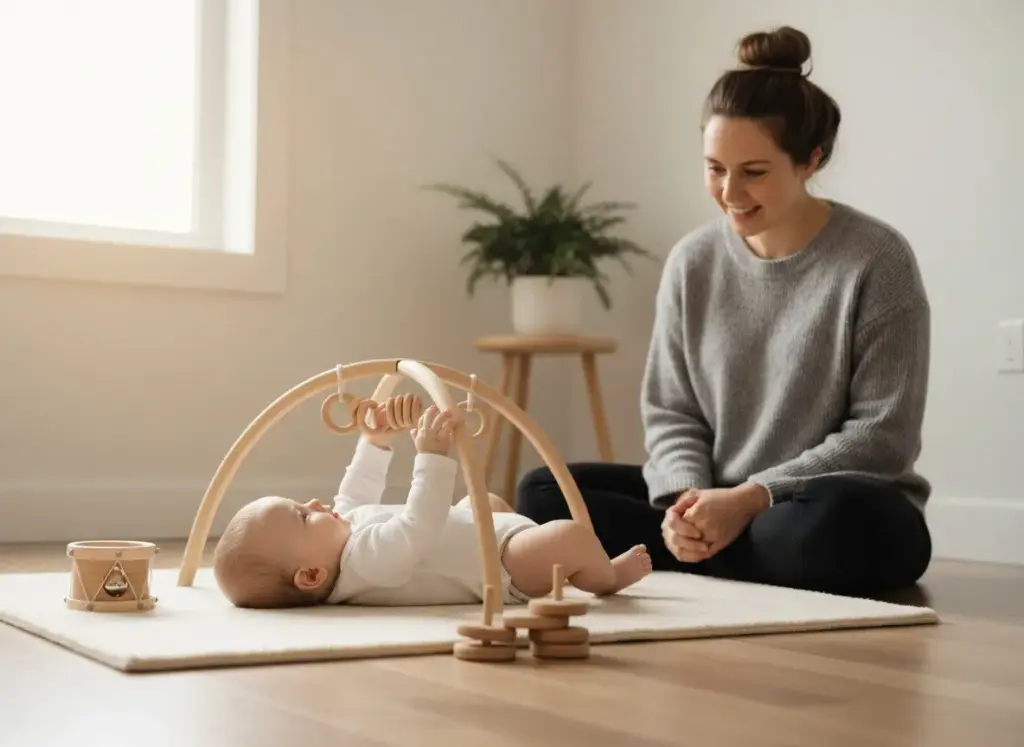
The first three months of life lay the foundation for all future development. By providing simple, purposeful Montessori toys that respect your baby’s natural developmental timeline, you’re supporting their innate drive to learn about themselves and their world. Remember that less is truly more during this sensitive period—a few carefully selected toys presented at the right moments will be far more beneficial than a nursery filled with flashy, overstimulating options.
Observe your baby carefully to understand when they’re receptive to engagement and when they need rest. Their cues will guide you in knowing when and how to introduce these developmental tools. By following Montessori principles of respect, simplicity, and natural materials, you’re not just providing toys—you’re creating an environment that honors your baby’s unique developmental journey from the very beginning.
Complete Montessori Baby Guide: Birth to Three Months
Download our comprehensive guide with week-by-week developmental information, toy rotation schedules, and observation prompts to support your Montessori journey.