A crowded home can make every small task feel harder. You may lose useful things, buy items you already own, or avoid a room because it feels overwhelming.
These One Dozen Decluttering Ideas focus on simple decisions. You do not need a perfect weekend, costly bins, or a large house. You need a clear place to begin and a way to keep moving.
The ideas below are inspired by practical closet and home systems, including the clothing-sorting approach described in this clothing decluttering guide. Start with one small area. Stop when your energy drops. Progress is more useful than an all-day purge.
Prepare for a Simple Home Reset
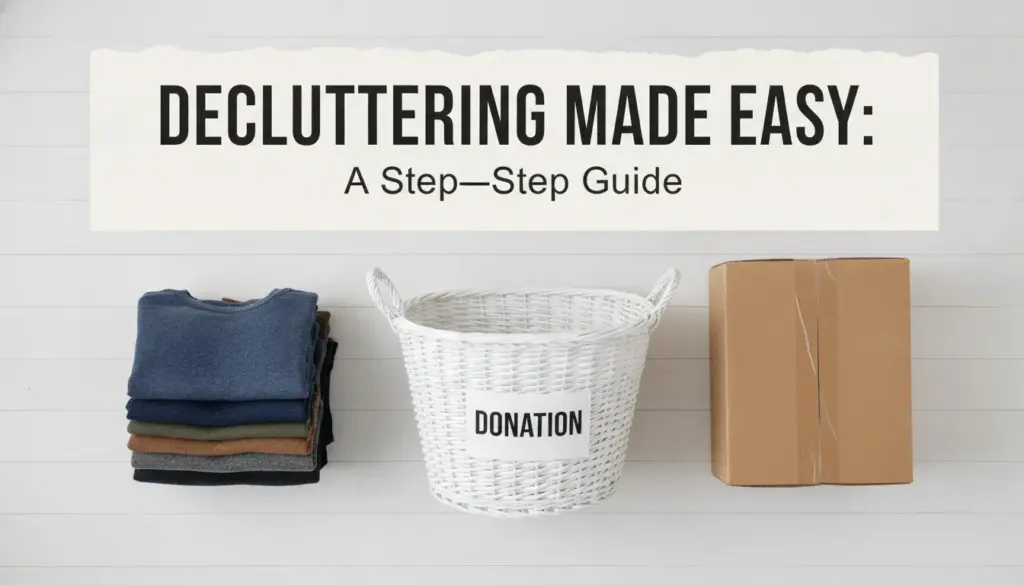
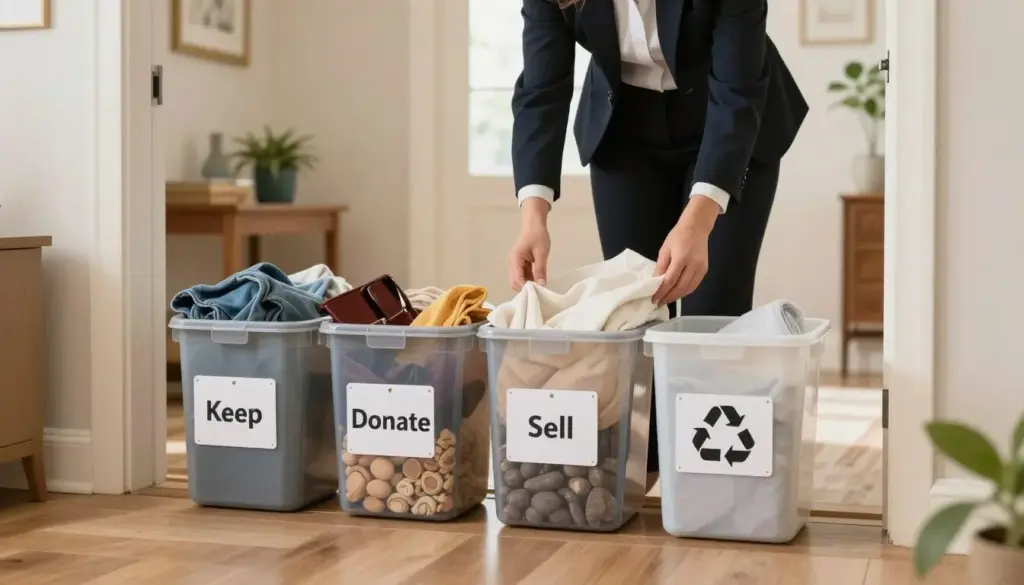
Decluttering works best when every decision has a destination. Before you touch the first drawer, prepare four basic groups: keep, donate, sell, and discard. You can use bags, boxes, or clean laundry baskets.
Keep the groups separate. A donation bag that sits beside the closet for three years is still part of the clutter. Move each group out of the room when you finish.
Set a short time limit. Ten or fifteen minutes can be enough for a drawer, shelf, or small section of a closet. Short sessions make the work easier to repeat.
1. Use the Four-Group Sorting Method
Choose one small surface and remove every item from it. Do not sort while the space is still full. A clear surface lets you see how many things you own and prevents hidden clutter from staying behind.
Place each item into one of four groups. Keep the pieces you use and need. Donate useful items that no longer fit your life. Sell only items that are worth the time and effort. Discard broken, stained, unsafe, or unusable things.
Try not to create a large “maybe” pile. If an item needs more thought, place it in one small box. Write the date on the box. If you do not need anything inside after six months, you may be ready to let it go.
- Use one bag for donations.
- Use one box for items to sell.
- Recycle or discard damaged pieces.
- Move finished bags out of the room.
2. Start With the Easy Things
Begin with items that do not carry strong memories. Empty boxes, expired products, duplicate tools, worn towels, and old magazines are often easier decisions than family keepsakes.
This first win gives you visible space and builds confidence. It also teaches your brain that removing things can feel safe. Once the room looks better, harder choices may feel less serious.
Do not begin with the entire house. Choose one shelf, one drawer, or one corner of a room. A small finished project is more useful than a large project left halfway done.
Declutter Clothes and Closets
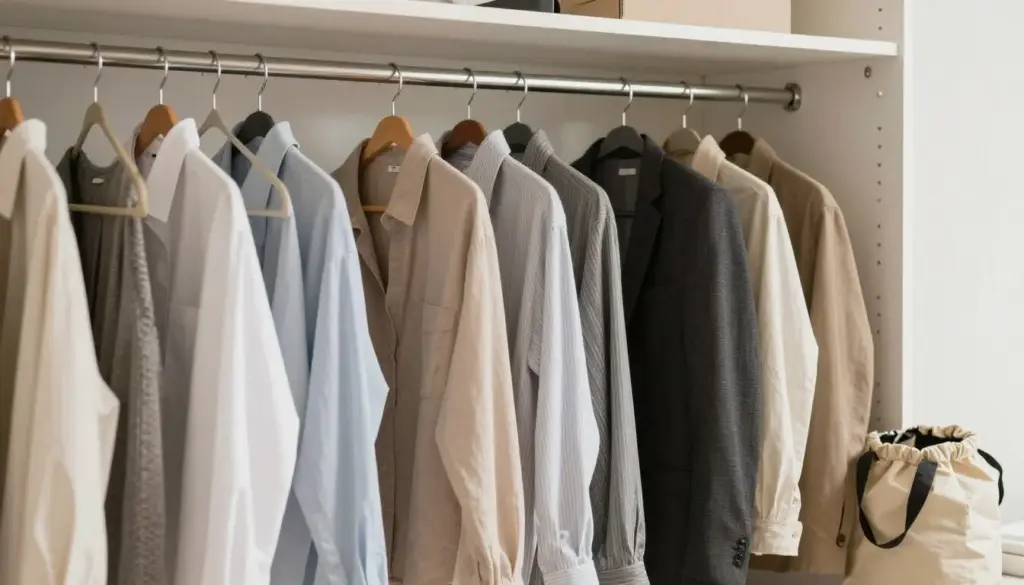
Clothes often create clutter because they represent many versions of our lives. Some pieces fit a past job, a former size, an old hobby, or a future plan. A closet can hold years of decisions that no longer match the person living in the home.
Use the space you have as a guide. If clothes cannot hang freely or folded items fall from drawers, the closet has more items than it can support. The answer may be fewer clothes, better storage, or both.
3. Try a Wear-Test for Everyday Clothes
Turn every hanger in one section so the hook faces the opposite direction. Each time you wear and return an item, turn the hanger back. After one season or one year, the untouched hangers show which pieces you rarely use.
This method removes guesswork. You do not need to ask whether a shirt is attractive. You only need to notice whether it fits your current life and whether you choose it when getting dressed.
For folded items, place worn pieces in a separate basket for two weeks. The basket will show what you reach for on normal days. The clothes left in drawers may be items you are holding onto without a real reason.
- Test daily clothes before formal clothes.
- Check fit, comfort, and condition.
- Keep useful pieces you really need.
- Donate the rest when the test is complete.
4. Remove Clothes That Belong to Another Year
Ask whether each piece works for your body, schedule, climate, and current style. An item that has not been worn for several years may be useful in theory but inactive in real life.
Do not keep every size for a possible future. If your body changes, you can decide what you need at that time. Holding onto too many sizes takes up space and can add pressure to an ordinary morning.
Keep a limited number of sentimental clothes. One memory box can protect meaningful pieces without allowing every old shirt to fill the closet. Photograph a special item before you donate it if the memory matters more than the fabric.
5. Create a Seasonal Closet
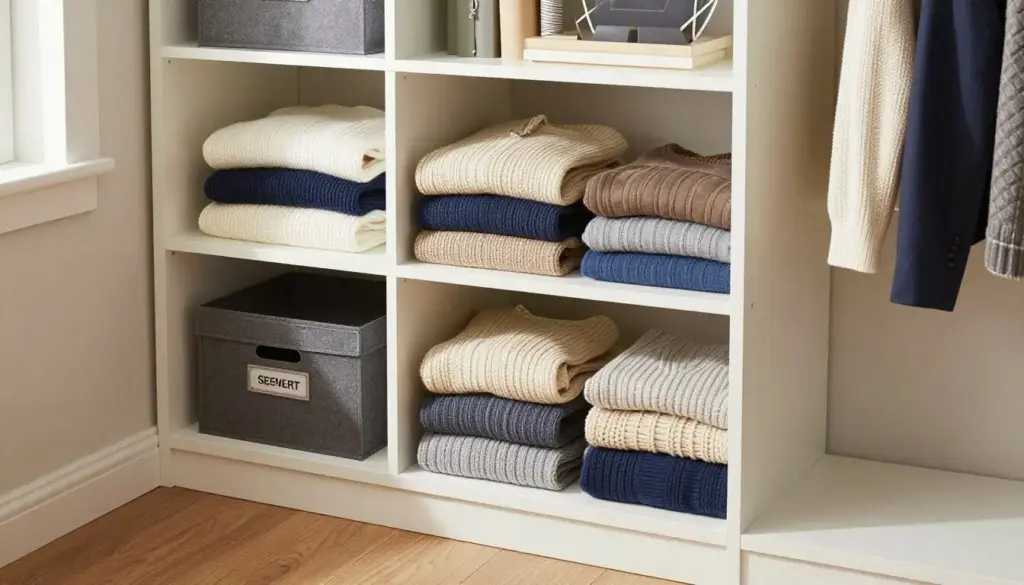
Keep the current season in the main closet. Store coats, swimwear, holiday pieces, or heavy sweaters elsewhere when the weather changes. Under-bed storage, a high shelf, or a labeled box can work in a small home.
Seasonal storage gives you a natural review point several times a year. When you bring items back, check whether you still need them. If you forgot about a piece, that may be useful information.
Label boxes by season and person. Avoid storing all family clothes in one deep container. Smaller groups make the next changeover easier and reduce the chance of losing items longer than necessary.
Clear Drawers and Small Storage
Drawers hide clutter well. A closed drawer can look tidy while holding duplicate items, old batteries, tangled cords, and things you forgot you owned. Emptying the drawer is the fastest way to see the real problem.
Use containers only after you reduce the number of items. Organizers can make a crowded drawer look neat, but they do not create more space. First remove what you do not use. Then give the remaining pieces a simple home.
6. Give the Junk Drawer a Clear Purpose
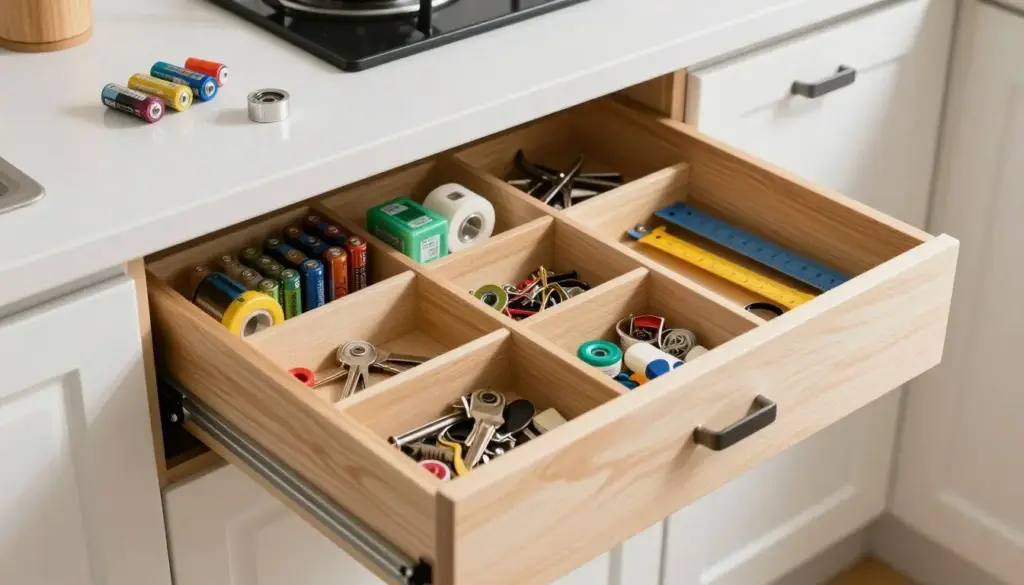
Take everything out of the drawer. Wipe the inside and group similar items on the counter. You may find tools, mail, makeup, hardware, keys, and office supplies mixed together.
Keep only small items that support daily household needs. Move screws to a tool area, pens to the office, and extra makeup to the bathroom. The drawer should hold useful odds and ends, not every object without a home.
Use small containers for batteries, fasteners, tape, and measuring tools. Leave some empty space. A drawer that is filled to the top will become difficult to use again.
7. Match Containers to the Items You Keep
Look at the items before buying storage. Measure the drawer, shelf, or closet space. A box that is too deep can hide small pieces, while a box that is too narrow may waste valuable space.
Use shallow containers for makeup, office supplies, and daily tools. Use taller boxes for towels, paper goods, and spare household items. Clear labels are helpful when several people use the same storage area.
Do not save empty boxes forever. Keep a few strong boxes for moving, shipping, or seasonal storage. Recycle the rest when they no longer serve a clear purpose.
8. Set a One-In, One-Out Rule
When a new towel, shirt, book, mug, or tool enters the home, choose one similar item to remove. This rule keeps the number of possessions stable and makes shopping more intentional.
The replacement does not have to be identical. A new bath towel may replace an old towel. A new cookbook may replace one you never open. A better tool may replace a broken one.
Write the rule on a small note inside a closet or drawer. A visible reminder helps family members understand why there is no need to keep every item longer than necessary.
Make the Kitchen Easier to Use
A kitchen should support the way your family cooks and eats now. It does not need to contain every gadget for every recipe. Extra items take up space, block cabinets, and make daily cleanup take more time.
Focus on access. Items used every day should be easy to reach. Items used once a year can move to a higher shelf or leave the home if they are not worth storing.
9. Remove Duplicate Kitchen Items
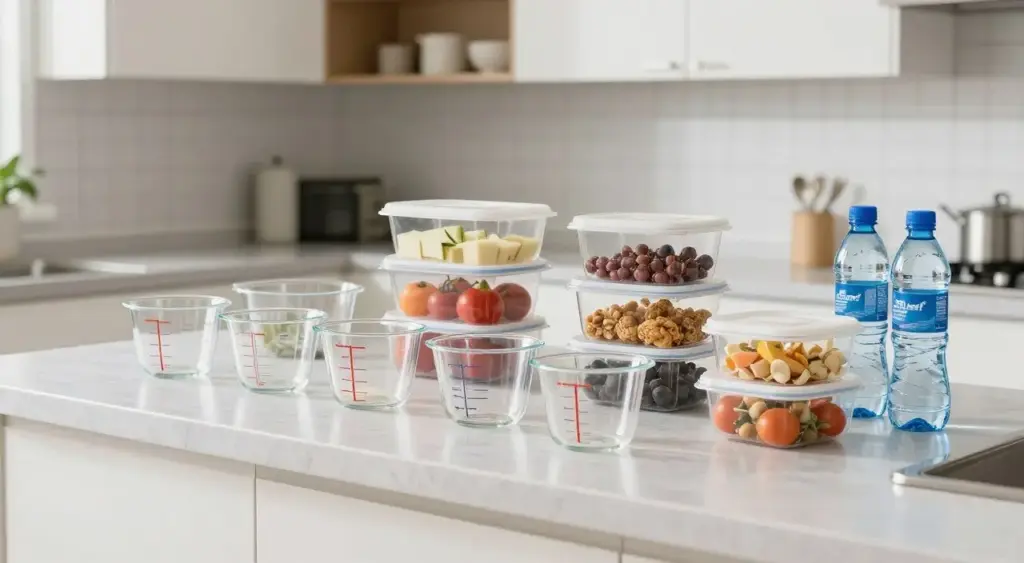
Gather similar items from cabinets, drawers, and the pantry. Place all spatulas, measuring cups, water bottles, food containers, and serving pieces together. Seeing the full set often reveals how many duplicates you have.
Keep the best ones based on condition, size, and use. Match food containers with lids and get rid of pieces that have no partner. Recycle or discard cracked plastic, rusty tools, and items that are unsafe to use.
Be careful with specialty tools. If a gadget has not been used in a year and performs only one minor task, ask whether it earns the space it takes. Borrowing one for a rare recipe may be a better way to manage storage.
10. Reduce the Pantry and Refrigerator Backlog
Check dates on food, spices, sauces, and supplements. Put older items at the front and use them before opening another package. Do not keep food that smells bad, has changed texture, or creates a safety concern.
Group pantry items by type. Keep baking supplies together, breakfast foods together, and snacks together. This system helps you shop from what you have and can reduce buying duplicates.
Use one shelf for open packages. Clip bags closed and add a simple date when needed. A visible “use first” area keeps food from becoming forgotten clutter.
Reduce Clutter in Living Spaces
The living room is a shared space, so it often collects things from every room. Books, toys, mail, blankets, electronics, and shoes can settle there during a busy day.
Make the room easier to reset by giving common items a nearby home. Storage should be close enough that family members will use it. A system that requires several trips across the house may not last.
11. Create a Daily Return Basket
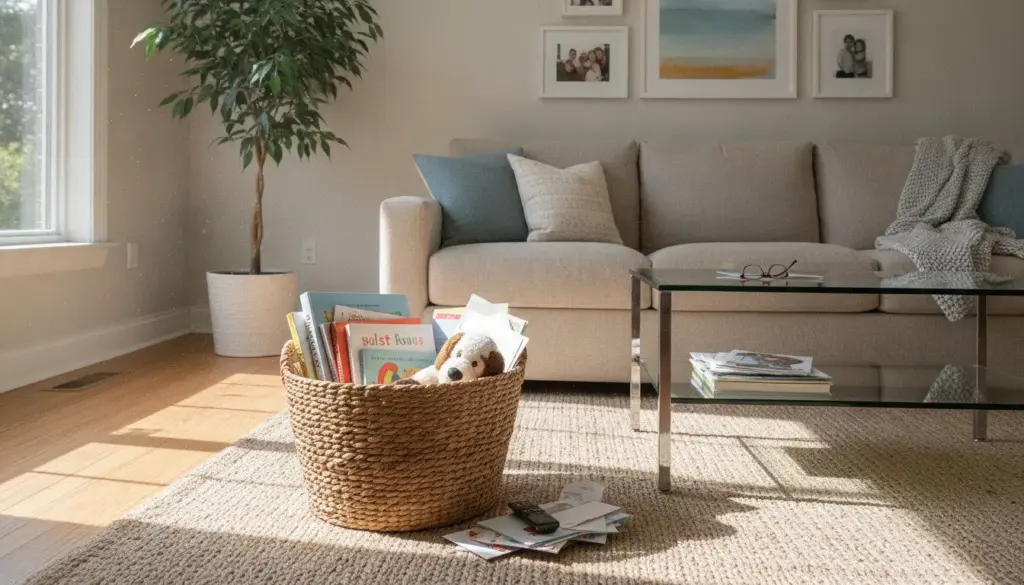
Place one basket in the living room for items that belong elsewhere. During the day, add toys, books, towels, mail, and small household pieces. At a set time, return the contents to their proper rooms.
Use one basket per floor if your home is large. Avoid keeping the basket full for weeks. A daily or evening reset prevents temporary storage from becoming a new clutter zone.
Children can help with this task. Ask them to return a few simple things before bedtime. The goal is not perfect cleaning. The goal is to make the next day begin with a usable room.
12. Edit Books, Paper, and Media
Gather books from the living room, bedroom, office, and other shelves. Keep the ones you read, reference, love, or plan to read soon. Let go of books you disliked, will never read, or can easily access elsewhere.
Sort old magazines newspapers into recycling unless a specific issue has lasting value. Keep only the pages you need by scanning or photographing them. A whole stack is rarely easier to use than one saved article.
Apply the same rule to DVDs, games, manuals, and unused media. Keep favorites and items that are hard to replace. Donate or sell the rest, especially when they are taking up space that your family uses every day.
- Keep books with a clear purpose.
- Recycle old magazines newspapers.
- Remove duplicate manuals.
- Donate rest that no one uses.
Reset the Bathroom and Linen Storage
Bathrooms can hold more products than one person can use. Towels, makeup, skin care, hair tools, and medicines often stay long after they stop being useful.
Work one category at a time. Do not empty every bathroom in the house at once. A smaller project gives you control and makes it easier to finish before the next task begins.
13. Check Expired Bathroom Products
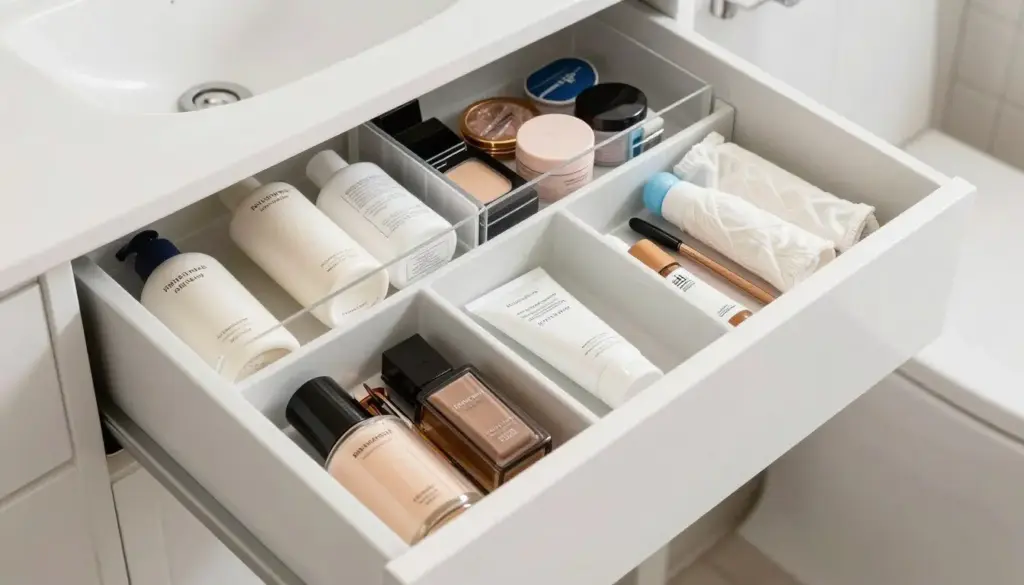
Look at makeup, sunscreen, skin care, hair products, and medicines. Discard items that are expired, separated, dried out, or changed in smell. Follow local guidance for medicine disposal rather than pouring it into a sink.
Keep the products you use often at eye level. Move backups to one labeled area. If you have several unopened products of the same type, stop buying more until you use what you own.
Makeup deserves special attention. Old makeup can irritate skin and is often difficult to identify once it is buried in a crowded drawer. Keep a small daily set and review the rest twice a year.
14. Limit Towels to a Useful Set
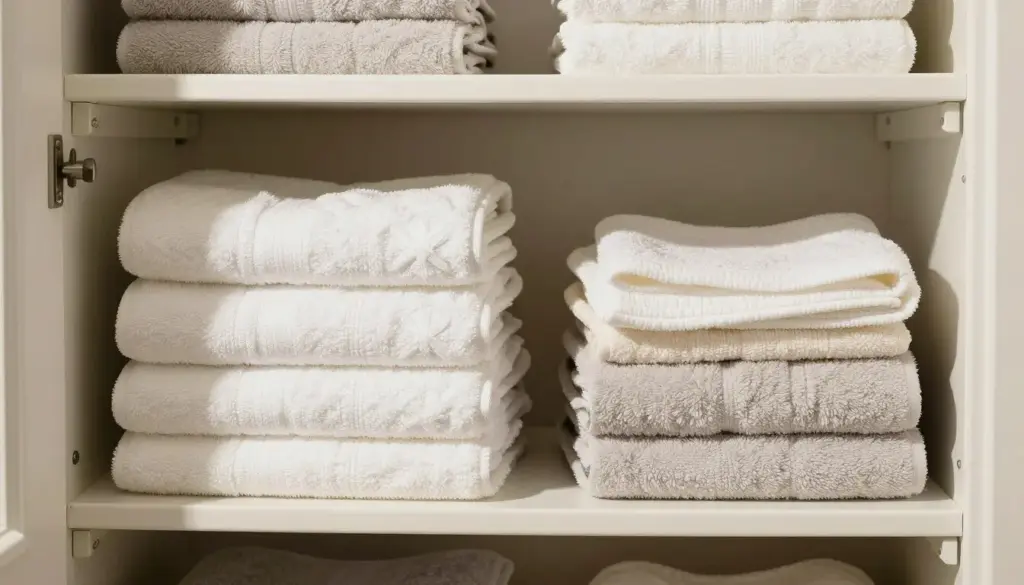
Count the towels your household actually uses. Keep enough for regular showers, guests, laundry delays, and basic cleaning. The right number depends on family size and laundry habits, not on a universal rule.
Remove towels that are thin, rough, stained, or no longer absorbent. They may become cleaning rags if they still serve that purpose. Otherwise, donate rest only when the receiving organization accepts used linens.
Fold the towels you keep by size. Store bath towels, hand towels, and washcloths separately. Leave room on the shelf so the stack does not fall every time someone takes one.
Organize the Office and Family Items
Paper and family supplies can spread through a home because no one knows where they belong. A simple system should answer three questions: what is active, what must be saved, and what can leave?
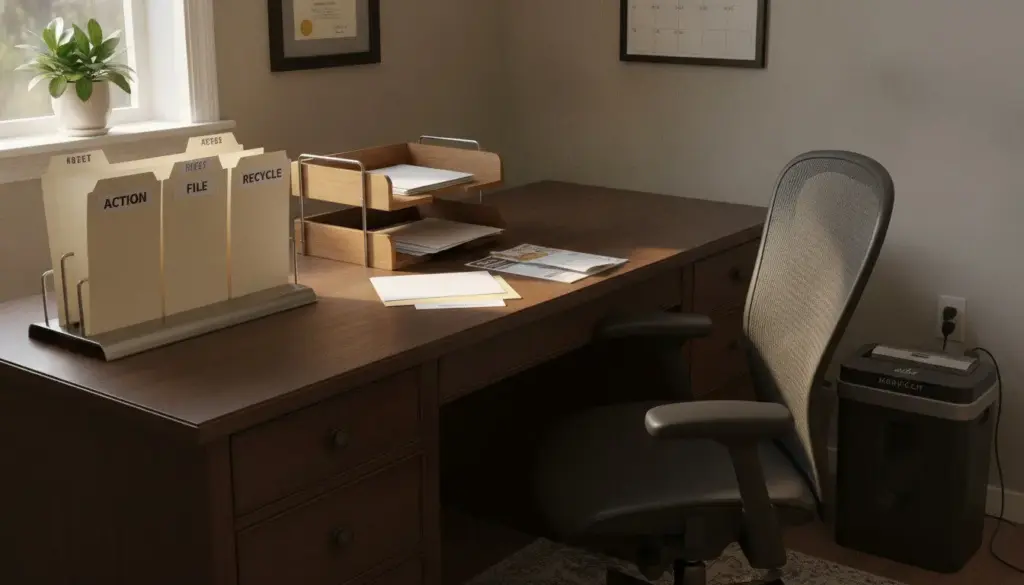
Make one place for current papers. The space may be a tray, drawer, or small file box. When the area is full, review it before adding more. This prevents papers from moving to tables and counters.
15. Build a Small Paper Action Station
Collect mail, school forms, receipts, notes, and documents from the home. Recycle junk mail immediately. Open the rest and sort it into action, file, and discard groups.
Keep only papers that require a future action or prove something important. Digitize records when a digital copy is acceptable. Shred documents with private information before recycling them.
Use one folder for bills, one for family forms, and one for records that need filing. A limited number of folders makes the system easier for every person in the home to follow.
16. Give Kids a Small Memory Limit
Children create many drawings, school projects, costumes, and small keepsakes. Saving everything can make the collection lose meaning. Choose one box, folder, or shelf for each child.
Invite kids to select their favorite pieces. Take photos of large projects before recycling them. Keep a few examples from each year rather than every worksheet and craft.
Label the box with the child’s name and year. At the end of each school year, review the collection together. This turns decluttering into a family habit instead of a secret adult task.
Make the Decluttering System Last
Decluttering is not a single event. Homes change as people grow, work shifts, hobbies begin, and storage needs change. A useful system leaves enough space for normal life.
Keep a small donation container in a closet or laundry area. When an item no longer works, place it there. Empty the container often so it does not become permanent storage.
17. Schedule a Short Monthly Review
Choose one day each month for a fifteen-minute review. Walk through one room and look for items that are broken, unused, duplicated, or out of place. Small reviews stop clutter from gaining momentum.
Rotate the focus. Review the kitchen one month, the bathroom the next, and the living room after that. Over a year, you can touch every room without giving up an entire weekend.
Write down problem areas that need a different storage solution. Do not buy organizers until you understand the problem. Sometimes the best solution is to remove items rather than add containers.
18. Use a “Home for Everything” Check
Pick up five things that are out of place. Ask where each item should live and whether that location is practical. If the answer is unclear, the item may need a new home or may be ready to leave.
Keep frequently used items near the place where they are used. Store cleaning tools near the rooms they serve. Keep towels close to the bathroom and school supplies near the area where homework happens.
When every item has a realistic home, tidying takes less time. Family members also have a better chance of helping because the standard is clear.
19. Set a Personal Clutter Limit
Decide how much space each category may use. Books may fit on two shelves. Makeup may fit in one drawer. Craft tools may fit in one cabinet. The limit turns a vague problem into a visible boundary.
When the space fills, review the collection before adding more. Choose the best items instead of trying to expand storage forever. This approach works well for clothes, towels, toys, kitchen tools, and office supplies.
A limit is not a punishment. It protects the space you need to live. It also makes future buying decisions more thoughtful.
Questions to Ask Before You Keep Things
Some items are difficult because they cost money or connect to a memory. Use calm questions instead of forcing a quick answer. The goal is to understand why you are holding onto the item and whether that reason still matters.
What Would I Buy Today?
If you saw the item in a store today, would you spend money on it? If not, ask why it remains in your home. This question is useful for décor, clothing, tools, and kitchen pieces.
Have I Used It in the Last Year?
A year is long enough to reveal most normal habits. Some seasonal or emergency items need exceptions. Still, an item unused for several years deserves a careful review.
Is It Worth the Space?
Storage is not free. Every item uses shelf, drawer, closet, floor, or mental space. Keep the things that support your current home, health, work, family, or joy.
Could Someone Else Use It Now?
Useful items may help another person more than they help you. Donate suitable clothes, books, toys, and household items through a local organization. Sell only when the expected return is worth the time involved.
A Calmer Home Starts With One Small Area
You do not need to remove everything from your home to feel a difference. One clear drawer can make a morning easier. One open shelf can calm a room. One edited closet can save time each week.
Use these One Dozen Decluttering Ideas as a flexible guide. Begin with easy items, sort with a clear purpose, and give the things you keep a realistic home. Review clothes, towels, books, makeup, tools, papers, and kitchen items as your needs change.
Most importantly, let go of the idea that decluttering must be perfect. A home is meant to be lived in. When you keep what you use and remove what no longer serves you, the space can become easier to clean, easier to share, and more comfortable every day.