
Cooler days invite open windows, warm meals, and more time at home. They also reveal dust, clutter, and jobs that summer made easy to ignore. This fall cleaning checklist helps you reset your home in small, clear steps, so the season feels calm instead of crowded.

A clean, warm living space makes the colder months feel more inviting.
Why Fall Is the Right Season for a Deep Clean
Fall is a useful bridge between summer and winter. Windows can stay open while you work, and mild weather makes outdoor jobs easier. A seasonal reset also gives you time to prepare before heating systems run every day.
Summer can bring pollen, sand, yard debris, and extra traffic through the home. These particles settle on floors, furniture, vents, and hard surfaces. Removing them can support better indoor air quality and make rooms feel fresher.
Fall cleaning is not about making every inch perfect in one day. It is about choosing the areas that affect comfort, health, safety, and daily use. Work from top to bottom, and finish one room before starting another when possible.
Simple rule: Declutter first, dust second, wash fabrics third, and clean floors last. This order prevents you from doing the same cleaning twice.
Your Printable Fall Cleaning Checklist
Use this master cleaning checklist before moving into room-by-room details. Check the tasks that fit your home. Skip anything that does not apply, such as a fireplace or outdoor storage area.
- Open windows briefly when weather and outdoor air conditions allow.
- Walk through each room and remove obvious clutter.
- Donate, recycle, repair, or store summer items you no longer need.
- Replace or wash HVAC filters according to the manufacturer’s guidance.
- Dust ceiling fans, light fixtures, vents, shelves, and baseboards.
- Vacuum upholstery, rugs, stairs, corners, and under furniture.
- Wash blankets, pillow covers, curtains, bath mats, and washable rugs.
- Clean windows, screens, tracks, frames, and glass doors.
- Clean kitchen appliances, cabinet fronts, drawers, and pantry shelves.
- Scrub bathroom surfaces, grout, drains, fixtures, and exhaust fans.
- Flip or rotate mattresses if the manufacturer permits it.
- Test smoke alarms, carbon monoxide alarms, and flashlights.
- Check door seals, drafty windows, outdoor faucets, and visible exterior gaps.
- Clean the laundry machine, lint trap, dryer vent opening, and floor.
- Store fans and summer gear after cleaning and drying them.
- Add warm lighting, soft textiles, and useful storage for the new season.
Take the checklist with you
Download a simple printable fall cleaning checklist. Keep it on the fridge, mark progress by room, and avoid trying to remember every task.
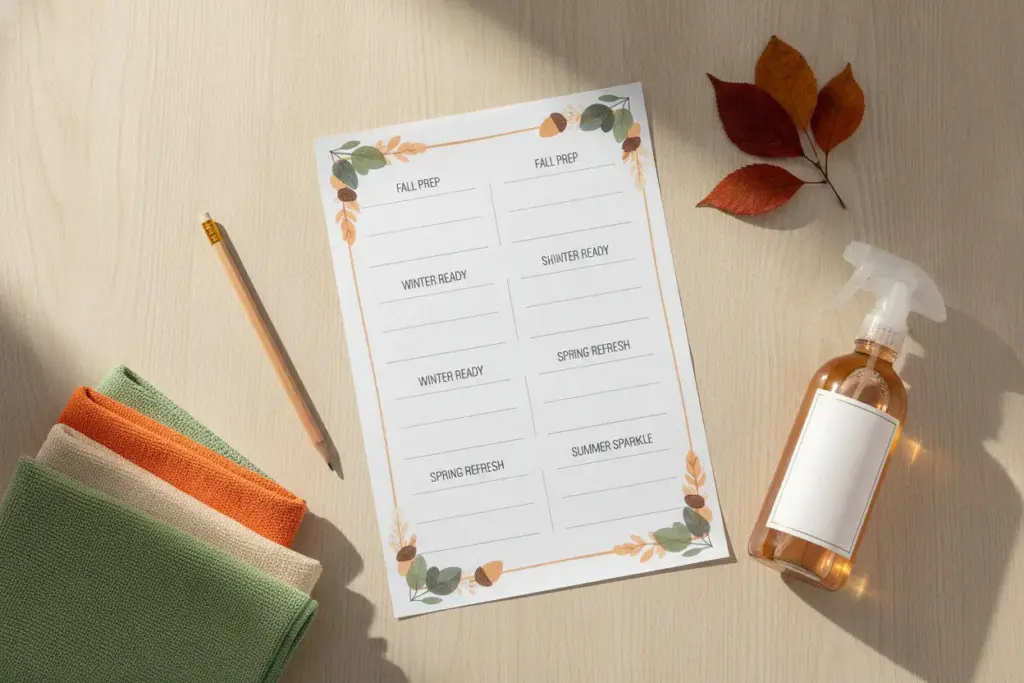
A printed plan turns a large seasonal clean into visible, manageable steps.
Gather Supplies and Set a Smart Cleaning Order
Collect supplies before you begin. A small caddy saves walking time and keeps products in one place. Use separate cloths for kitchens, bathrooms, glass, and general surfaces.
Basic supplies
- Microfiber cloths
- Vacuum with attachments
- Broom, mop, and bucket
- All-purpose cleaner
Helpful tools
- Soft brush and old toothbrush
- Squeegee for windows
- Step stool for safe reach
- Reusable gloves
Before you clean
- Read product labels
- Test cleaners on small areas
- Never mix bleach and ammonia
- Keep products away from children
Start with dry work. Dust and vacuum before using water. Move from bedrooms and living spaces toward kitchens and bathrooms. Save floors for the end, since crumbs and dust will fall as you work.
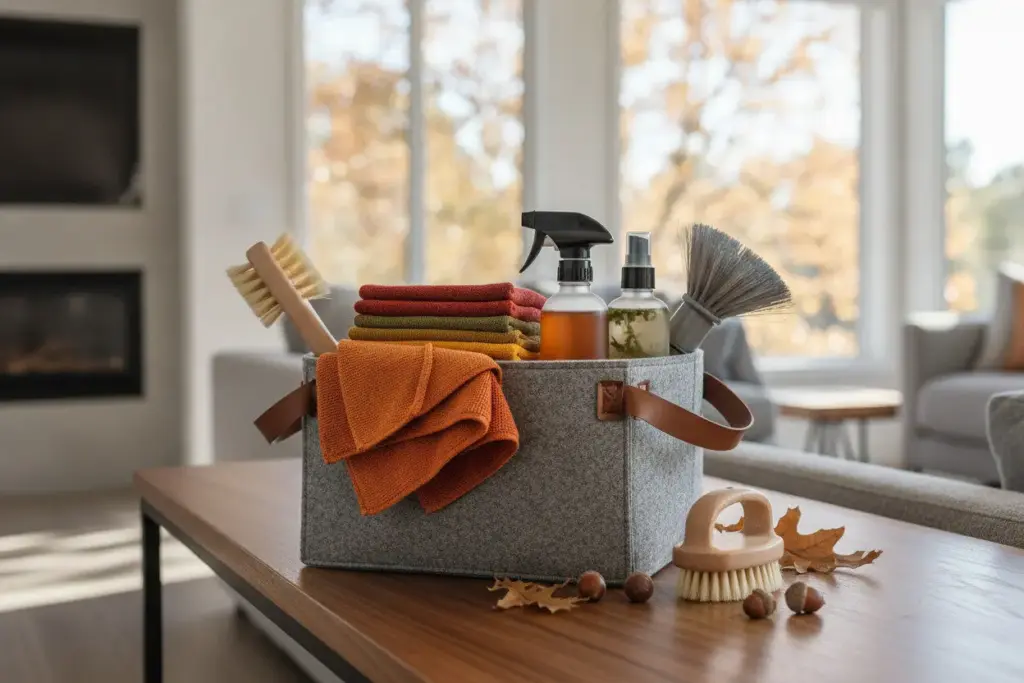
A prepared caddy keeps cleaning supplies close and reduces wasted time.
Kitchen Fall Cleaning Checklist
The kitchen often needs the most detailed cleaning because food residue, grease, and moisture collect in many small areas. Work from storage to appliances, then finish with counters and floors.
- Remove everything from one pantry shelf or cabinet at a time.
- Check dates, wipe shelves, and group similar food items.
- Clean cabinet doors, handles, drawer edges, and the area above cabinets.
- Empty the refrigerator and wipe shelves, drawers, seals, and the top surface.
- Clean the oven, stovetop, hood filter, microwave, toaster, and dishwasher edges.
- Run a cleaning cycle on the dishwasher if the manual allows it.
- Wash the sink, faucet, drain cover, backsplash, and trash can.
- Vacuum crumbs from under appliances and mop the floor.
Do not spray cleaner directly into appliance controls or electrical openings. Use a damp cloth instead. Let every surface dry before replacing food or small appliances.
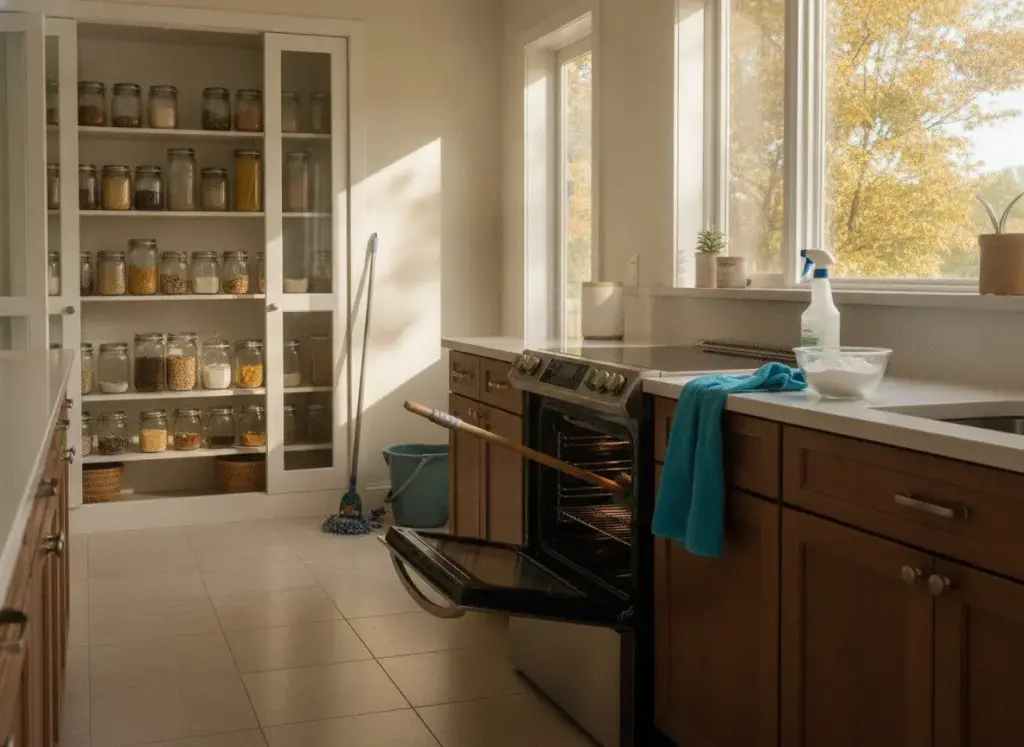
Clean appliances and clear counters make everyday cooking easier through winter.
Bedroom and Living Area Checklist
Bedrooms and living areas hold fabric, dust, and items that are used every day. Cleaning these spaces can improve comfort and support indoor air quality before the home stays closed for longer periods.
Bedrooms
- Remove items from nightstands, dressers, and under the bed.
- Donate clothing that no longer fits or gets worn.
- Wash sheets, mattress covers, blankets, and pillow protectors.
- Vacuum the mattress surface and let it air briefly if practical.
- Dust headboards, lamps, shelves, blinds, and baseboards.
- Flip or rotate the mattress only if the care instructions allow it.
- Move summer clothing into clean, dry storage.
Living areas
- Dust ceiling fans, lamps, frames, shelves, and electronics.
- Vacuum sofas, cushions, rugs, stairs, and hidden corners.
- Wash removable covers and clean upholstery according to the label.
- Clean remote controls, light switches, door handles, and table surfaces.
- Sort books, games, cables, and small items into simple zones.
- Clean windows and glass doors before closing them for winter.

Fresh bedding and less clutter create a quieter bedroom for the cooler months.
Bathroom Cleaning Checklist
Bathrooms benefit from a careful clean because soap film, moisture, and buildup can collect quickly. Use ventilation while cleaning, and allow surfaces to dry between steps.
- Remove expired products and wipe storage shelves.
- Dust the exhaust fan cover and clean it only when power is safely off.
- Scrub the tub, shower walls, grout, door, and fixtures.
- Clean the toilet, including the base, handle, hinges, and nearby floor.
- Wash the sink, faucet, backsplash, mirror, and glass.
- Clear hair from drains and rinse drain covers.
- Wash towels, bath mats, shower curtains, and fabric liners as directed.
- Mop behind the toilet, under the vanity, and around the door.
Use the right product for natural stone, painted surfaces, and delicate glass. A soft brush often removes buildup with less product and less water than repeated spraying.
Air tip: Run the bathroom exhaust fan during showers and for a short period afterward. Lower moisture can help protect surfaces and support better indoor air conditions.
Entryway, Laundry Area, and Windows
The entryway controls what comes into the home. The laundry area supports every other cleaning task. Windows affect light, drafts, and the way a room feels, so these smaller areas deserve a place on your cleaning checklist.
Entryway
- Remove summer shoes, beach items, and unused bags.
- Vacuum the mat, wash it if safe, and clean the floor below it.
- Wipe the door, frame, handles, light switches, and nearby walls.
- Create a small zone for coats, boots, umbrellas, and keys.
- Check that the door closes well and that the weather seal is intact.
Laundry area
- Clean the washer gasket, detergent drawer, lid, and control panel.
- Run a washer-cleaning cycle as directed by the manufacturer.
- Remove lint from the dryer screen after every load.
- Check the visible dryer vent opening and keep the area clear.
- Wipe shelves, hampers, walls, and the floor behind machines.
Windows
- Vacuum tracks and screens before washing glass.
- Wash frames, sills, and glass with a mild solution.
- Use a squeegee from top to bottom to reduce streaks.
- Inspect seals for gaps and report damaged areas before winter.

An orderly entryway makes busy mornings easier when coats and boots return.
Outdoor Spaces, Heating, and Home Safety
Fall cleaning also includes the parts of the home that protect you from cold weather. Outdoor maintenance can reduce drafts, moisture, and last-minute repairs during winter.
- Sweep the porch, steps, patio, and garage entry.
- Remove leaves from walkways, drains, and outdoor vents.
- Clean outdoor furniture before covering or storing it.
- Check gutters from a safe position or arrange professional service.
- Disconnect hoses and protect outdoor faucets where needed.
- Inspect visible caulk around windows and doors.
- Replace or clean HVAC filters using the correct size.
- Clear furniture and storage items away from heating vents.
- Test smoke alarms and carbon monoxide alarms.
- Replace batteries when needed and check flashlight batteries.
- Schedule heating maintenance if your system requires annual service.
Never climb onto a roof or use an unstable ladder for a quick cleaning job. Safety belongs at the top of every fall cleaning checklist.
Safety first: Turn off power before cleaning fixtures or appliances. Keep water away from outlets, and follow all care instructions for heating equipment.
A Practical Weekend Fall Cleaning Schedule
A schedule helps prevent decision fatigue. Use this two-day plan for a full reset, or spread it across several evenings. Adjust the timing to your household and stop before the work becomes unsafe or exhausting.
- Friday evening: Gather supplies, start a laundry load, and walk through the home with a donation box.
- Saturday morning: Declutter bedrooms and living areas. Strip beds and start washing fabrics.
- Saturday afternoon: Clean the kitchen, including appliances, cabinets, pantry shelves, and floors.
- Saturday evening: Clean bathrooms and replace fresh towels. Take a short break before finishing.
- Sunday morning: Dust vents, fans, fixtures, shelves, and baseboards. Vacuum upholstery and rugs.
- Sunday afternoon: Wash windows, refresh the entryway, and clean the laundry area.
- Sunday evening: Check alarms, filters, door seals, outdoor areas, and heating preparation.
Make your weekend easier
Use the printable plan to divide tasks by person, room, or time block. A visible checklist turns a large clean into small wins.
How to Prioritize Fall Cleaning in a Busy Home
You do not need to complete every task to make a meaningful change. Begin with areas that affect health, safety, comfort, and daily movement. Then use leftover time for appearance-based work.
- Remove food waste and bathroom buildup.
- Wash bedding and high-use fabrics.
- Vacuum floors, rugs, stairs, and upholstery.
- Check alarms, filters, vents, and drafts.
Do first
- Clean windows and screens.
- Organize the entryway and pantry.
- Dust baseboards, fans, and light fixtures.
- Clean the laundry machine and dryer area.
Do next
- Sort deep storage areas.
- Polish decorative items.
- Rearrange furniture.
- Complete small outdoor projects.
Do later
For a household with limited time, choose one high-impact task per day. A 15-minute vacuum of the main living area may matter more than reorganizing a hidden closet. Give each person a clear job, such as collecting clutter, washing fabrics, or wiping surfaces.
Three-task method: Pick one health task, one comfort task, and one visual task. This keeps progress balanced without turning fall cleaning into an all-day event.
Eco-Friendly and Time-Saving Cleaning Tips
Simple choices can reduce waste while keeping cleaning effective. Use reusable cloths, refillable bottles, and concentrated products when suitable. Buy only the products needed for the surfaces in your home.
- Use washable microfiber cloths instead of disposable wipes.
- Vacuum slowly in high-traffic areas instead of repeating rushed passes.
- Carry a donation box during every decluttering session.
- Clean from dry to wet and from high surfaces to low surfaces.
- Use warm water only when the product label calls for it.
- Use natural light during the day and switch to efficient bulbs at night.
- Air-dry washable fabrics when weather permits.
- Measure cleaning products carefully to avoid residue and waste.
- Choose fragrance-free products if strong scents bother your household.
- Never combine household chemicals, even when a surface looks difficult.
Better indoor air is not created by fragrance alone. Remove dust, control moisture, clean filters, and ventilate when outdoor conditions are suitable. If anyone in the home has allergies or breathing concerns, follow their health professional’s advice.
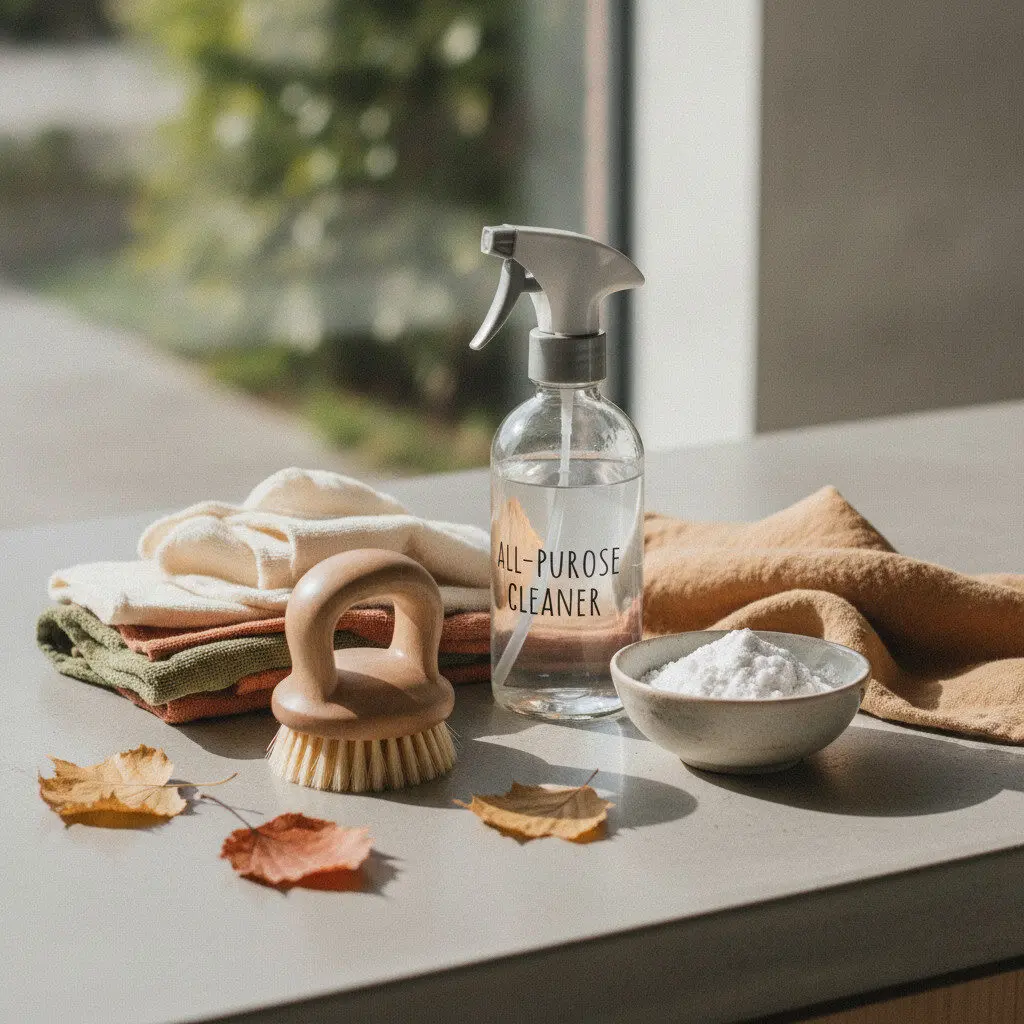
Reusable tools can make regular cleaning simpler and reduce disposable waste.
When to Ask for Professional Cleaning Help
Some households can complete a seasonal clean alone. Others may need support because of work, caregiving, mobility limits, a move, or an approaching gathering. Asking for help is a practical choice, not a failure.
Professional service may be useful for large homes, neglected areas, heavy buildup, high windows, or tasks that require special equipment. Before requesting an estimate, list the rooms, surfaces, and priorities that matter most to you.
Keep the request focused. A clear scope helps a service provider understand the work and gives you a more useful response.
Keep the Home Fresh Through Winter
After the main fall cleaning is complete, maintain the result with short weekly resets. Vacuum the busiest areas, wipe kitchen and bathroom surfaces, wash high-use fabrics, and return loose items to their storage zones.
Check indoor air filters on the schedule recommended for your system. Watch for moisture near windows and bathrooms. Open windows briefly when safe and appropriate, and keep vents clear of furniture.
At the start of each month, choose one deeper task. Clean a neglected appliance, wash a rug, sort a drawer, or inspect a drafty door. Small maintenance keeps the next seasonal clean from becoming overwhelming.

A few minutes of maintenance each week can preserve the calm created by fall cleaning.
Start your seasonal reset today
Print the fall cleaning checklist, choose your first room, and work in a pace that fits your household. If you need support, send a focused cleaning request.
A Cleaner, Cozier Season Starts Small
Fall cleaning can refresh more than the look of your home. It can reduce clutter, support indoor air quality, improve daily comfort, and prepare important areas for winter. Use the master checklist, focus on one room at a time, and let practical progress guide you.
When the final task is complete, keep the results with short weekly resets. A clean entryway, fresh fabrics, clear vents, and tidy living space can make the colder months feel warmer and easier.