Creating a dedicated play area for your baby doesn’t require expensive equipment or a massive home renovation. With some creativity and thoughtful planning, you can design a space that’s not only safe but also stimulates your little one’s development. As both a parent and child development enthusiast, I’ve discovered that the best play areas grow with your child and encourage independent exploration.
In this guide, I’ll share 10 DIY baby play area ideas that you can implement regardless of your budget or space constraints. These ideas are designed to foster your baby’s natural curiosity while giving you peace of mind about their safety. Let’s transform a corner of your home into a magical space where your little one can learn, explore, and thrive!
1. Create a Cozy Floor Bed Play Space
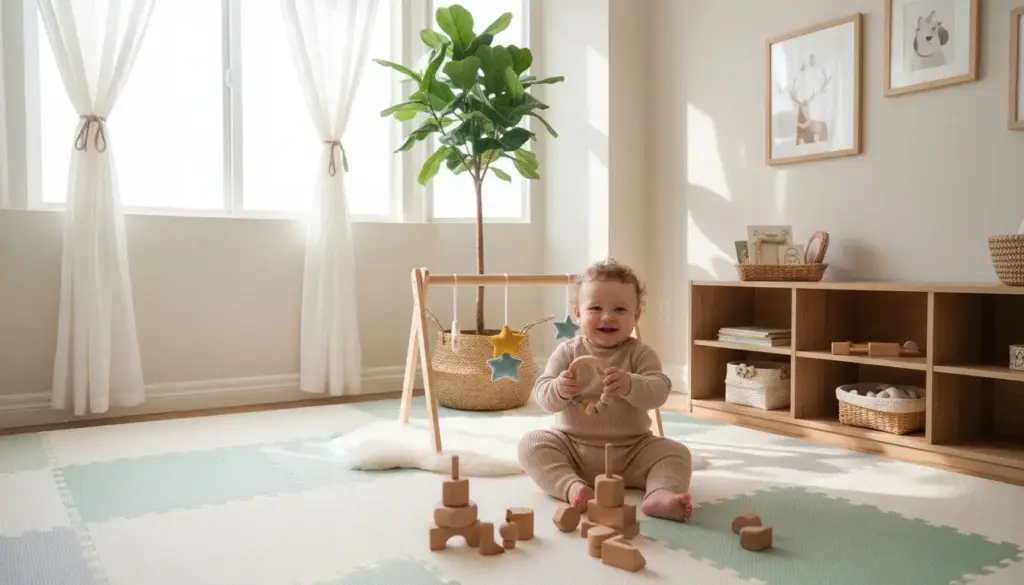
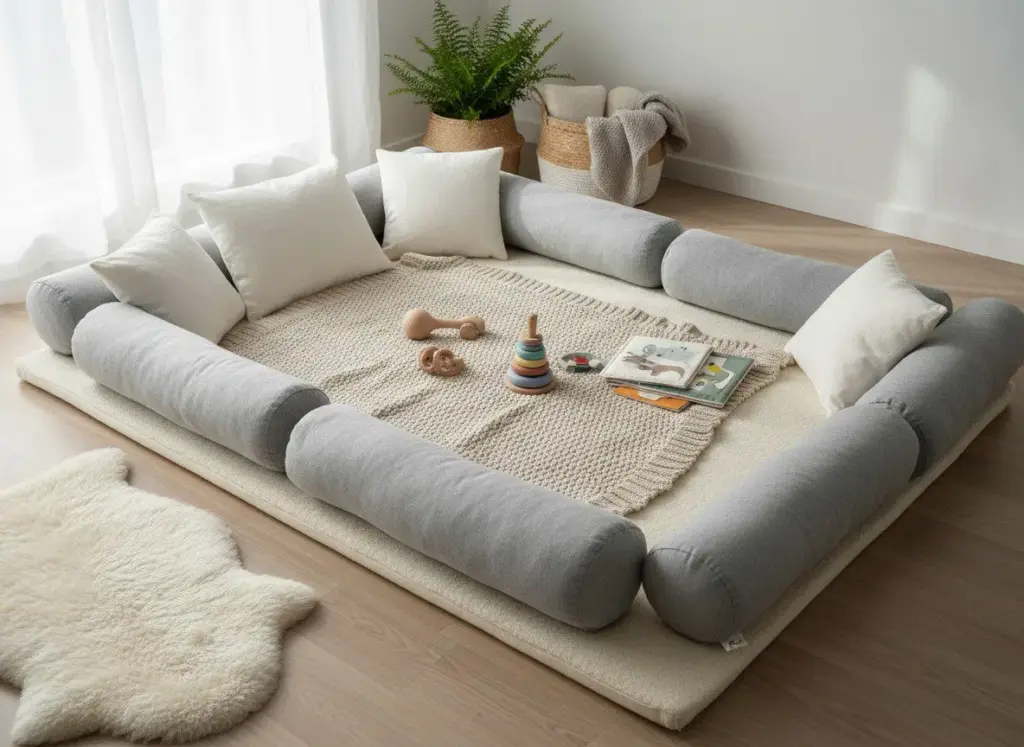
The foundation of any great baby play area is a comfortable, safe floor space. Babies learn through movement and sensory exploration, making a floor bed the perfect starting point for your DIY play area.
What You’ll Need:
- Foam mattress topper or play mat (non-toxic)
- Soft, washable blanket or cover
- Body pillows or bolsters (for babies who aren’t yet mobile)
- Basket for toys
How to Set It Up:
Place your mattress topper or play mat in a corner of your living room or bedroom. Cover it with a soft, washable blanket that’s securely tucked in. For younger babies who aren’t yet mobile, you can use body pillows around the edges to create a cozy nest.
This floor bed becomes not just a play space, but also a gathering spot for the whole family. You’ll find yourself naturally spending more time at your baby’s level, which encourages bonding and helps you see the world from their perspective.
Safety Tip: If your baby is not yet able to roll over independently, avoid using pillows or soft bedding that could pose a suffocation hazard. Always supervise your baby during play time.
2. DIY Sensory Wall for Visual Stimulation
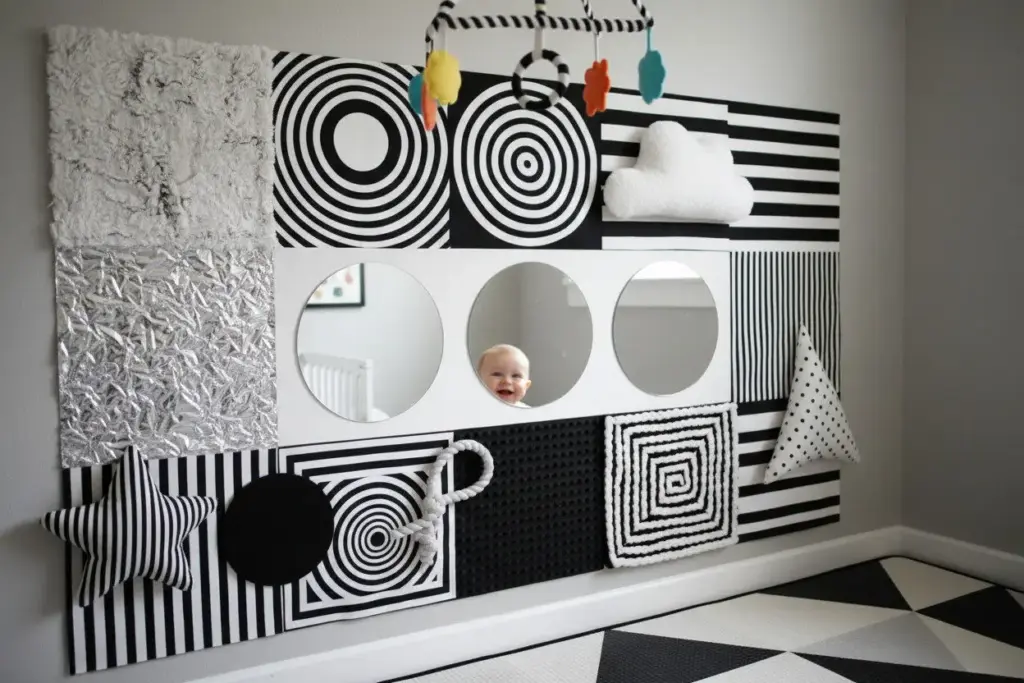
Babies are naturally drawn to high-contrast visuals and interesting textures. Creating a sensory wall next to your baby’s play area provides visual stimulation and encourages reaching and touching as they develop.
What You’ll Need:
- Shatterproof mirror (acrylic)
- High-contrast black and white printables
- Picture frames (with acrylic rather than glass)
- Command strips for safe hanging
- Various textured materials (felt, ribbons, silicone)
How to Set It Up:
Mount a shatterproof mirror horizontally at your baby’s eye level when they’re on their tummy. Surround it with framed high-contrast images. You can print free black and white patterns online or use simple art cards designed for babies.
For added sensory exploration, create a texture panel using different fabrics and materials securely attached to a board. Ensure everything is firmly attached and contains no small parts that could become choking hazards.
Looking for ready-made high-contrast art? The “Art for Baby” book features real artwork that happens to be high-contrast and includes removable posters perfect for your sensory wall.
3. Movement Zone with DIY Baby Gym
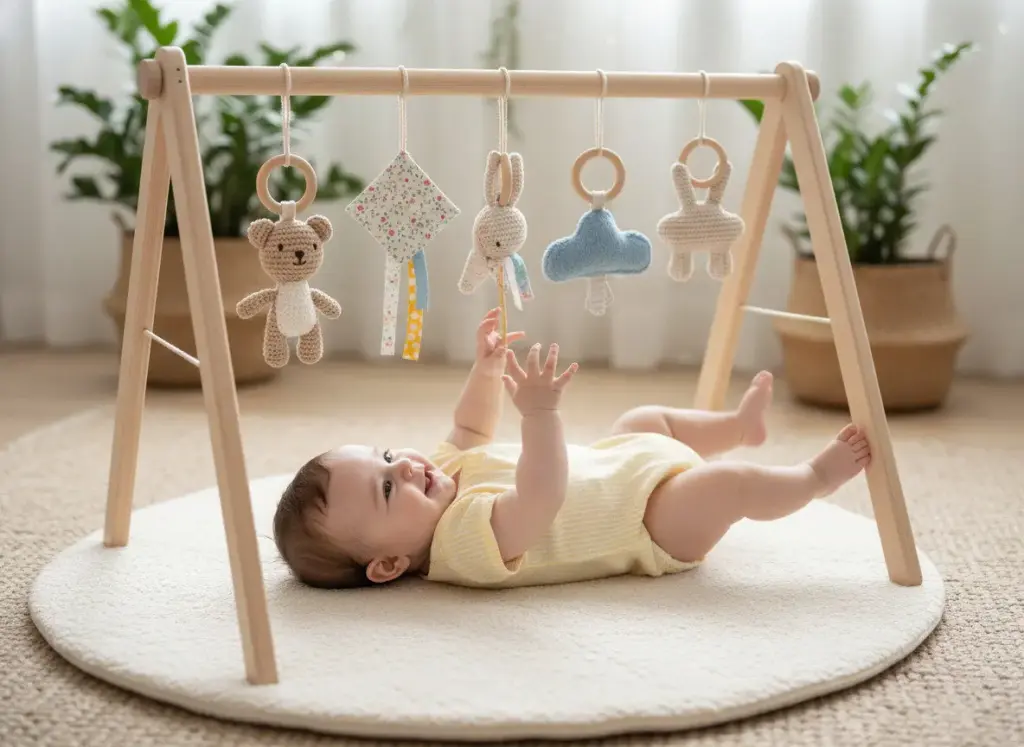
Encouraging movement is crucial for your baby’s physical development. A movement zone with a DIY baby gym helps develop coordination, strength, and spatial awareness through what child psychologists call “circular reactions” – when babies learn that their movements cause interesting effects.
What You’ll Need:
- Wooden dowels or PVC pipes
- Safe, non-toxic paint (optional)
- Hanging toys (wooden rings, fabric scraps, soft toys)
- Secure attachment method (ribbons, silicone links)
How to Set It Up:
Create an A-frame structure using wooden dowels or PVC pipes. If using wood, sand all edges smooth and consider applying a non-toxic finish. Attach various hanging elements at different heights to encourage reaching, grasping, and kicking.
Rotate the hanging toys weekly to maintain your baby’s interest. Include items with different textures, sounds, and visual appeal. Position the gym on your floor bed or play mat where your baby has room to move freely.
“The first stage of cognitive development is the ‘Sensorimotor’ period. During this time, babies experience the world through movement and their senses.”
4. Accessible Book Nook for Little Readers
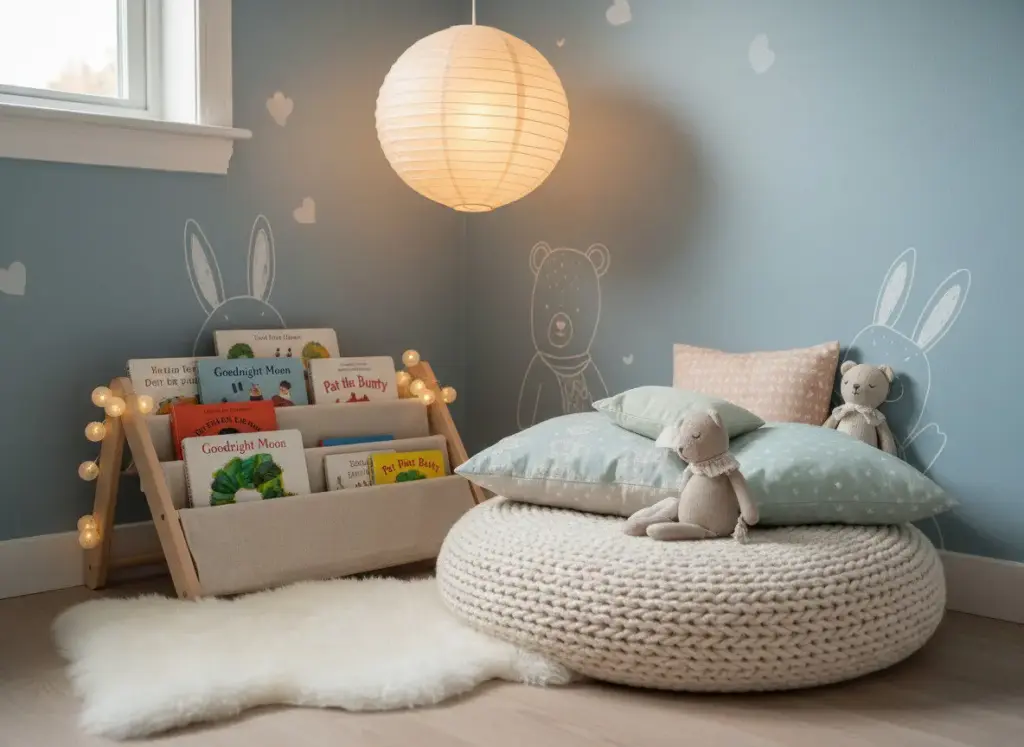
Reading to your baby is one of the best activities for cognitive development. Creating an accessible book nook within your play area encourages a love of books from an early age and provides a cozy spot for reading together.
What You’ll Need:
- Fabric book display or forward-facing bookshelf
- Board books with high-contrast images
- Soft cushion or pillow
- Small basket for book rotation
How to Set It Up:
Install a fabric book display or forward-facing bookshelf at your baby’s height. These displays allow the covers to face outward, making it easier for babies to see and select books. Fill with board books featuring simple, high-contrast images for younger babies or tactile elements for older ones.
Add a soft cushion nearby to create a cozy reading spot. Keep a small collection of books available and rotate them regularly to maintain interest. This approach follows Montessori principles of accessible, child-led learning environments.
A fabric sling bookshelf works perfectly for this purpose and can be easily mounted to the wall with secure anchors. These bookshelves grow with your child and will remain useful well into the toddler years.
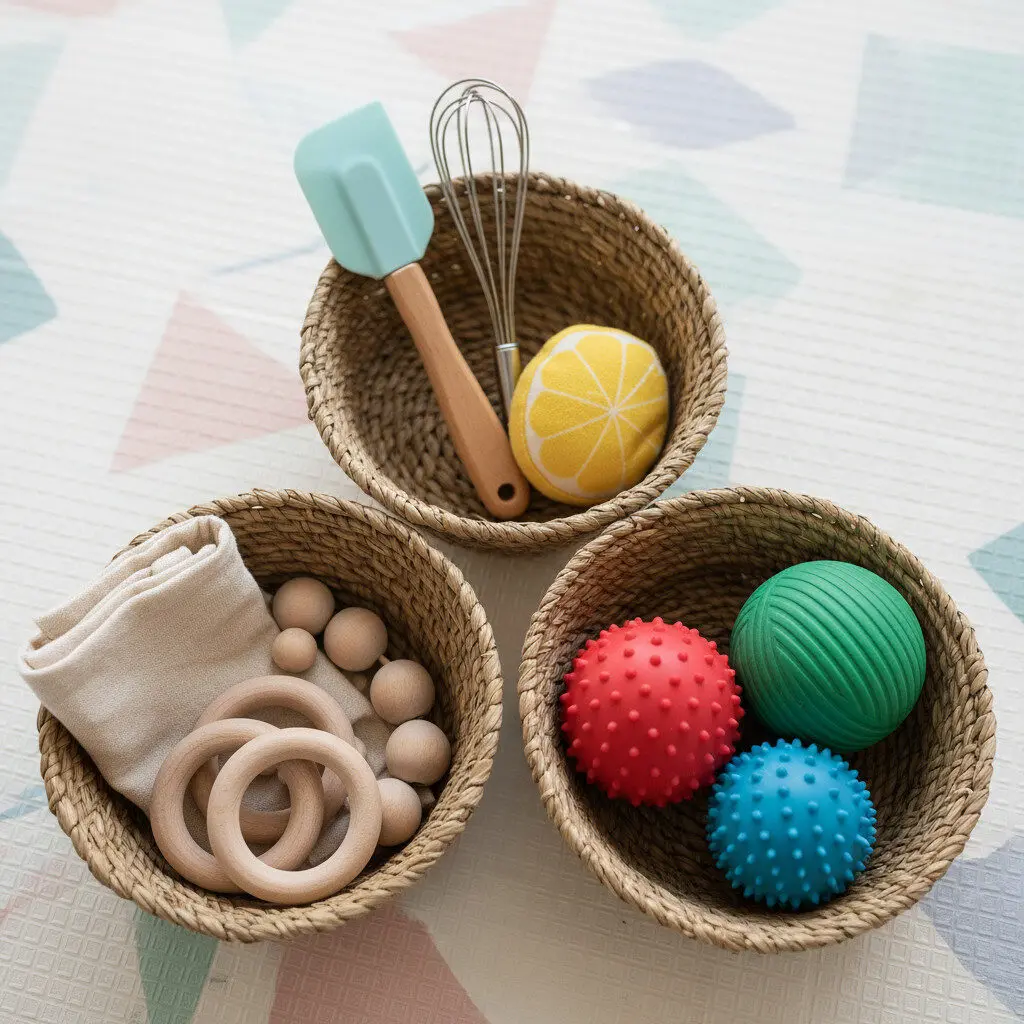
5. Themed Exploration Baskets
Exploration baskets filled with carefully selected objects provide focused sensory experiences for your baby. These Montessori-inspired treasure baskets encourage independent discovery and help develop concentration.
What You’ll Need:
- Shallow woven baskets (no sharp edges)
- Collection of safe objects grouped by theme
- Storage solution for basket rotation
Basket Theme Ideas:
- Natural materials (wooden rings, cotton cloths)
- Kitchen tools (silicone spatulas, whisks)
- Different textured balls
- Musical items (maracas, bells)
- Fabrics of different textures
- Safe household items (brushes, sponges)
How to Set It Up:
Create 3-5 themed baskets with 4-6 objects in each. Place one basket at a time in your baby’s play area, switching them out every few days to maintain interest. For younger babies, sit nearby and describe the objects as they explore. For older babies, allow independent exploration while you supervise.
These small woven baskets are perfect for creating exploration collections and can be repurposed as your child grows. They’re also aesthetically pleasing additions to your living space.
Research shows that babies actually engage more deeply with toys when fewer are available at once. Rotating toys in baskets helps prevent overstimulation and encourages focused play.
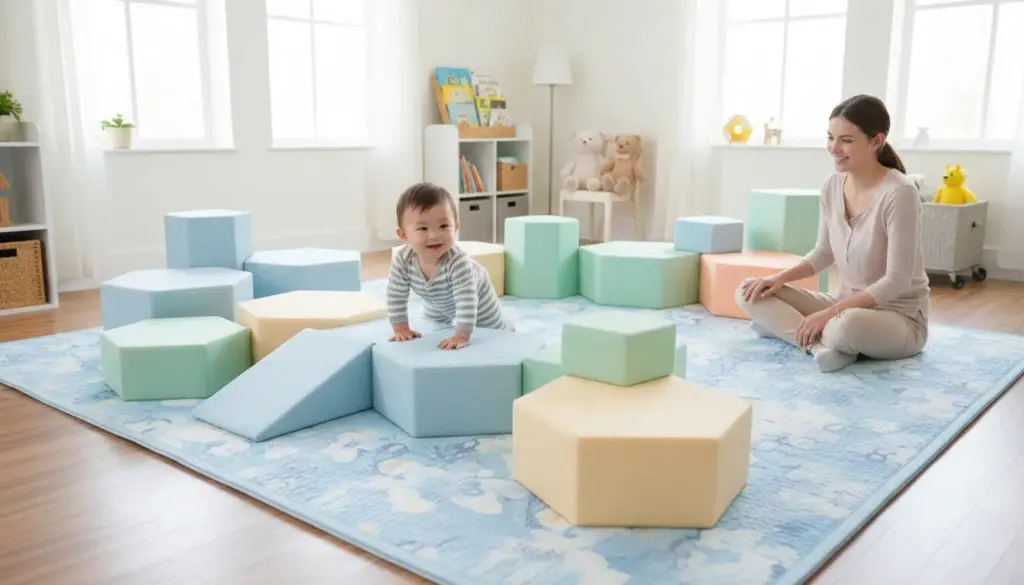
6. Safe Climbing Zone for Motor Development
As your baby becomes more mobile, creating safe climbing opportunities supports gross motor development and builds confidence. A simple climbing area can be created with household items and a few key purchases.
What You’ll Need:
- Foam blocks or cushions of varying heights
- Foam wedge or ramp
- Extra floor cushioning for landing areas
- Sturdy furniture for pulling up (secured to wall)
How to Set It Up:
Arrange foam blocks or cushions in a configuration that allows crawling over, around and between. Include a gentle ramp for babies to practice crawling up and down. Ensure all climbing elements are stable and placed on a soft surface with extra cushioning in potential landing areas.
For babies who are pulling up to stand, include a sturdy, low furniture piece secured to the wall that they can safely pull up on. As your baby’s skills develop, you can rearrange the elements to create new challenges.
Modular foam play sets like the Nugget Comfort can be perfect for creating safe climbing zones that grow with your child from baby to preschool years. These versatile cushions can be arranged in countless configurations to support different stages of development.
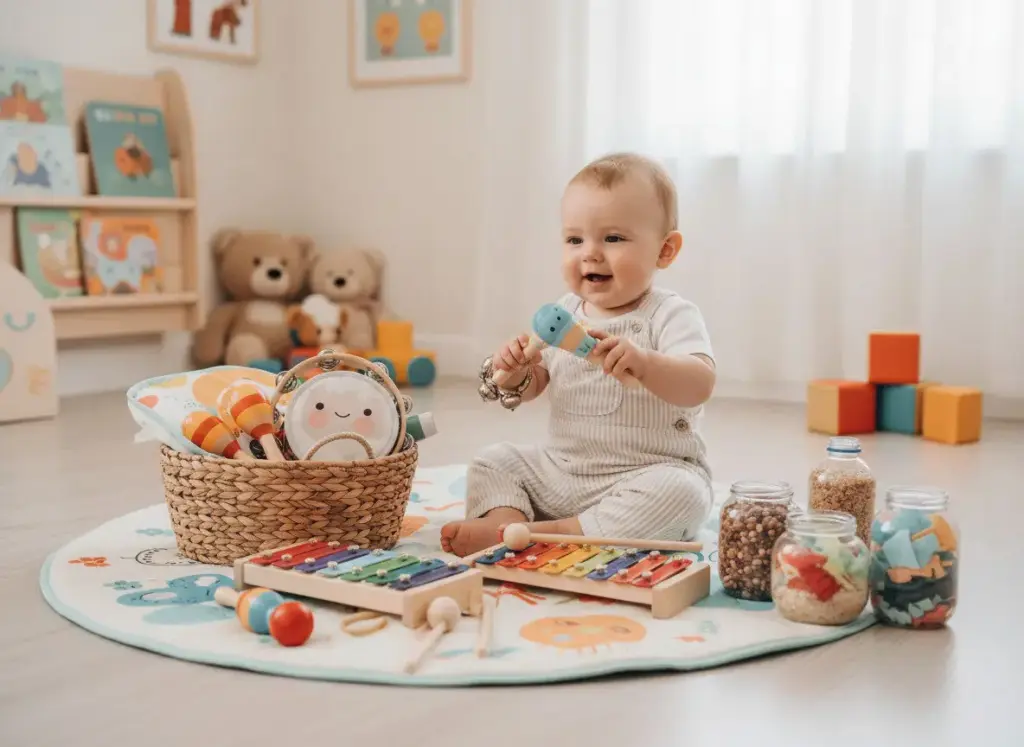
7. DIY Music Corner
Music exposure benefits babies’ brain development in numerous ways. Creating a simple music corner in your play area introduces rhythm, sound discrimination, and cause-and-effect learning through play.
What You’ll Need:
- Baby-safe musical instruments (maracas, tambourine)
- DIY sound makers (sealed containers with different fillings)
- Small xylophone or piano keyboard
- Basket for instrument storage
How to Set It Up:
Designate a corner of your play area for musical exploration. Include a mix of commercial baby instruments and DIY sound makers. Create simple shakers by filling sealed containers with different materials like rice, beans, or bells (ensuring they’re completely secure).
For younger babies, demonstrate how the instruments work and describe the different sounds. For older babies, allow free exploration while you provide language to describe what they’re hearing: “That’s a loud sound!” or “The bells make a tinkling sound.”
Rotate instruments regularly and incorporate music time into your daily routine. Even simple egg shakers can provide endless fascination for babies as they discover cause and effect through sound.
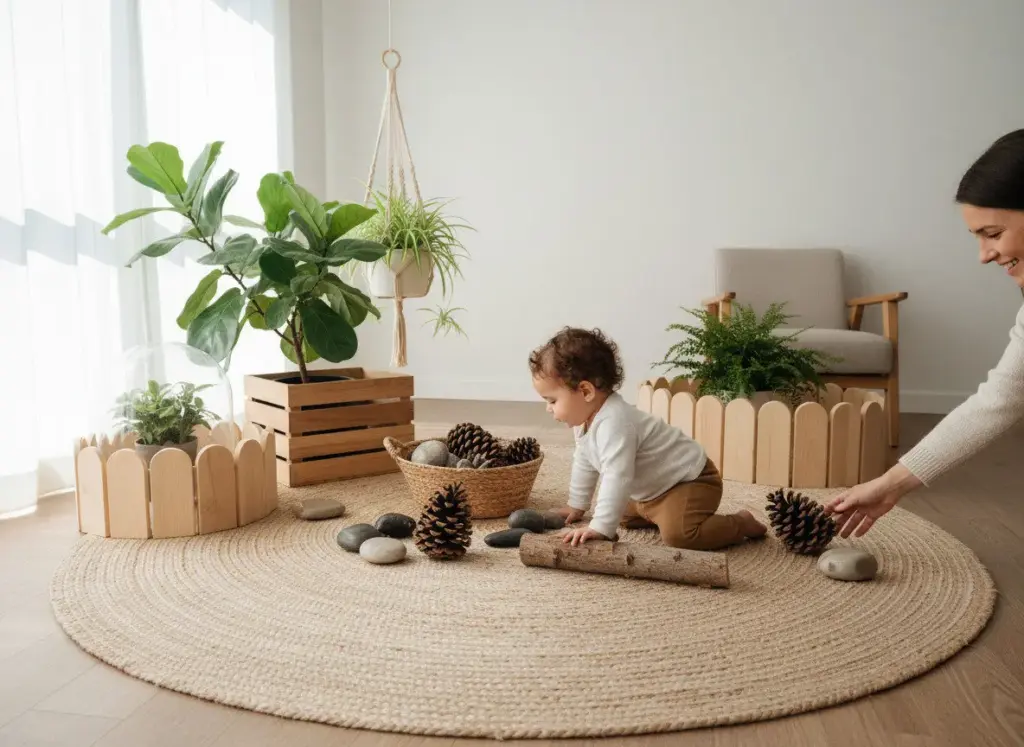
8. Indoor Nature Exploration Zone
Connecting babies with natural elements supports sensory development and builds a foundation for environmental awareness. An indoor nature zone brings the outside world in, especially valuable during extreme weather seasons.
What You’ll Need:
- Baby-safe plants in secure containers
- Collection of natural materials (large pinecones, smooth stones)
- Natural fiber mat or rug
- Nature-themed books or images
How to Set It Up:
Create a designated nature space with non-toxic plants placed securely out of reach for younger babies or within supervised reach for older ones. Add a collection of natural materials that are large enough not to be choking hazards, such as large pinecones, smooth stones, or branches with interesting textures.
Place these items on a natural fiber mat to define the space. Add nature-themed board books or images nearby. For younger babies, describe the natural elements as they observe them. For older babies, allow supervised exploration of safe natural items.
Always research plants thoroughly to ensure they’re non-toxic before bringing them into your baby’s environment. Keep small natural items like acorns or small stones away from babies who are still mouthing objects.
9. Peek-a-Boo and Object Permanence Play Station
Understanding that objects continue to exist even when out of sight (object permanence) is a crucial cognitive development for babies. A dedicated station for peek-a-boo and hiding games supports this important milestone.
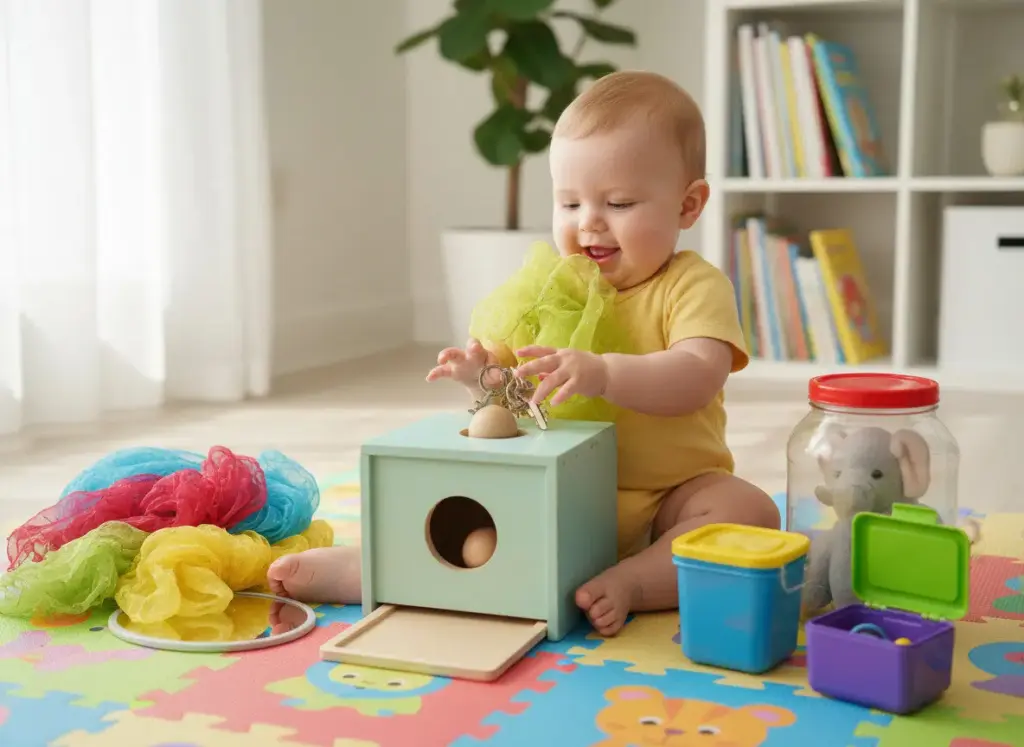
What You’ll Need:
- DIY object permanence box (or purchased version)
- Lightweight scarves for peek-a-boo
- Containers with lids for hiding objects
- Small toys for hiding and finding
How to Set It Up:
Create or purchase an object permanence box where balls can be dropped and reappear. Add a collection of lightweight scarves for traditional peek-a-boo play. Include containers with easy-open lids where objects can be hidden and found.
Demonstrate how to use these materials, then allow your baby to explore. For younger babies, you’ll lead the play. For older babies, they’ll begin initiating peek-a-boo games themselves as they master the concept of object permanence.
Simple cardboard boxes with holes cut in the top and side can make excellent DIY object permanence toys. Just ensure all edges are smooth and the box is sturdy enough not to collapse during play.
10. Baby’s First Art Space
Even the youngest babies can begin to explore art materials with the right setup. A dedicated art space introduces sensory experiences, cause and effect, and eventually creative expression.
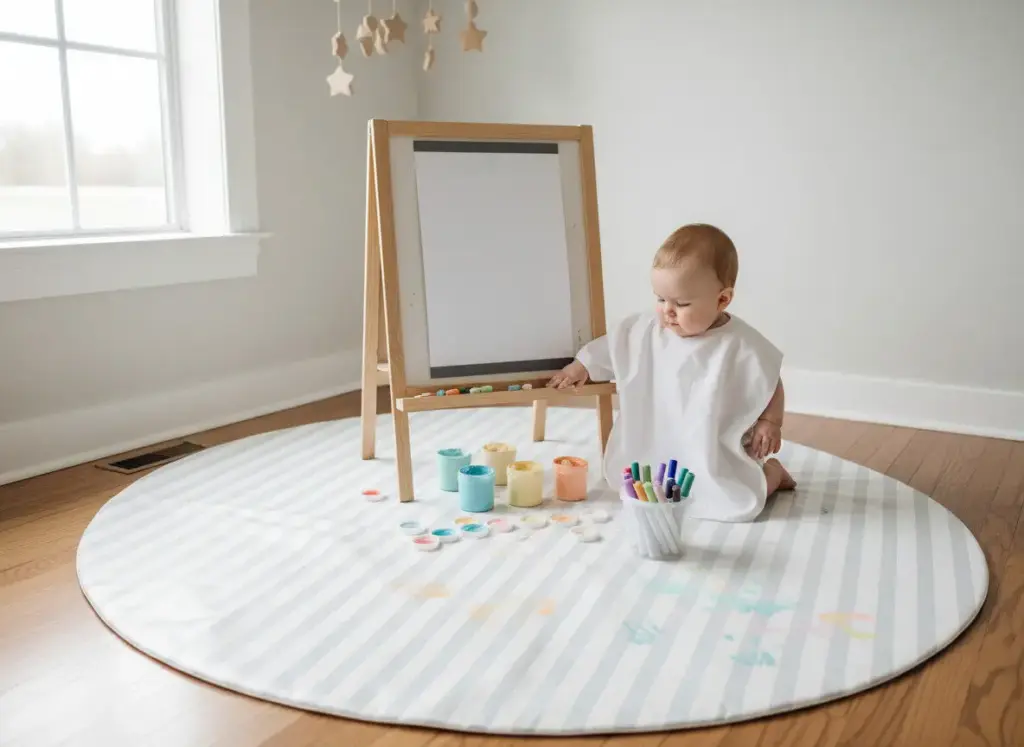
What You’ll Need:
- Small easel or tray for art materials
- Non-toxic, washable finger paints
- Large paper sheets
- Washable mat for floor protection
- Art smock or old shirt
How to Set It Up:
Create a designated art space with a washable mat underneath for easy cleanup. For younger babies, offer supervised finger painting experiences using edible materials like yogurt colored with food coloring. For older babies, introduce washable finger paints and chunky crayons.
Keep art sessions short and focused on the sensory experience rather than creating a finished product. Have cleanup supplies ready and consider doing messy art near a sink or bathroom for easy washing afterward.
A small tabletop easel can be perfect for baby art experiences and will grow with your child into the toddler years. Look for one with a paper roll holder for easy refreshing of the art surface.
Putting It All Together: Creating Your Complete DIY Baby Play Area
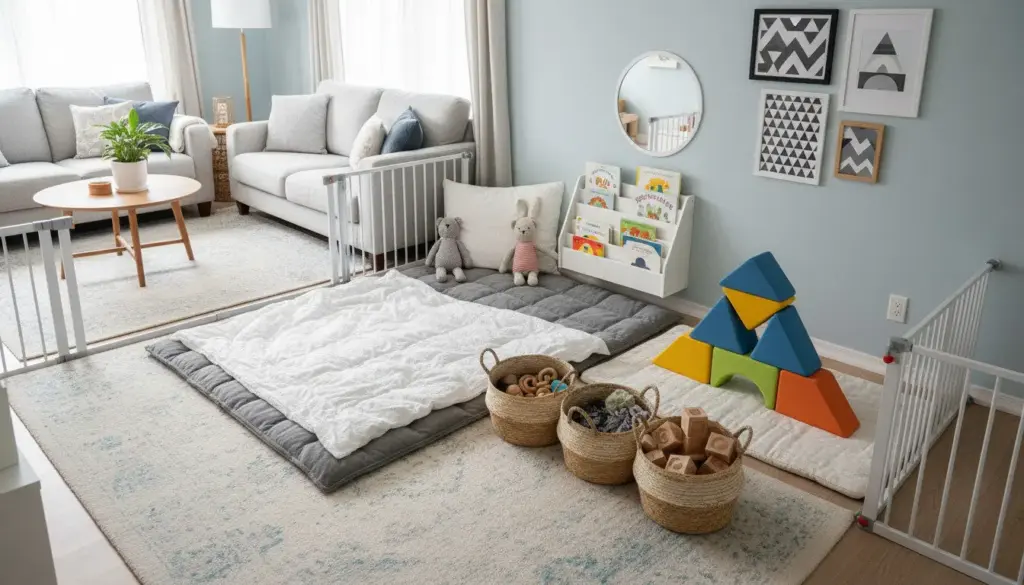
You don’t need to implement all ten ideas at once or have a dedicated playroom to create an effective play area. Start with the floor bed as your foundation, then add elements based on your baby’s current interests and developmental stage.
Tips for Success:
- Rotate materials – Keep only a few options available at once and switch them regularly to maintain interest
- Observe your baby – Notice which elements engage them most and expand on those interests
- Keep it simple – Babies can become overwhelmed with too many choices
- Integrate with your living space – Choose aesthetically pleasing materials that won’t make your home feel cluttered
- Prioritize safety – Regularly check all elements for wear and potential hazards
Remember that the most important element of any play area is you! While these DIY spaces encourage independent exploration, your interaction, conversation, and presence remain the most valuable developmental tools for your baby.
Ready to Create Your DIY Baby Play Area?
Start with the elements that best match your baby’s current developmental stage and the space you have available. The beauty of these DIY ideas is that they can be implemented gradually and adapted as your baby grows.
Conclusion: The Gift of Purposeful Play
Creating a DIY baby play area is more than just setting up a space—it’s about providing an environment that respects your baby’s capabilities and supports their natural development. By thoughtfully designing play zones that encourage movement, exploration, and sensory experiences, you’re giving your baby the gift of purposeful play.
Remember that these play areas will evolve as your baby grows. What works at six months will need adjustment at nine months and again at a year. By observing your baby’s interests and abilities, you can continuously adapt your DIY play area to meet their changing needs.
The time and thought you invest in creating these spaces now will pay dividends in your baby’s development and your family’s enjoyment of these precious early years. Happy playing!