Easter morning brings excitement. Children wake up early. Traditional egg hunts are fun, but this year can be different. These creative Easter egg hunt ideas transform a simple activity into an unforgettable experience.
Every family deserves fresh traditions. The same old backyard hunt gets predictable. Kids crave novelty and challenge. These unique approaches spark imagination and create lasting memories that children will treasure for months to come.
Planning the perfect hunt takes creativity. Whether you have toddlers or teenagers, indoor space or a sprawling yard, these ideas adapt to any situation. Each concept brings new excitement to this beloved spring holiday tradition.
1. Glow in the Dark Night Hunt
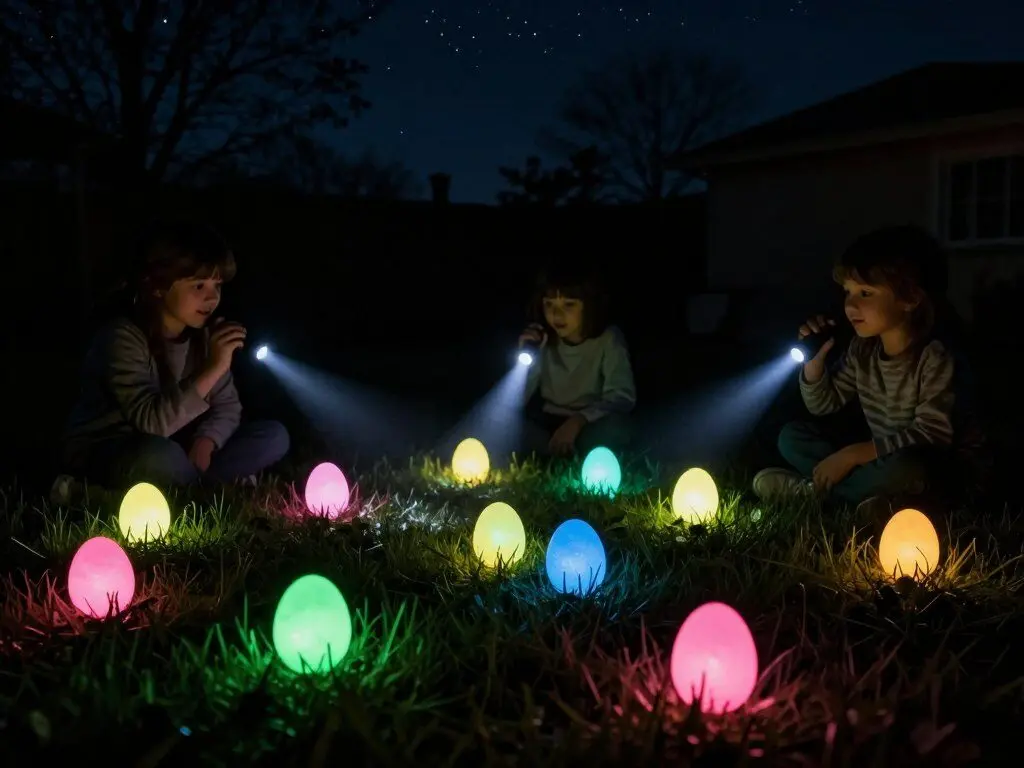
Darkness transforms an ordinary hunt into magical adventure. Wait until sunset falls completely. Hide glow stick eggs throughout your yard or house. Children use flashlights to navigate and discover hidden treasures.
The excitement builds as daylight fades. Little ones feel brave exploring familiar spaces that look completely different after dark. Teenagers enjoy the challenge of spotting subtle glows hidden in creative locations.
Preparation Steps
- Purchase glow sticks and plastic eggs one week early
- Insert glow sticks into eggs right before hiding
- Create a safe boundary for younger children
- Test the darkness level in your hunting area
- Provide each child with their own flashlight
Safety Considerations
- Mark any obstacles with reflective tape
- Keep adults stationed in different zones
- Establish clear start and end times
- Remove any tripping hazards before dark
- Have backup lighting ready if needed
This creative approach works wonderfully for all ages. Younger children enjoy the novelty of hunting in the dark. Older kids appreciate the added difficulty of finding eggs in low light conditions. The glow creates photo opportunities that capture genuine excitement and wonder.
2. Rainbow Color Coded Hunt
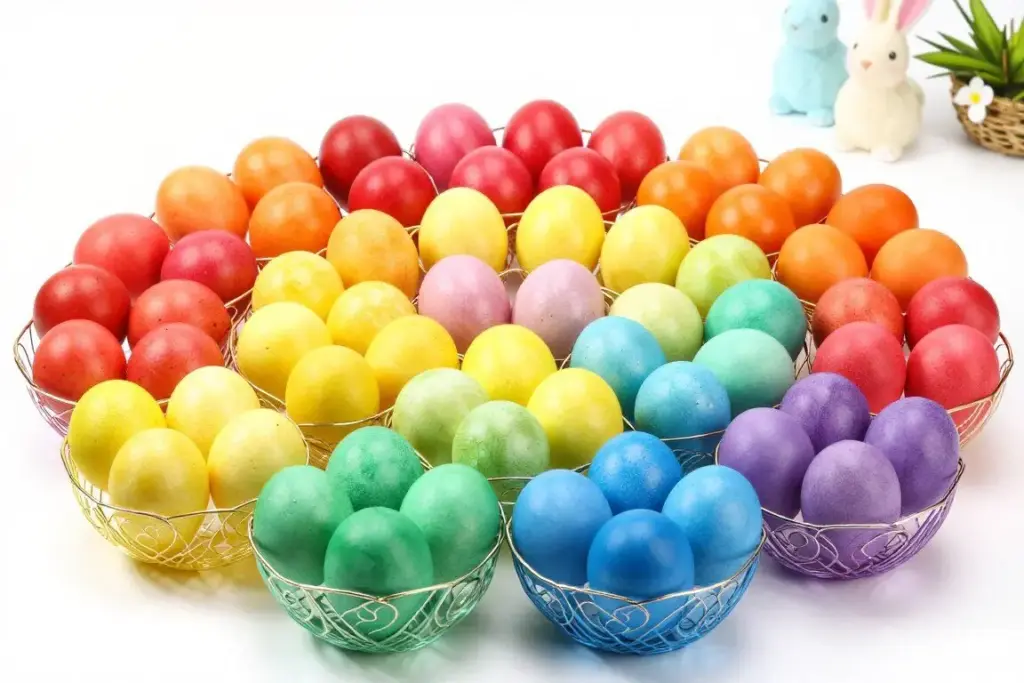
Assign each child a specific color. They can only collect eggs matching their designated shade. This system prevents older kids from grabbing everything first. Everyone gets equal opportunity to find their special eggs.
The color coding solves common hunt problems. Toddlers compete fairly against older siblings. Parents hide eggs strategically based on difficulty levels for each color. Younger children get easier spots while teenagers face real challenges.
- Purchase eggs in six distinct rainbow colors
- Create a color assignment chart before the hunt
- Hide easier colors in obvious spots for toddlers
- Place challenging colors in tricky locations for older kids
- Use the same number of eggs per color for fairness
- Allow trading after the hunt ends
This method extends the fun beyond finding eggs. Kids enjoy trading their collected items with siblings afterward. A green egg might contain chocolate while a blue one holds a small toy. The exchange becomes part of the holiday excitement and teaches negotiation skills.
3. Puzzle Piece Treasure Hunt
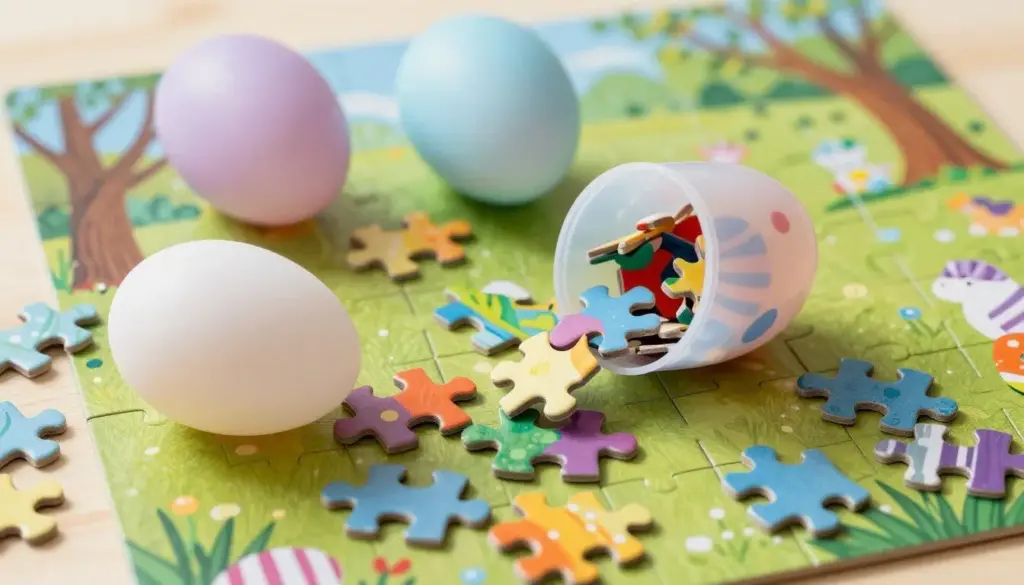
Break a puzzle into pieces and hide each piece inside an egg. Children must find all the eggs to complete the picture. The finished puzzle reveals their grand prize location or a special message from the Easter bunny.
This concept adds problem-solving to physical activity. Kids work together or compete to gather pieces faster. The hunt continues indoors as they assemble their discovery. A simple twenty-piece puzzle works perfectly for this creative activity.
Pro Tip: Write the prize on the puzzle’s back before breaking it apart. This creates anticipation as pieces come together to reveal their reward. Choose age-appropriate puzzle difficulty to match your children’s skill levels.
Purchase a spring-themed puzzle featuring bunnies or flowers. Take a photo of the completed puzzle first as a reference guide. Break it apart and seal individual pieces in eggs. Hide them throughout your chosen hunt area. The first person or team to complete their puzzle wins the grand prize.
4. Golden Ticket Special Prize
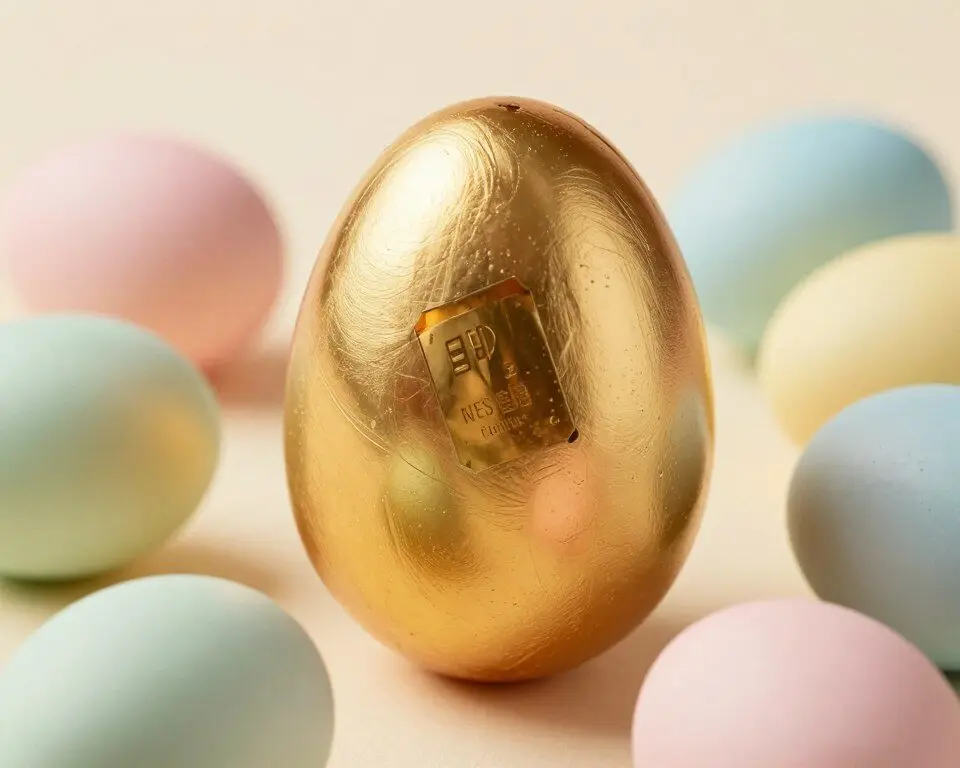
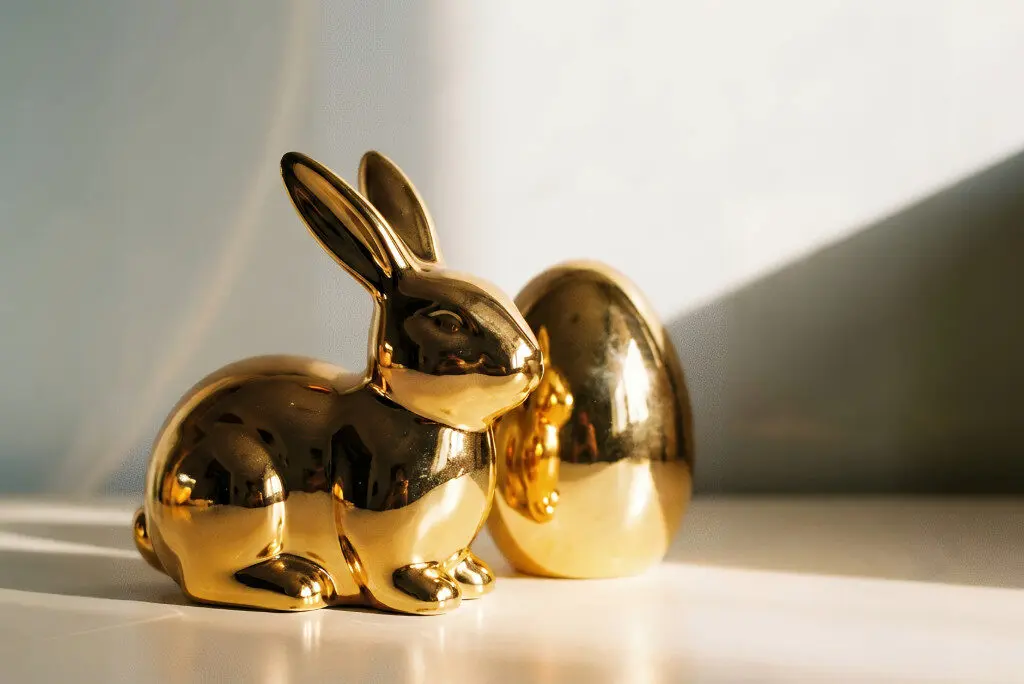
Hide one special golden egg among regular ones. This prize egg contains a bigger reward like a gift card, toy, or special privilege. Everyone hunts for regular eggs, but finding the golden one brings extra excitement and an amazing surprise.
The golden egg creates healthy competition. Kids search more carefully when something special awaits. Use a metallic gold plastic egg or spray paint a regular one. The visual difference makes it clearly special when discovered.
- Choose one truly special grand prize reward
- Hide the golden egg in a moderately difficult spot
- Fill regular eggs with smaller treats or candy
- Announce the golden egg existence before starting
- Create backup prizes for other participants
- Take photos of the golden egg discovery moment
This idea works brilliantly for mixed age groups. The special prize motivates teenagers to participate enthusiastically. Younger children still enjoy finding regular eggs even if they miss the golden one. Consider multiple golden eggs if you have many participants to ensure several kids experience winning something extraordinary.
5. Scavenger Hunt With Clues
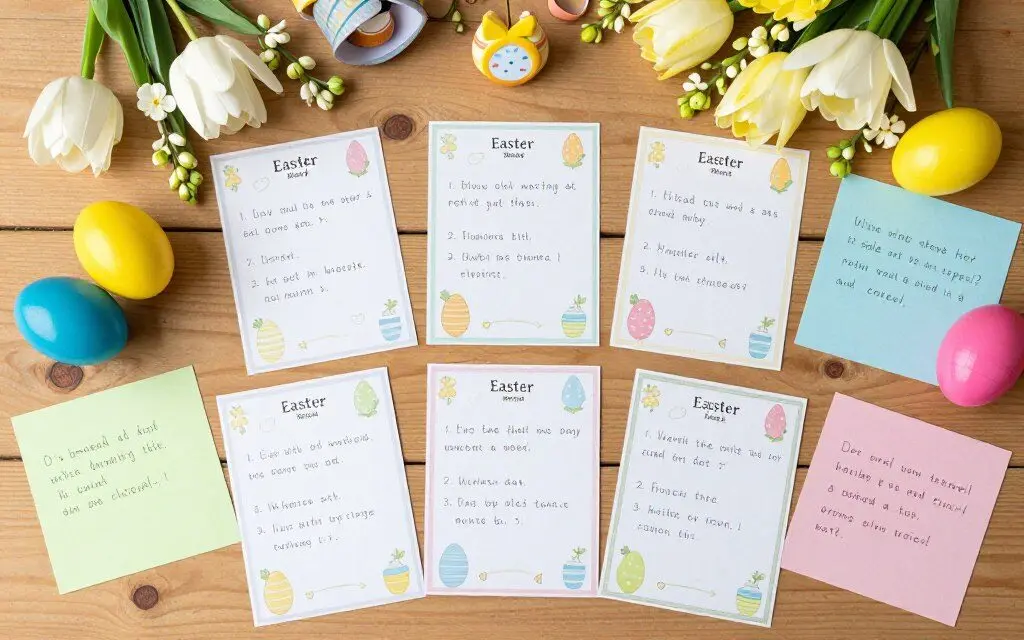
Replace random searching with strategic thinking. Each egg contains a clue leading to the next location. Children solve riddles to progress through the hunt. The final egg reveals the location of their Easter basket or grand prize.
Clue-based hunts challenge minds and bodies. Kids read carefully and think critically about each hint. Rhyming clues add extra fun. Simple riddles work for younger children while complex puzzles challenge teenagers and adults.
Want Weekly Creative Activity Ideas?
Join over 50,000 parents who receive our free newsletter with seasonal crafts, party games, and family activity ideas delivered every week. Make every holiday special!
Write clues tailored to your space. Reference specific furniture, outdoor features, or family inside jokes. Number each egg so kids follow the correct sequence. Start with easier clues and increase difficulty as they progress through the hunt.
6. Egg Toss Collection Game
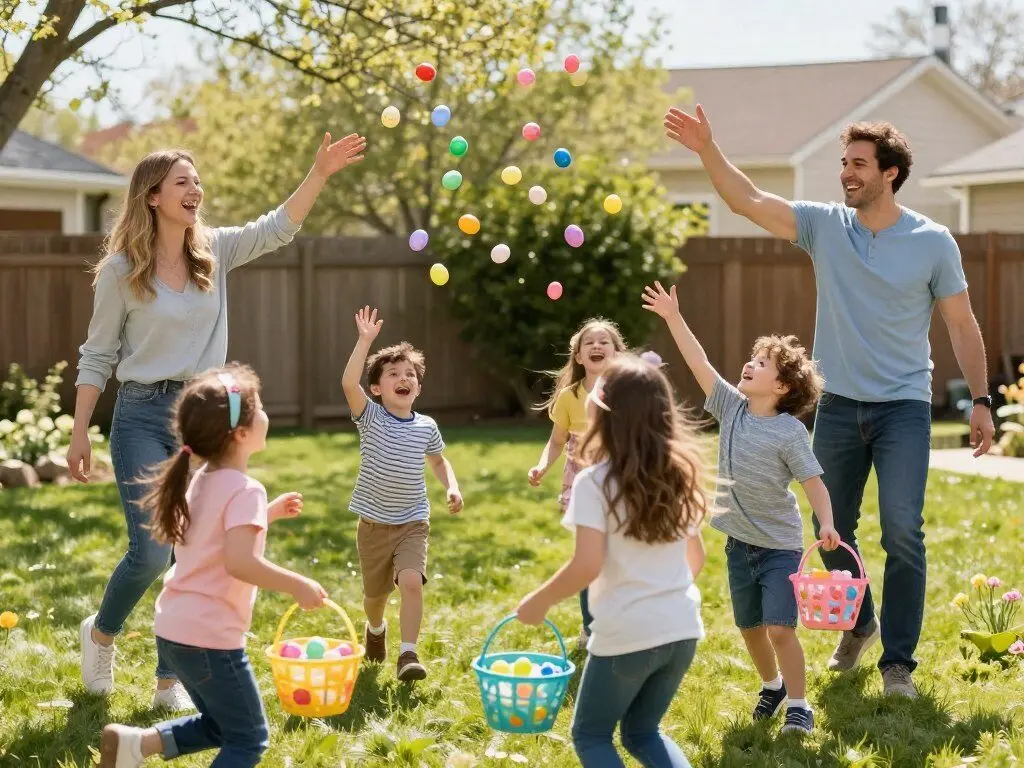
Parents stand in the center holding all the eggs. They toss eggs into the air one at a time. Children run to catch them or grab them quickly from the ground. Fast reflexes and quick thinking determine who collects the most treats.
This active approach gets everyone moving. Kids develop hand-eye coordination while having fun. Parents control the pace by adjusting toss frequency. Space tosses further apart for younger children or rapid-fire for competitive older kids.
Game Variations
- Toss eggs to specific children by name
- Alternate high and low throws for variety
- Use a beach towel to launch multiple eggs
- Create zones where certain colors land
- Add bonus points for catching versus grabbing
Equipment Needed
- Fifty to one hundred plastic eggs
- Large open space free of obstacles
- Collection baskets for each child
- Whistle or timer for game rounds
- Prizes to fill the eggs beforehand
This method works exceptionally well for large groups or parties. Multiple adults can toss simultaneously from different positions. Set time limits for each round. Kids enjoy the physical challenge combined with the thrill of collecting treats and toys.
7. Alphabet Egg Learning Hunt
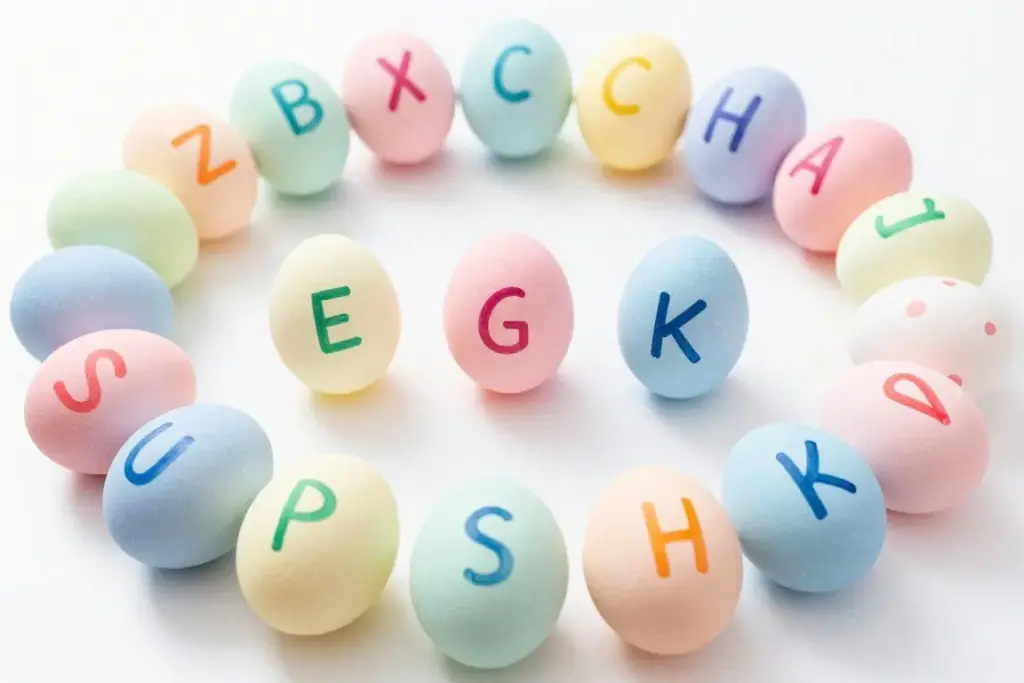
Mark each egg with a letter of the alphabet. Young children hunt for letters while learning. They can find letters in order, spell their name, or collect the entire alphabet. This creative Easter egg hunt combines education with holiday fun.
Learning feels like play with this approach. Kids practice letter recognition without realizing they study. Fill alphabet eggs with small items starting with that letter. An “A” egg might contain an apple-flavored candy while “B” holds a bouncy ball.
- Use permanent markers to write letters clearly
- Hide vowels in easier spots for quick success
- Create letter matching worksheets for afterward
- Fill eggs with corresponding letter items
- Play alphabet ordering games after collecting all eggs
- Take photos of children spelling words with their eggs
Preschool and kindergarten children benefit most from this hunt. Teachers can use this idea for classroom Easter celebrations. Parents reinforce school learning at home. Older siblings help younger ones identify letters, creating bonding opportunities during the holiday activity.
8. Indoor Map Treasure Hunt
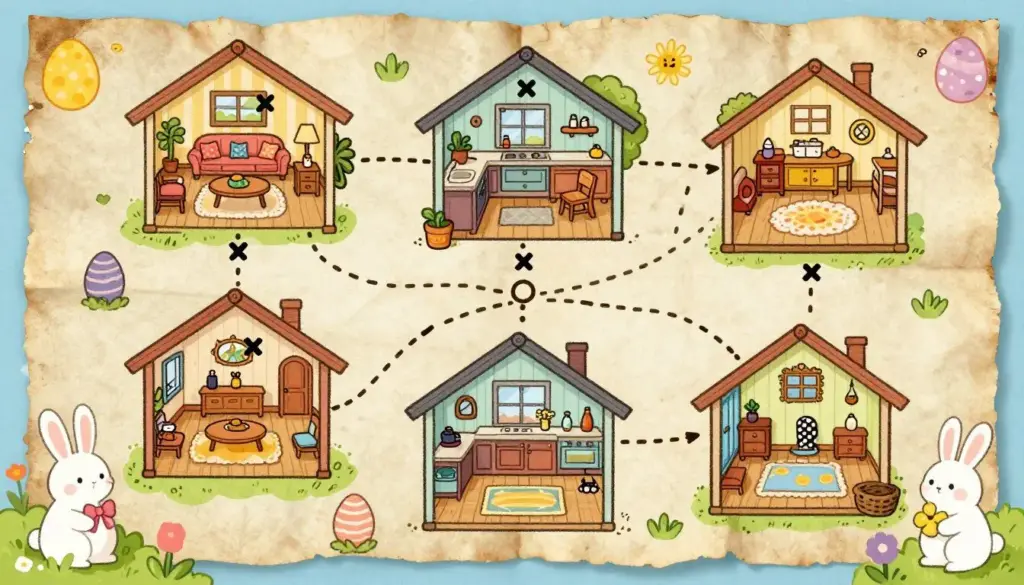
Draw a simple house map marking egg locations with X symbols. Children follow the map to discover hidden treats. This approach works perfectly for rainy Easter days when outdoor hunts become impossible. The treasure map adds adventure to indoor spaces.
Map reading teaches valuable skills. Kids learn spatial awareness and following directions. Create age-appropriate maps with varying detail levels. Toddlers need simple pictures while older children handle more complex floor plans with multiple rooms and levels.
Rainy Day Alternative: When weather prevents outdoor activities, the indoor map hunt saves the day. Hide eggs in creative indoor spots like inside shoes, behind picture frames, or inside kitchen cabinets. The map transforms familiar spaces into exciting treasure hunting grounds.
Use graph paper or regular paper to sketch your home layout. Mark furniture and key landmarks. Draw clear X marks where eggs hide. Number the locations to create a specific path through your house. Laminate the map so children can mark off found locations with dry erase markers.
9. Blindfolded Partner Hunt
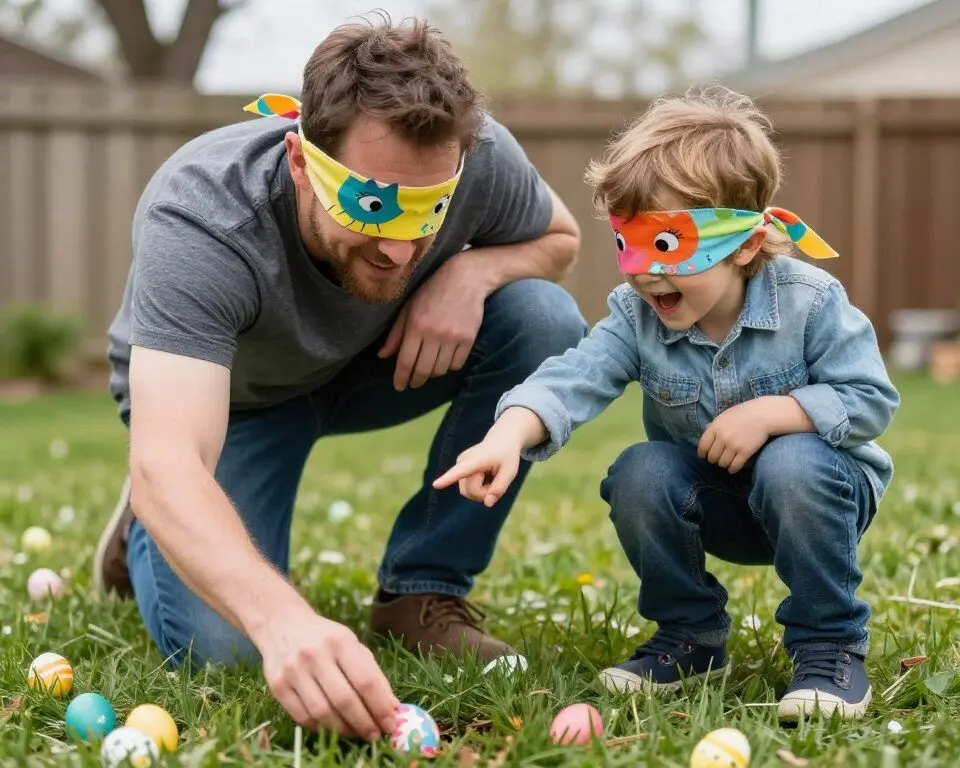
Pair children with adults in teams. Blindfold the adult while the child gives verbal directions. The child guides their partner to find eggs without touching them. This hilarious activity creates laughter and strengthens communication skills between family members.
Teamwork becomes essential in this creative hunt. Kids practice giving clear instructions. Adults learn to trust and listen carefully. The role reversal empowers children as leaders. Everyone enjoys watching adults stumble around while following kid directions.
- Use soft fabric blindfolds that block vision completely
- Clear the hunting area of dangerous obstacles
- Set boundaries children must keep adults within
- Allow only verbal directions, no physical guidance
- Time each team to add competitive element
- Switch roles halfway through the activity
This hunt variation works wonderfully for family gatherings. Grandparents can participate as blindfolded hunters guided by grandchildren. Record videos of the funny moments when adults walk in wrong directions or miss eggs right in front of them. The captured memories become treasured family keepsakes.
10. Bunny Trail Pathway Hunt
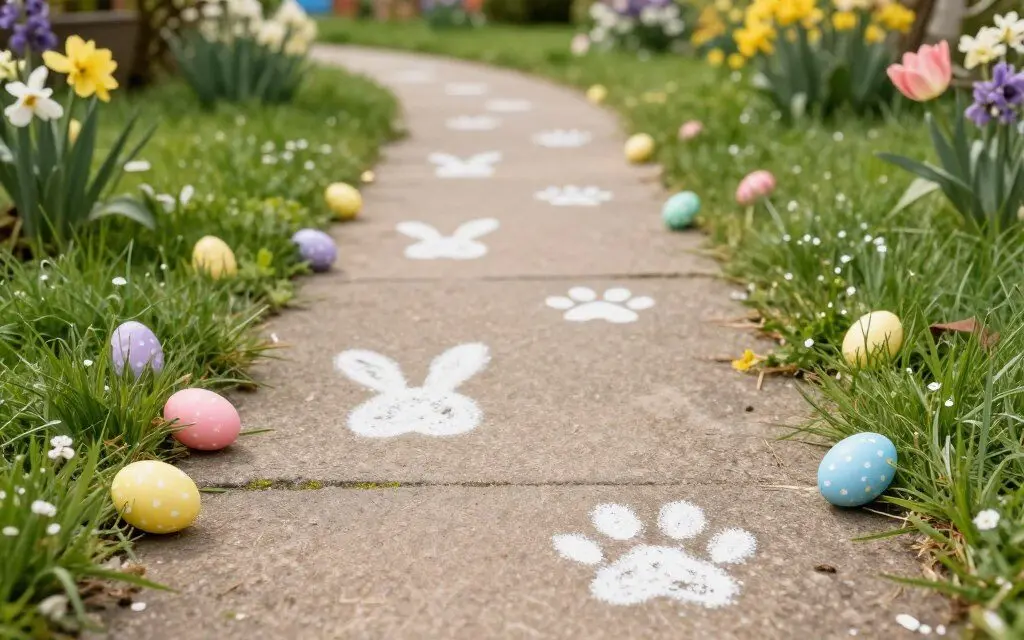
Create bunny footprint trails using flour, chalk, or cut paper paws. The trails lead children from their starting point to egg locations. Multiple colored trails guide different children to their designated areas. Following bunny tracks adds mystery and storytelling to the traditional egg hunt experience.
Younger children especially love this guided approach. They feel like detectives following clues. The visual trail prevents frustration from not finding any eggs. Parents control difficulty by making some trails straight while others wind through complex paths.
Trail Making Methods
- Spray flour through bunny stencils
- Draw paws with sidewalk chalk
- Cut paper paws and tape them down
- Use washable paint for concrete areas
- Create trails with Easter grass or ribbon
Creative Enhancements
- Make paws different sizes for different kids
- Add bunny messages along the trail
- Include rest stops with small treats
- End trails at personalized Easter baskets
- Hide bonus eggs just off the main path
The bunny trail concept combines well with other ideas. Trails can lead to puzzle pieces, golden eggs, or clue cards. Parents create elaborate stories about where the Easter bunny hopped throughout your property. Kids imagine following the actual bunny’s path from the night before.
11. Egg Relay Race Teams
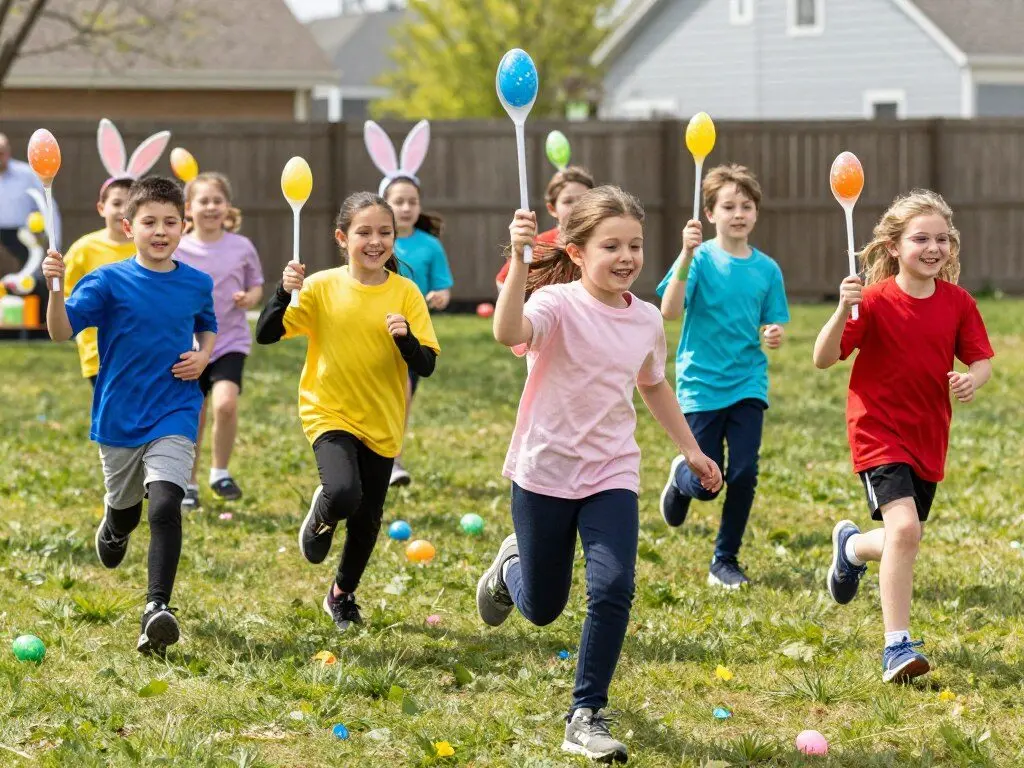
Divide kids into teams for relay-style egg collecting. The first teammate runs to find one egg and returns to tag the next player. Teams race to collect a specific number of eggs first. This format combines traditional egg hunting with athletic competition and team cooperation.
Relay races burn excess energy effectively. Kids who love running excel at this version. The team structure teaches cooperation and encouragement. Slower children contribute without feeling left behind. Everyone celebrates together when their team succeeds.
- Create equal teams based on age and ability
- Mark clear start and finish lines with chalk
- Designate specific hunting zones for each team
- Use different colored eggs for each team
- Set a target number of eggs to collect
- Award prizes to winning team members
Add challenges like balancing eggs on spoons while running. Require certain egg colors or patterns. Make players hop like bunnies instead of running. These modifications increase difficulty for older kids. Simpler versions work for toddlers and preschoolers just learning relay race concepts.
12. Sensory Bin Egg Dig
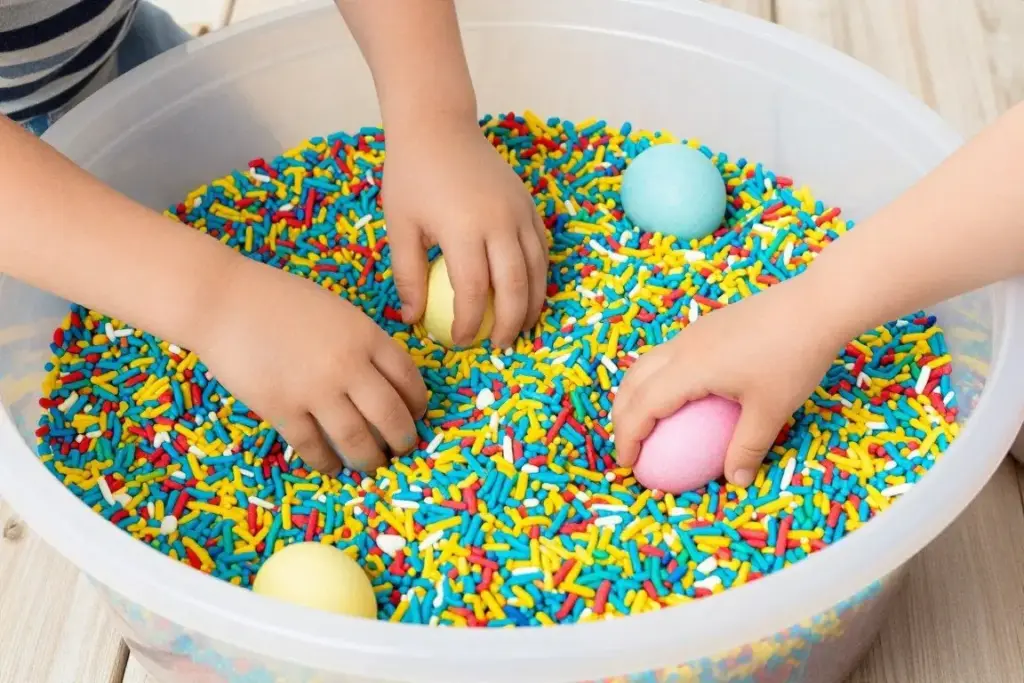
Fill a large container with rice, sand, or shredded paper. Bury plastic eggs inside the sensory material. Children dig through the contents to discover hidden treasures. This contained hunt works perfectly for toddlers and children with special sensory needs who might feel overwhelmed by traditional outdoor searches.
Sensory bins provide calming engagement. Kids explore different textures while hunting. The controlled environment reduces stress and competition. Multiple children can dig simultaneously in a large bin. This activity works beautifully for indoor celebrations or small spaces.
Rice Sensory Bin
Dye white rice with food coloring in rainbow colors. Mix colors together for visual appeal. Bury eggs at various depths. The rice texture provides satisfying digging experience.
Sand Discovery Box
Use play sand or kinetic sand for beach vibes. Add small shovels and pails. Children excavate eggs like archaeologists. Sand sticks to hands creating sensory fun.
Paper Grass Hunt
Shred colorful paper or use Easter grass. Layer eggs throughout the material. Kids push through the rustling paper. Easy cleanup option compared to loose rice or sand materials.
Sensory bins adapt to any space or situation. Apartment dwellers benefit from this contained approach. Teachers use sensory bins for classroom Easter activities. Parents appreciate the mess staying in one location. Add scoops, funnels, and cups to extend playtime beyond just finding eggs.
13. Underwater Pool Egg Dive
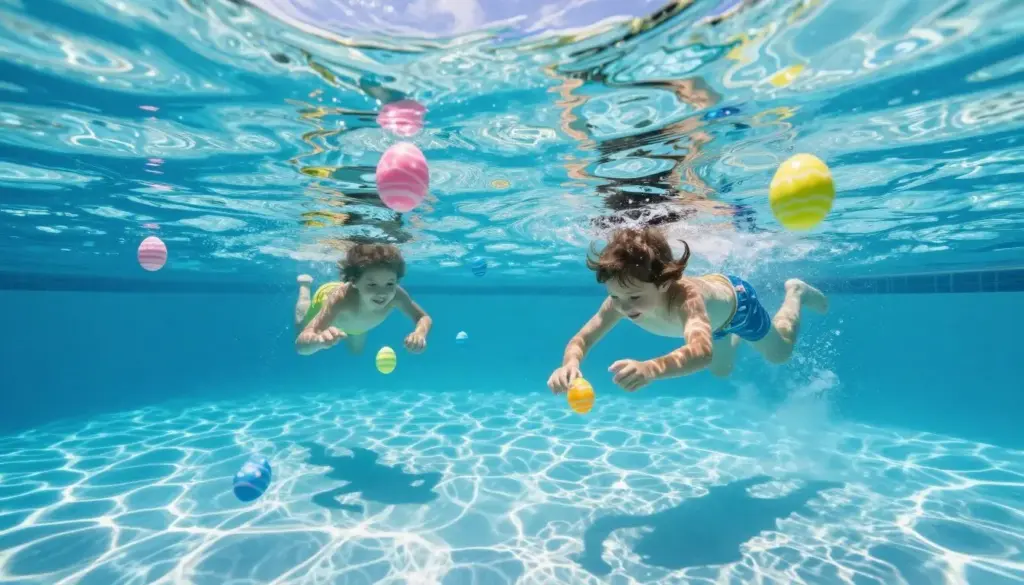
Fill eggs with items that make them sink. Toss eggs into the pool for an underwater hunt. Children dive and swim to collect treats from the pool bottom. This refreshing twist works perfectly for warm climates or late spring celebrations when swimming weather arrives.
Diving for eggs builds swimming confidence. Kids practice underwater skills while having fun. The pool hunt creates a unique Easter memory. Ensure all participants swim well enough to dive safely. Use a shallow end for younger or less experienced swimmers.
Safety First: Adult supervision is absolutely essential during pool egg hunts. Ensure all children are strong swimmers. Use US Coast Guard approved flotation devices for weaker swimmers. Have multiple adults watching from different pool angles. Remove eggs promptly if any child shows signs of fatigue or distress.
Fill eggs with coins, rocks, or marbles to ensure sinking. Test eggs beforehand to confirm they submerge completely. Mark pool boundaries children must stay within. Count eggs before and after to verify all items are recovered. This prevents accidental swimming incidents from missed eggs.
14. Mystery Box Egg Challenge
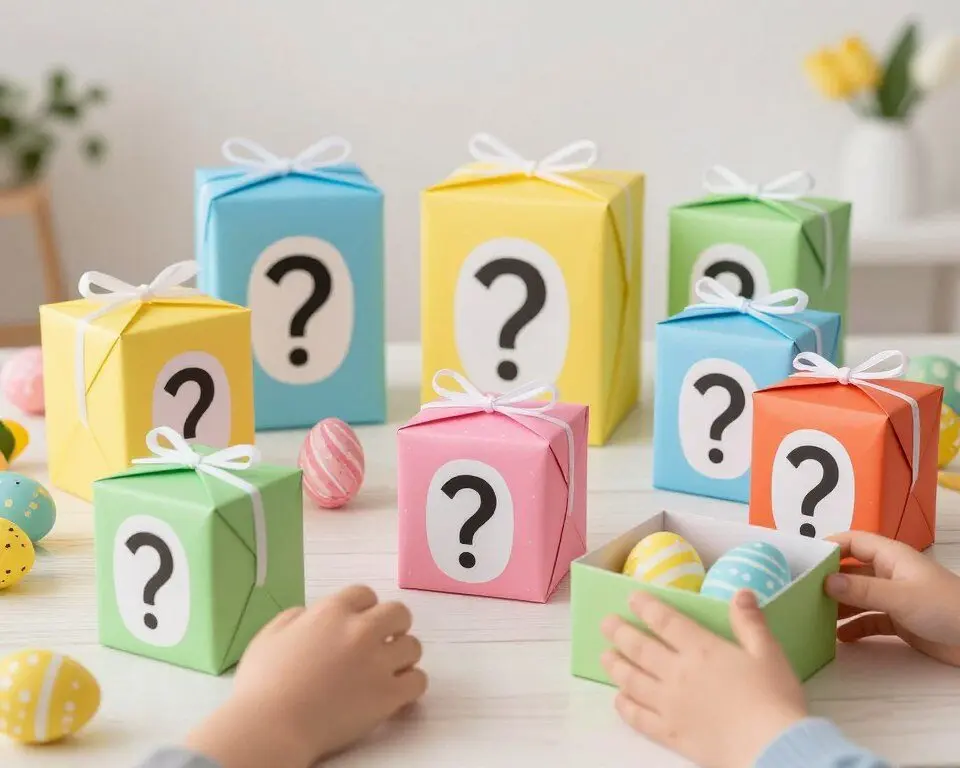
Place eggs inside decorated boxes or bags. Children shake boxes to guess contents without looking inside. They decide whether to keep their mystery box or trade with someone else. The gamble adds excitement and strategic thinking to egg collecting activities.
Mystery boxes teach decision making skills. Kids weigh risks and benefits before choosing. Some boxes contain amazing prizes while others hold simple candy. The uncertainty creates anticipation. Trading negotiations develop social skills and compromise abilities.
- Use same-sized boxes so shaking provides only clues
- Fill some boxes with multiple small eggs
- Include one or two extra special prize boxes
- Allow limited trades after initial selection
- Record reactions when boxes open simultaneously
- Create point systems where contents have different values
Decorate boxes with Easter themes and question marks. Number boxes so children remember their selection. Set rules about trading limits and timing. Consider letting kids work in pairs to share risk. The mystery element keeps everyone engaged even after the hunt portion ends.
15. Photo Clue Picture Hunt

Take photos of egg hiding spots before the hunt. Print pictures showing subtle views of locations. Children use photo clues to find eggs instead of searching randomly. This modern scavenger hunt combines technology with traditional Easter activities in an engaging way.
Photo hunts challenge observation skills. Kids study pictures carefully for location clues. Close-up photos make finding eggs harder while wide shots provide easier hints. Adjust difficulty by how much of the hiding spot you reveal in each picture.
Love These Creative Ideas?
Get our free Easter planning kit with printable games, decoration templates, and menu ideas. Plus receive seasonal activity suggestions delivered to your inbox throughout the year!
Use your smartphone to capture hiding spots. Print photos at home or at a local pharmacy. Laminate pictures for durability if reusing them in future years. Number photos to create a specific hunting order. Include partial views that make identification challenging but not impossible for your kids age group.
16. Egg Decorating Craft Hunt
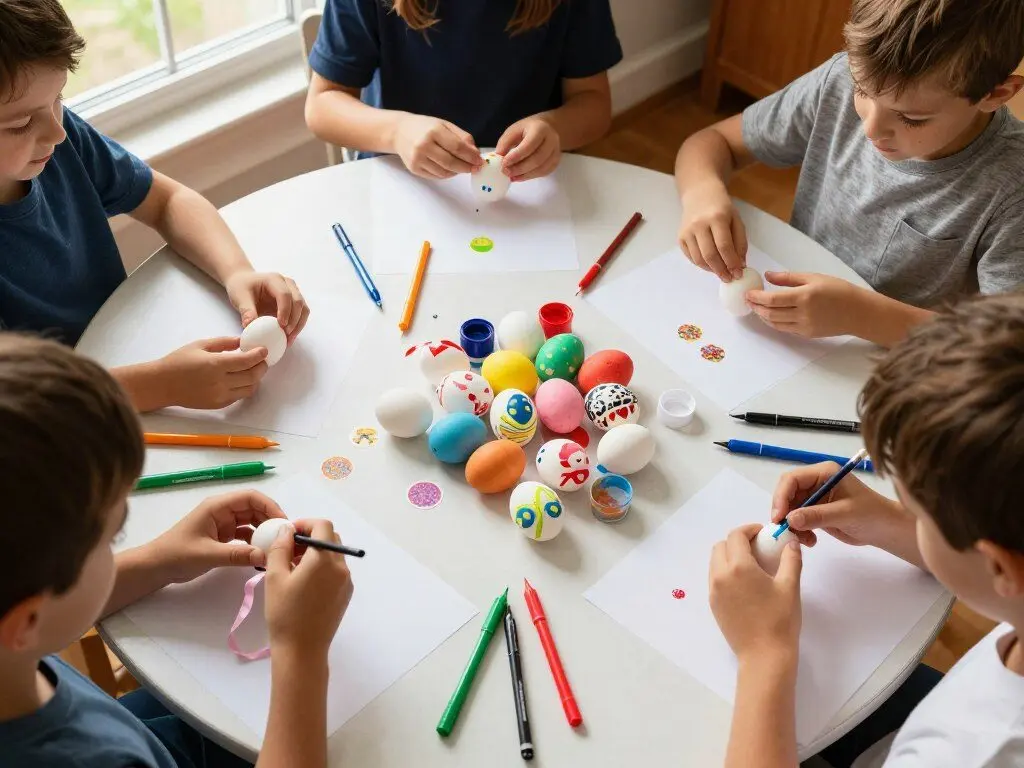
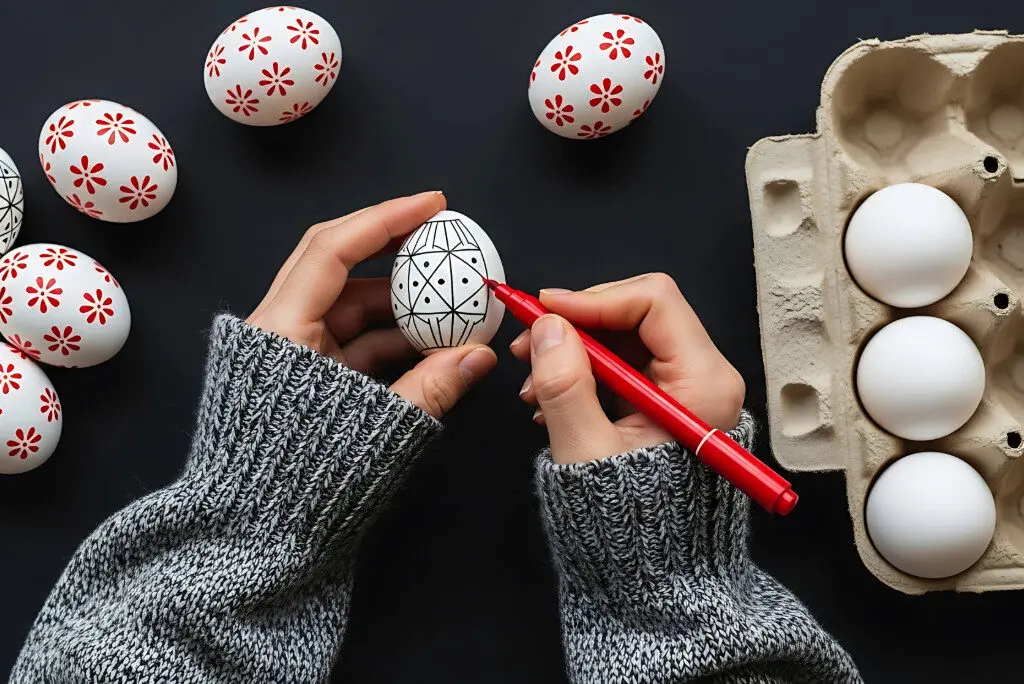
Hide empty eggs containing craft supplies instead of candy. Children collect eggs then sit together to create and decorate their finds. Items inside might include stickers, markers, small ribbons, or beads. The hunt transitions into a creative crafting session afterward.
This approach reduces sugar consumption while providing lasting keepsakes. Kids create personalized decorations they treasure beyond Easter day. The craft activity extends celebration time. Families bond while decorating together after the physical hunt ends.
Craft Supply Ideas
- Washable markers in spring colors
- Easter themed sticker sheets
- Glitter glue pens for sparkle
- Small ribbon pieces for bows
- Foam shapes and adhesive gems
- Washi tape in pastel patterns
Decoration Projects
- Create egg families with faces
- Design spring flower patterns
- Make animal characters like bunnies
- Add names to personalized eggs
- Build themed sets matching colors
- Construct mini egg sculptures
Provide plain white or clear plastic eggs for decorating. Set up a crafting station with tables, chairs, and protective covering. Play music while kids create their masterpieces. Display finished eggs in a special basket or on a decorated table. Take photos of proud artists with their completed designs.
17. Egg Bowling Game Hunt
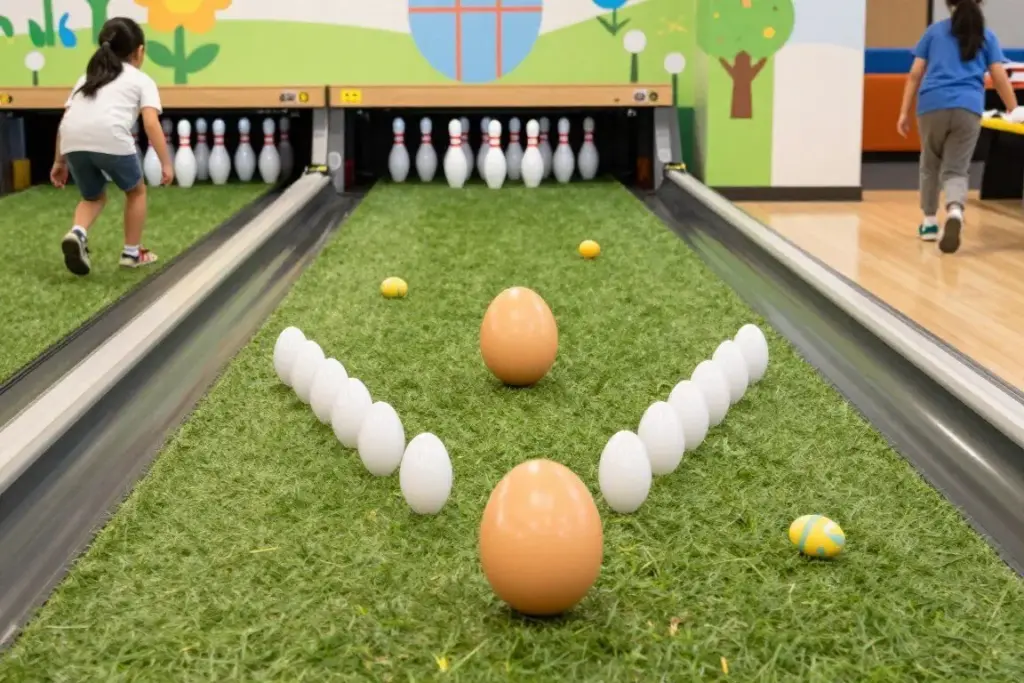
Set up eggs as bowling pins in a triangle formation. Children roll collected eggs toward the setup trying to knock down pins. Each knocked pin becomes theirs to keep. This game extends the Easter celebration beyond just collecting eggs into active play that everyone enjoys.
Bowling combines egg hunting with skill development. Kids practice aim and coordination. Competition stays friendly and fun. Set up multiple bowling lanes for larger groups. Players bowl with eggs they found during the initial hunt portion of Easter activities.
- Create stable bowling pins using heavier eggs
- Mark bowling line distance with tape or chalk
- Award points for different pin combinations knocked
- Let children bowl with their favorite found egg
- Set up tournament brackets for family competition
- Provide prizes for highest scores achieved
Use ten eggs as pins and any found egg as the bowling ball. Adjust distance based on age and ability. Younger kids bowl from closer positions. Teens face longer lanes requiring more skill. Keep score on a simple chart. Celebrate strikes and spares with special rewards or privileges.
18. Egg Exchange Dice Game
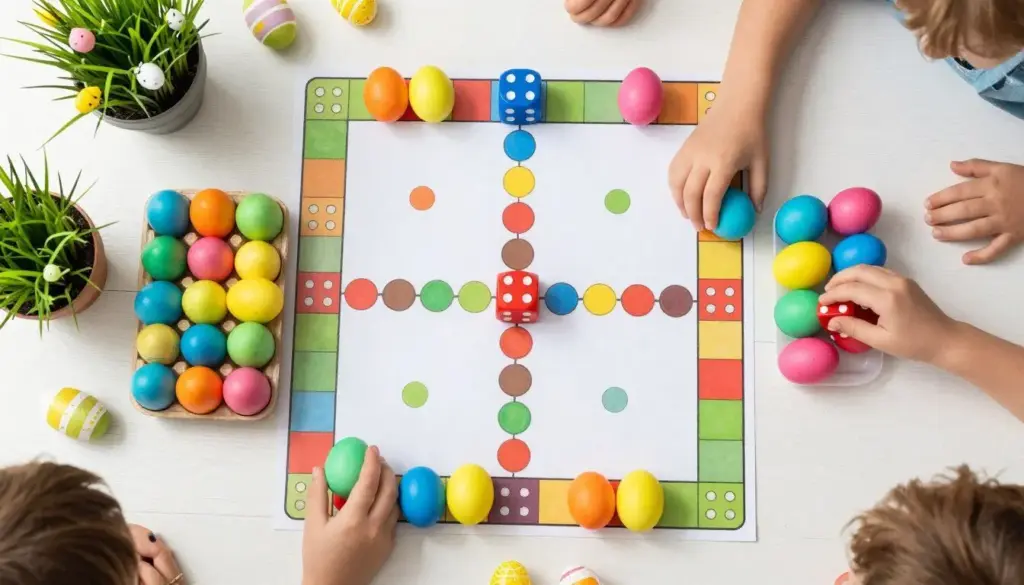
After collecting eggs, gather everyone in a circle. Take turns rolling dice that determine trading actions. Roll a three and trade with the person on your left. Roll a five and everyone passes eggs clockwise. The dice add surprise to who keeps which eggs and what prizes they ultimately receive.
The exchange game equalizes egg distribution. Kids who found fewer eggs might end up with better prizes. Luck replaces finding ability. Everyone stays engaged throughout the entire game. Anticipation builds with each dice roll as egg ownership constantly changes.
Game Rules: Assign actions to each dice number. One means keep your eggs. Two means trade with anyone. Three means pass left. Four means pass right. Five means everyone passes clockwise. Six means steal from anyone. Play continues for ten minutes or twenty rolls per person.
Use oversized foam dice that everyone sees clearly. Print rule cards so children remember what each number means. Fill eggs with varying prizes from small candies to larger toys. The suspense of not knowing what you will ultimately keep makes this game incredibly exciting for all participants.
19. Symbol Story Religious Hunt
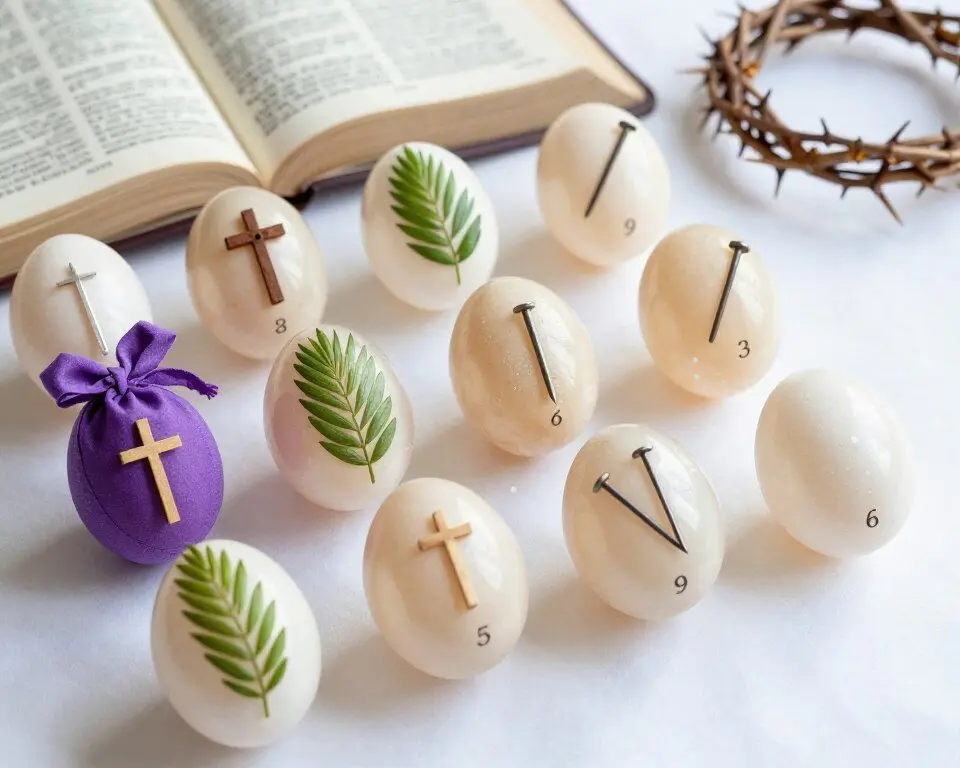
Fill eggs with symbols representing the Easter story. Palm leaves, purple cloth, a small cross, and an empty egg symbolize different parts. Children find numbered eggs in order. Families discuss each symbol’s meaning together. This hunt teaches religious significance while maintaining fun traditions.
Religious hunts honor Easter’s true meaning. Kids learn Bible stories through hands-on discovery. Parents guide discussions about each symbol found. The activity combines education with celebration. Grandparents often appreciate this meaningful approach to Easter egg hunts.
- Use palm fronds or green paper for Palm Sunday
- Include purple fabric representing royalty and suffering
- Add tiny crosses symbolizing crucifixion
- Place white stones showing the tomb
- Leave final egg empty showing resurrection
- Attach scripture references to each symbol
Purchase pre-made religious Easter egg sets or create your own. Explain symbols before the hunt or reveal meanings as children find them. Read corresponding Bible verses with each discovery. This approach works wonderfully for church Easter events or families wanting to maintain spiritual focus during holiday celebrations.
20. Creating Unforgettable Easter Memories

These creative Easter egg hunt ideas transform ordinary celebrations into extraordinary memories. Each approach offers something unique. Some ideas challenge physical skills while others develop mental abilities. Certain hunts work best outdoors while others suit indoor spaces perfectly.
Mix and match ideas to create your perfect hunt. Combine color coding with puzzle pieces. Add a golden egg to any hunt style. Try glow in the dark eggs with a scavenger hunt format. The possibilities are endless when creativity meets tradition.
Start planning your Easter celebration early. Purchase supplies ahead of time. Test ideas with family members. Adjust difficulty based on your children’s ages and abilities. Document the day with photos and videos capturing genuine excitement and joy.
Easter provides opportunities for family bonding. These hunts create stories children retell for years. The effort you invest in creative planning pays dividends in lasting memories. Make this Easter one your kids talk about all year long.
Never Run Out of Family Activity Ideas
Join our community of 50,000+ creative parents! Get weekly ideas for holidays, parties, rainy days, and family bonding. Plus instant access to our complete library of printable games, activities, and party planning guides.
Remember that perfect hunts adapt to your unique situation. Apartment dwellers can create amazing indoor experiences. Large yards offer space for elaborate outdoor adventures. Small families enjoy intimate hunts while big gatherings thrive on team competitions.
The most important element remains having fun together. Laugh when things go wrong. Celebrate each child’s success. Take breaks when needed. Focus on joy rather than perfection. These creative approaches guarantee an Easter celebration everyone will cherish and remember fondly.