

Being a stay-at-home mom comes with countless rewards, but it also brings financial challenges. You want to contribute to your household income without sacrificing precious time with your children. The good news? Pinterest offers a legitimate way to make money on your own terms.
Unlike traditional jobs that demand rigid schedules, Pinterest lets you work during naptime, early mornings, or late evenings. This platform reaches over 500 million active users each month, and many of them are ready to buy products, try services, and discover new ideas.
This guide shows you exactly how to make money on Pinterest as a stay-at-home mom. You’ll learn practical strategies that real mothers use to generate income. From affiliate marketing to selling your own products, these methods work whether you’re brand new to Pinterest or already have an account.
Why Pinterest is Perfect for Stay-at-Home Moms
Pinterest stands apart from other social media platforms because it functions as a visual search engine. People come to Pinterest with a purpose. They’re planning weddings, decorating nurseries, searching for recipes, and looking for products to solve their problems.
The platform’s audience aligns perfectly with opportunities to make money. Research shows that Pinterest users have higher household incomes and are more likely to make purchases than users on other platforms. When you create content on Pinterest, you’re reaching people who are actively ready to buy.
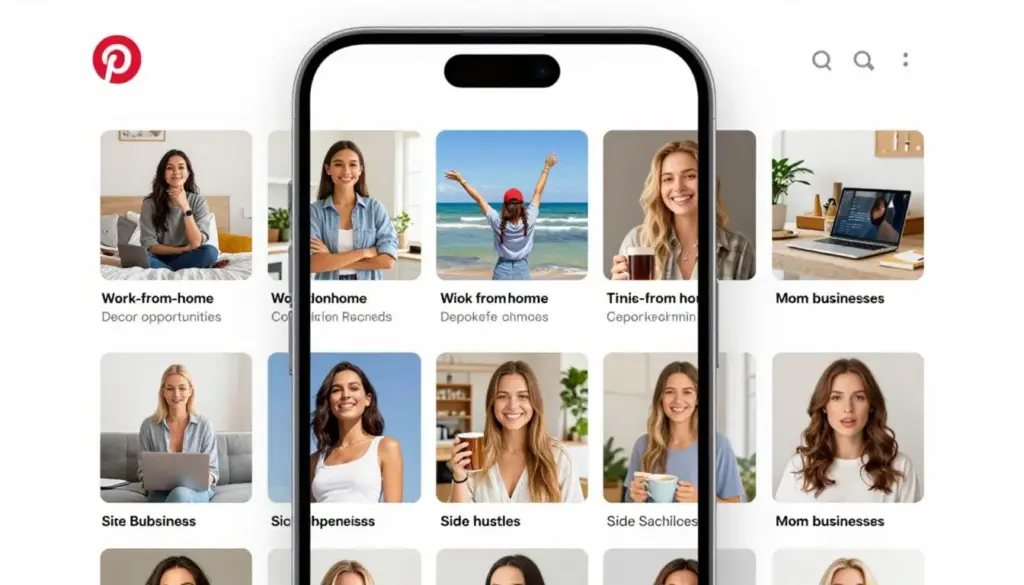
Here’s what makes Pinterest ideal for busy moms:
- You don’t need thousands of followers to start earning income
- Content remains discoverable for months, not just hours like other social media
- The platform rewards quality over quantity in posting frequency
- You can schedule pins in advance and work during your available time
- Multiple income streams work simultaneously on one platform
Pinterest users skew heavily female, with approximately 60% of the platform’s audience being women. Many are mothers themselves, searching for parenting tips, home organization ideas, and ways to manage family life. This demographic match creates natural opportunities for authentic content that resonates.
The platform’s visual nature also works in your favor. You don’t need video production skills or on-camera presence. Simple, eye-catching images with helpful information perform exceptionally well. This accessibility removes many barriers that other platforms create.
Ready to Start Your Pinterest Journey?
Get your free Pinterest Profit Starter Checklist and learn the exact steps to set up your account for success. This actionable guide walks you through profile optimization, niche selection, and your first profitable pins.
Understanding Pinterest Affiliate Marketing
Affiliate marketing provides one of the fastest ways to make money on Pinterest as a stay-at-home mom. The concept is straightforward: you recommend products you genuinely like, and when someone purchases through your unique link, you earn a commission.
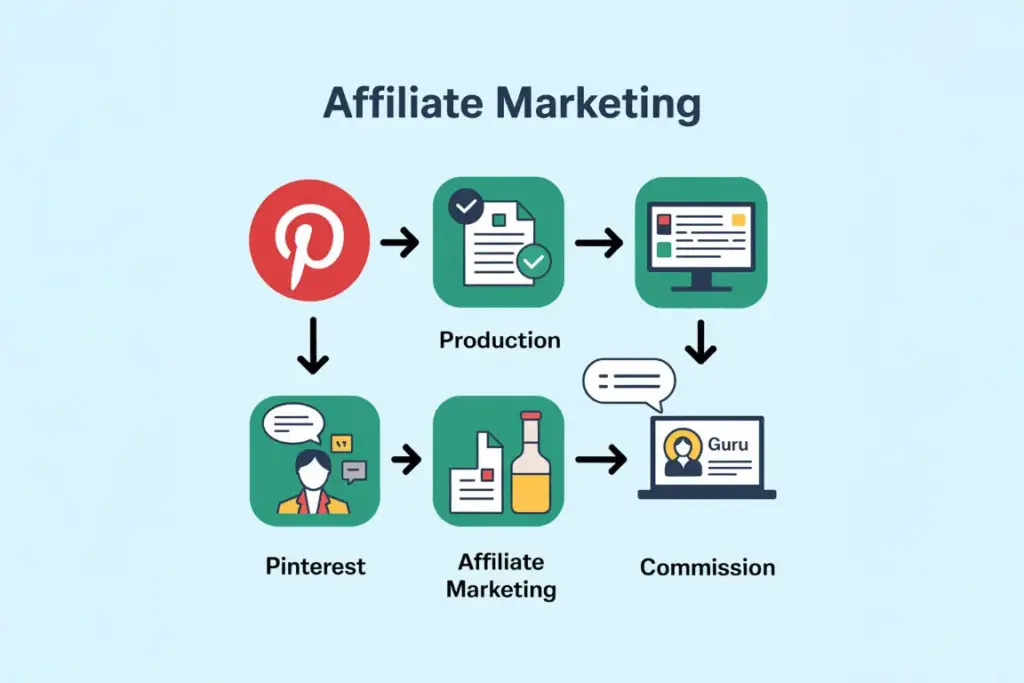
Pinterest officially allows affiliate links, making it a legitimate platform for this income strategy. Unlike some social media platforms that restrict affiliate content, Pinterest embraces it as long as you follow their guidelines and provide value to users.
How Affiliate Marketing Works on Pinterest
The process begins when you join an affiliate program. Popular options include Amazon Associates, ShareASale, and CJ Affiliate. These platforms connect you with thousands of companies offering commissions ranging from 1% to 50% depending on the product category.
Once approved, you create pins that showcase products. Each pin links to the product page using your special affiliate link. When a Pinterest user clicks your pin, visits the product, and makes a purchase, the affiliate platform tracks that sale and credits your account with the commission.
The beauty of this strategy lies in its passive nature. A single pin can generate income for months or even years after you create it. Pinterest’s search algorithm continues showing your content to new users long after publication, unlike posts on other social media platforms that disappear quickly.
Choosing Your Affiliate Products Wisely
Success with affiliate marketing depends heavily on product selection. The most profitable approach focuses on products you already use and recommend authentically. Your audience trusts recommendations that come from genuine experience.
Consider these high-performing product categories on Pinterest:
- Home decor and organization products
- Kitchen gadgets and cooking tools
- Children’s toys and educational materials
- Fashion and accessories
- Beauty and skincare products
- Craft supplies and DIY materials
- Books and digital courses
Research shows that pins featuring specific products with clear benefits outperform generic recommendations. Instead of creating a pin about “best kitchen tools,” focus on “5-minute meal prep container that saves dinner time.” Specific solutions attract more engaged clicks.
Important: Always disclose your affiliate relationships. Pinterest requires transparency, and the FTC mandates clear disclosure when you earn commissions. Include phrases like “This post contains affiliate links” in your pin descriptions.
Setting Up Your Pinterest Business Account
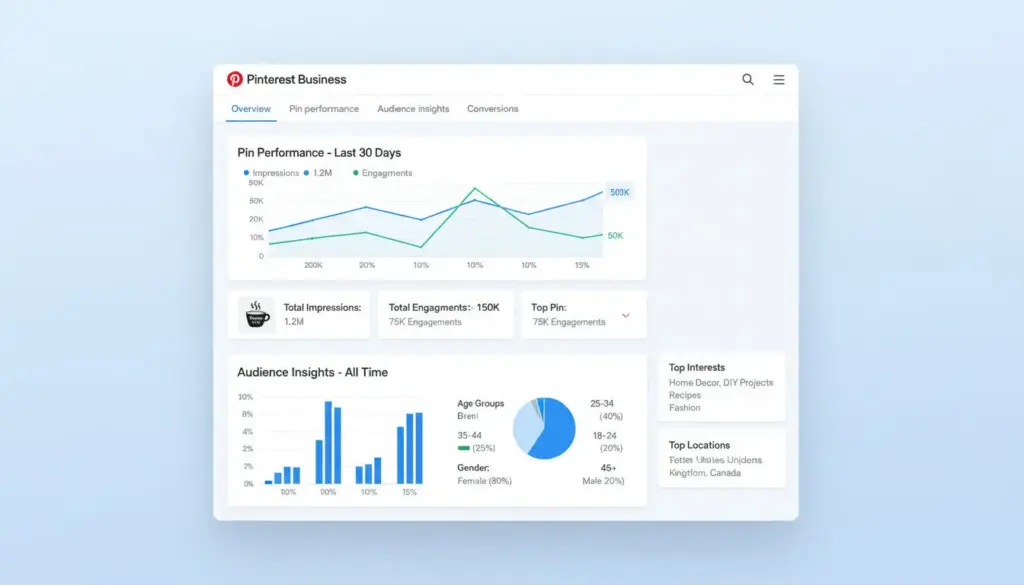
A Pinterest business account unlocks essential tools that personal accounts don’t provide. The conversion takes just minutes and costs nothing, but it gives you access to analytics, advertising options, and features designed specifically for making money on the platform.
Converting to a Business Account
Start by visiting Pinterest’s business account creation page. You can either create a new account or convert your existing personal account. The conversion process preserves all your existing pins and boards while adding business features.
During setup, Pinterest asks about your business type and website. If you don’t have a website yet, don’t worry. You can add one later or use affiliate platform links. However, claiming a website or blog eventually helps build credibility and provides more opportunities for traffic and income.
Complete your business profile with these essential elements:
Profile Picture
Use a clear photo of yourself or a simple logo. Faces build trust and connection with your audience, especially for content targeting other moms.
Business Name
Choose a name that reflects your niche. Keep it simple, memorable, and relevant to the content you plan to create.
Profile Description
Write a concise bio explaining what visitors will find on your account. Include relevant keywords that describe your content focus.
Website Link
Add your blog, online store, or affiliate platform profile. This link becomes clickable and drives traffic to your monetization sources.
Selecting Your Profitable Niche
Your niche determines everything: the content you create, the products you promote, and ultimately how much money you make. The most successful Pinterest accounts focus on specific topics rather than trying to cover everything.
Consider these popular and profitable niches for stay-at-home moms:
- Parenting tips and child development resources
- Budget-friendly family meal planning and recipes
- Home organization and decluttering strategies
- Work-from-home opportunities and side hustles
- Frugal living and money-saving techniques
- Educational activities for children
- Health and wellness for busy mothers
The ideal niche sits at the intersection of your interests, your knowledge, and market demand. Tools like Pinterest Trends (free from Pinterest) show you what topics are currently popular and which keywords people search for most frequently.
Creating Pins That Convert to Sales
Pin design directly impacts your ability to make money on Pinterest as a stay-at-home mom. The platform is inherently visual, and users scroll past hundreds of images daily. Your pins must stop that scroll and compel clicks.

Design Principles for High-Performing Pins
Pinterest recommends a 2:3 aspect ratio for pins, which translates to 1000×1500 pixels. This vertical format takes up maximum screen space on mobile devices, where most Pinterest browsing happens. Pins in this format receive more impressions and clicks than square or horizontal images.
Creating professional-looking pins doesn’t require expensive software. Canva offers free templates specifically designed for Pinterest, and their Pro version (which costs about $13 monthly) provides access to thousands of premium templates and stock photos. Many successful Pinterest creators rely entirely on Canva for their pin designs.
Every effective pin includes these core elements:
- A clear, benefit-focused headline that tells users exactly what they’ll get
- High-quality product images or lifestyle photos that show the item in use
- Text overlay that’s readable on mobile devices (minimum 40pt font size)
- Your logo or brand name for recognition and consistency
- Colors that contrast with Pinterest’s white background to stand out in feeds
Writing Pin Descriptions That Drive Action
Pinterest allows up to 500 characters for pin descriptions, and using this space strategically improves both discoverability and click-through rates. The description serves two purposes: it helps Pinterest’s algorithm understand your content and it convinces users to click through.
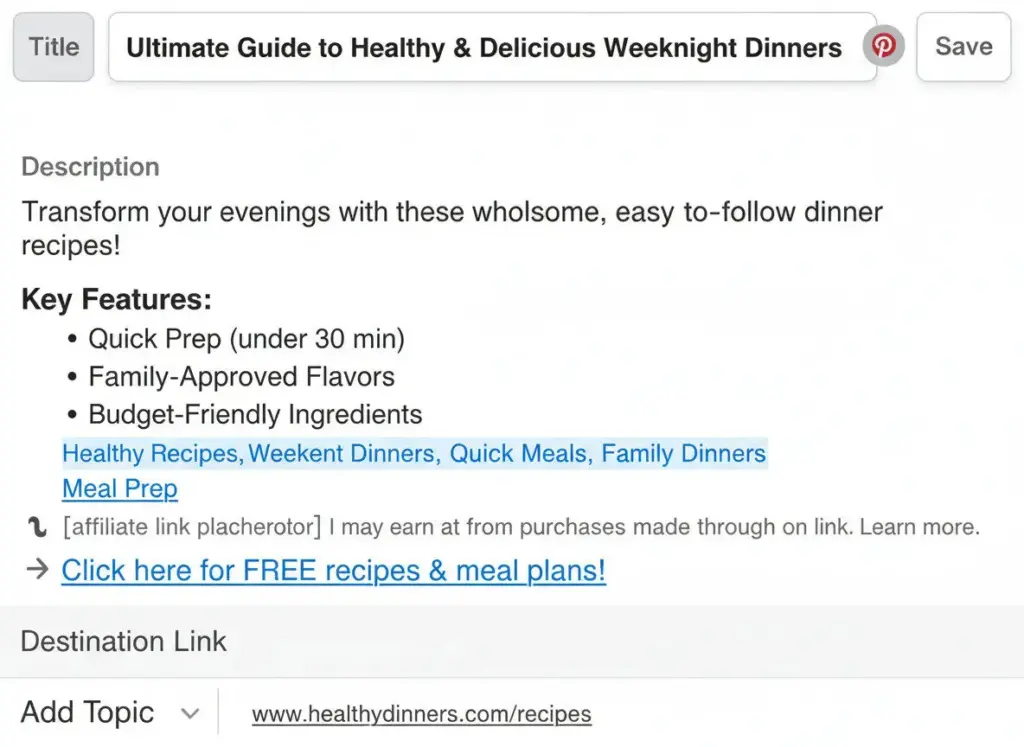
Start descriptions with the most important information. Many users only read the first sentence before deciding whether to click. Include your primary keyword naturally in the first 50-70 characters.
A strong pin description follows this formula:
- Hook: One sentence explaining the benefit or solution your pin offers
- Details: Two to three sentences providing more context about the product or content
- Call-to-action: A clear instruction telling users what to do next
- Keywords: Natural inclusion of relevant search terms throughout
- Disclosure: Affiliate relationship statement if applicable
For example: “This budget meal planner helped me cut grocery costs by 40% in just one month. Perfect for busy moms who want to save money without spending hours on meal prep. Includes printable shopping lists and 30 family-friendly recipes. Click to get your planner today! #mealplanning #budgetmeals #momhacks [Affiliate disclosure: This post contains affiliate links]”
Keyword Research for Pinterest Success
Keywords determine whether Pinterest shows your pins to the right audience. The platform functions as a search engine, so understanding what your target audience searches for is critical to making money.
Pinterest’s search bar provides free keyword research. Type a broad topic related to your niche and Pinterest auto-suggests popular related searches. These suggestions come directly from real user data, showing you exactly what people are looking for.
Tools like Pinterest Trends reveal seasonal patterns in search behavior. This free tool from Pinterest shows you when specific keywords peak in popularity, helping you create timely content. For instance, “back to school organization” searches spike in July and August, while “holiday gift ideas” peaks in November.
Pro Tip: Create and schedule pins 45-60 days before seasonal peaks. Pinterest recommends this timeline because it takes several weeks for new pins to gain traction in search results.
Top Ways to Make Money on Pinterest
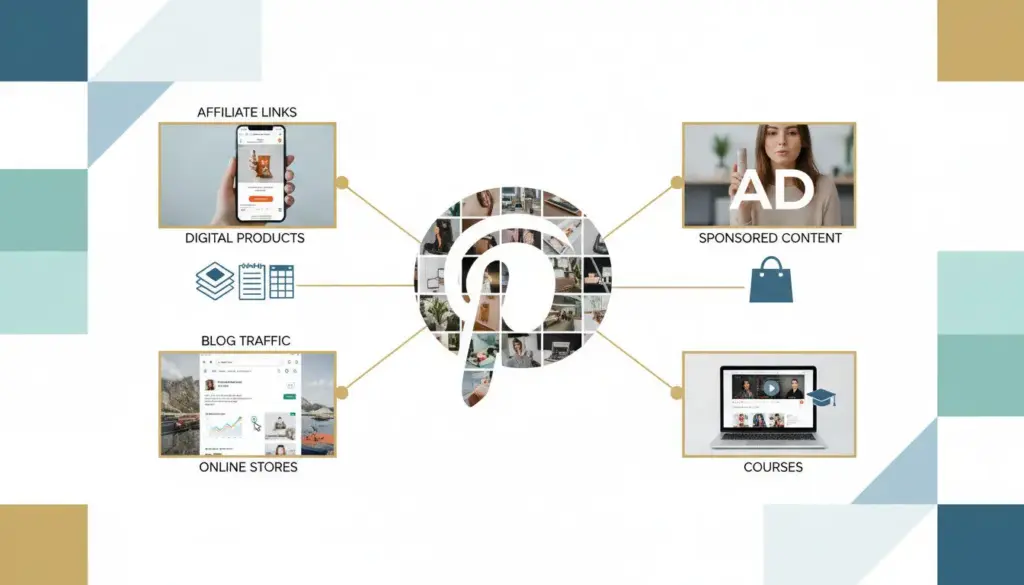
Multiple income streams provide stability and maximize your earning potential on Pinterest. While affiliate marketing works as a starting point, combining several methods creates a sustainable business that generates income from different sources.
Driving Traffic to Your Blog
Blogging pairs perfectly with Pinterest. Your blog becomes the hub where you can display ads, promote products, and build an email list. Pinterest drives traffic to your blog posts, and your blog provides more space to explain products and include affiliate links.
Starting a blog requires minimal investment. Hosting costs roughly $3-10 monthly through providers like Bluehost or SiteGround. WordPress offers free website-building software that powers over 40% of all websites online.
Once your blog attracts consistent traffic, you can apply for ad networks like Mediavine or AdThrive. These platforms pay you based on pageviews. Mediavine requires 50,000 monthly sessions, while AdThrive needs 100,000. Until you reach those thresholds, Google AdSense accepts blogs with any traffic level.
The key to profitable blog traffic from Pinterest involves creating content that matches what Pinterest users search for. Recipe blogs, DIY tutorials, parenting advice, and home organization content consistently perform well because users actively seek this information on Pinterest.
Selling Digital Products
Digital products offer exceptional profit margins because you create them once and sell them infinitely without inventory costs or shipping. Stay-at-home moms have successfully built businesses selling planners, printables, templates, and online courses through Pinterest.
Popular digital products for Pinterest audiences include:
- Printable planners and organizers
- Budget worksheets and financial trackers
- Recipe collections and meal planning templates
- Party decorations and printable invitations
- Educational worksheets for children
- Art prints and wall decor
- Social media templates
Platforms like Etsy make selling digital products straightforward. You upload your file once, and Etsy automatically delivers it to buyers after purchase. The platform charges a $0.20 listing fee and takes 6.5% of each sale, but handles all payment processing and file delivery.
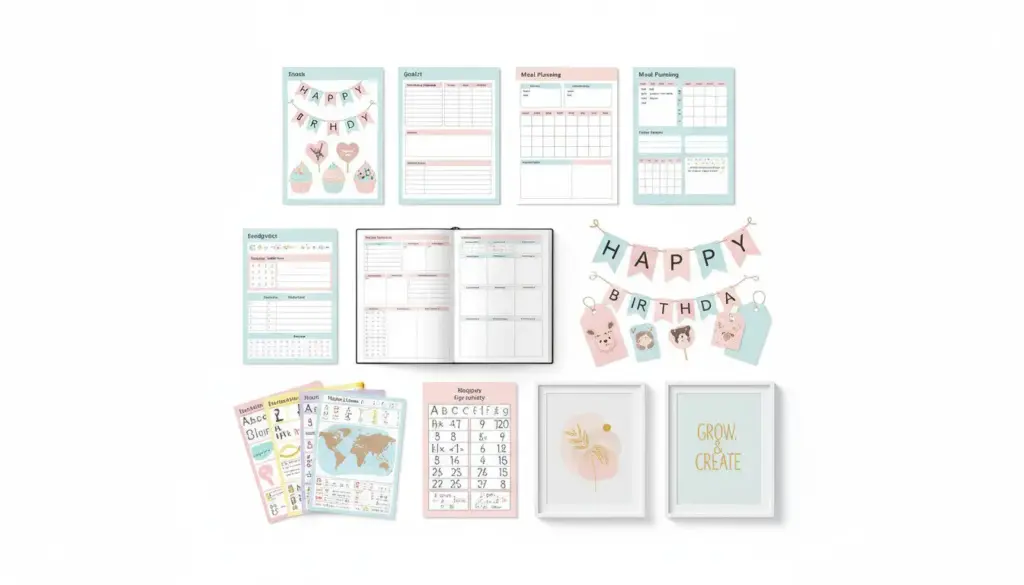
Creating digital products doesn’t demand advanced design skills. Canva’s templates provide starting points for planners, worksheets, and printables. You customize colors, text, and layouts to create unique products. Many successful Etsy sellers started with simple black-and-white printables before expanding to full-color premium products.
Building an Online Store
Pinterest excels at driving sales for ecommerce businesses. If you create physical products or use print-on-demand services, Pinterest provides a direct path from discovery to purchase.
Print-on-demand eliminates the need for inventory investment. Services like Printful, Printify, and Teespring let you design products like t-shirts, mugs, and tote bags. They handle production and shipping while you keep the profit margin.
The process works like this: you create designs and upload them to the print-on-demand platform. When someone orders through your online store, the service prints your design on the product, packages it, and ships it directly to the customer. You never touch the physical product.
Pinterest Shopping features allow eligible accounts to upload product catalogs and create shoppable pins. These pins include current pricing and direct checkout options, reducing friction in the buying process. To qualify for Pinterest Shopping, you need a claimed website and an active business account selling physical products.
Creating Sponsored Content
Brands pay influencers and content creators to promote their products on Pinterest. As your account grows and demonstrates engagement, you may receive sponsorship offers. Alternatively, you can pitch brands directly once you’ve built an audience.
Sponsored content rates vary widely based on your follower count, engagement rate, and niche. Micro-influencers (accounts with 10,000-50,000 followers) typically charge $200-500 per sponsored pin. Accounts with larger followings command higher rates.
Influencer marketing platforms connect creators with brands looking for partnerships. Sites like AspireIQ, Influence.co, and Activate allow you to create profiles showcasing your Pinterest statistics. Brands browse these platforms searching for creators whose audiences match their target customers.
Take Your Pinterest Strategy to the Next Level
Want to learn the exact system successful moms use to generate consistent income from Pinterest? Get access to our comprehensive Pinterest Profit Blueprint that covers advanced strategies, time-saving tools, and proven templates.
Offering Services Through Pinterest
Your Pinterest expertise itself becomes a marketable service. Many businesses recognize Pinterest’s power but lack the time or knowledge to manage accounts effectively. This creates opportunities for virtual assistants specializing in Pinterest management.
Pinterest managers typically charge $300-1,500 monthly per client depending on the scope of services. Tasks include creating pins, scheduling content, optimizing boards, conducting keyword research, and analyzing performance metrics.
Starting a Pinterest management service requires building your own successful account first. Potential clients want proof that you understand the platform and can deliver results. Document your growth, save examples of high-performing pins, and track your analytics to demonstrate expertise.
Growing Your Pinterest Traffic and Audience
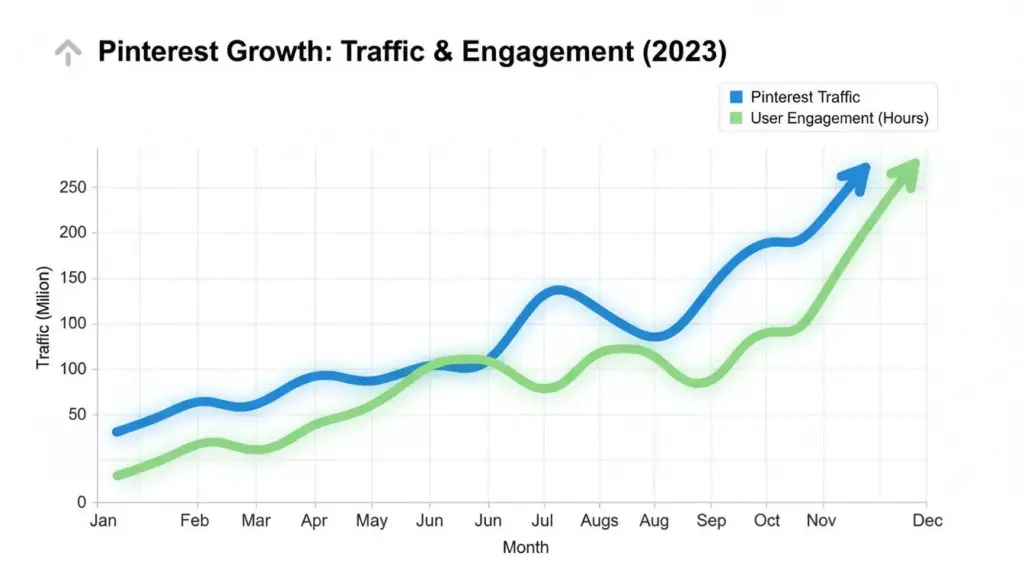
Consistent traffic growth separates casual Pinterest users from those who successfully make money on the platform. Understanding Pinterest’s algorithm and implementing strategic practices accelerates your account’s visibility and reach.
The Pinterest Algorithm Explained
Pinterest prioritizes fresh, high-quality content that generates engagement. The algorithm considers several factors when deciding which pins to show users: pin quality, domain quality, pinner quality, and topic relevance.
Pin quality measures how users interact with your content. Saves (when users add your pin to their boards) carry more weight than simple clicks. Pins that people save signal to Pinterest that your content provides value worth revisiting.
Domain quality refers to the reputation of the website you’re linking to. Established websites with strong Pinterest presence typically see their pins distributed more widely. This factor emphasizes the importance of claiming your website and building consistent traffic over time.
Consistency matters more than volume. Posting one high-quality pin daily outperforms dumping twenty mediocre pins once per week. Pinterest rewards accounts that provide steady, valuable content rather than sporadic bursts of activity.
Optimizing Your Pinning Strategy
Strategic pinning involves timing, frequency, and content variety. Research shows that Pinterest users are most active in the evenings between 8-11 PM and on weekends. However, Pinterest’s algorithm continues showing your pins long after publication, so perfect timing matters less than on other platforms.
Aim to publish between 5-30 new pins daily. This range provides enough content to stay active without overwhelming your audience. Quality always trumps quantity, so focus on creating valuable pins rather than hitting arbitrary numbers.
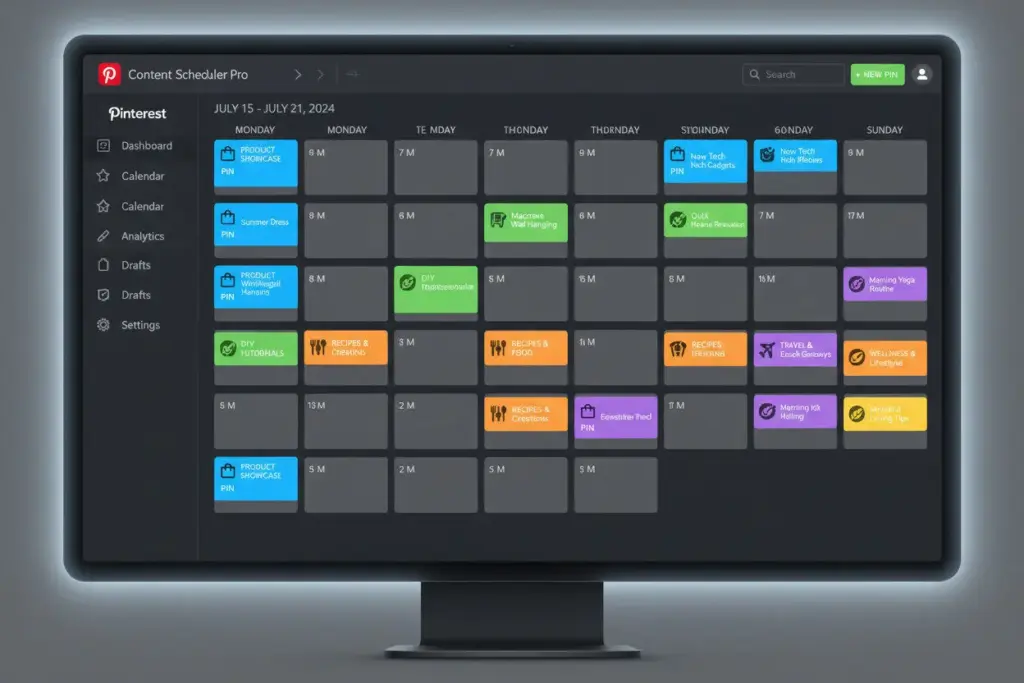
Scheduling tools automate the pinning process and save hours of manual work. Tailwind, the only Pinterest-approved third-party scheduler, lets you upload pins in batches and automatically posts them according to your chosen schedule. The tool also provides analytics showing which pins perform best.
Alternative scheduling options include Pinterest’s native scheduler (available in business accounts) and Later. The native scheduler works well for basic needs and costs nothing, while Later offers additional features for managing multiple social media platforms simultaneously.
Using Pinterest Analytics
Pinterest Analytics provides free insights into your account’s performance. This tool shows which pins generate the most impressions, saves, and clicks. Analyzing this data helps you understand what content resonates with your audience.
Key metrics to monitor include:
- Impressions: How many times your pins appeared in feeds and search results
- Saves: How many users added your pins to their boards
- Pin clicks: How many users clicked on your pins to see details
- Outbound clicks: How many users clicked through to your website or affiliate link
- Top pins: Which specific pins drove the most engagement
Review your analytics weekly to identify patterns. If certain topics, colors, or formats consistently outperform others, create more content following those successful patterns. Conversely, reduce or eliminate content types that generate minimal engagement.
Leveraging Group Boards and Idea Pins
Group boards allow multiple contributors to pin content to a shared board. Joining relevant group boards exposes your pins to the board owner’s followers, expanding your reach beyond your own audience.
Finding active group boards requires some research. Search Pinterest for boards in your niche and look for boards labeled with multiple contributor names. Many board descriptions explain how to request an invitation to join. Follow the board owner and send a polite request asking to contribute.
Idea Pins (formerly Story Pins) are Pinterest’s answer to Instagram Stories and TikTok videos. These multi-page pins let you share step-by-step tutorials, behind-the-scenes content, or curated collections. Idea Pins don’t include outbound links, so they won’t drive traffic to your website, but they increase your visibility and follower count on Pinterest itself.
Strategy Tip: Use Idea Pins to build your Pinterest following and establish authority. Include your website name or product brand in the content so viewers can find you elsewhere. Balance Idea Pins with regular pins that link to your monetization sources.
Time Management for Pinterest Success
Balancing Pinterest content creation with motherhood demands realistic planning and efficient systems. The most successful stay-at-home moms treat Pinterest as a real business but structure it around family needs rather than sacrificing family time.

Creating a Sustainable Content Schedule
Batch content creation saves time and reduces daily pressure. Instead of creating one pin each day, dedicate a few hours weekly to designing multiple pins at once. This approach lets you work during your most productive times rather than scrambling for content when children need attention.
A realistic weekly schedule might look like this:
- Monday: Research trending keywords and plan content topics (30 minutes during morning routine)
- Tuesday: Create pin designs in Canva (1-2 hours during naptime)
- Wednesday: Write pin descriptions and schedule posts (45 minutes in early morning)
- Thursday: Engage with community, join group boards (30 minutes in evening)
- Friday: Review analytics and adjust strategy (30 minutes)
- Weekend: Light engagement only, or complete rest
This schedule totals about 4-5 hours weekly, making it manageable alongside childcare responsibilities. As you gain efficiency and potentially earn enough to invest in help, you can increase time commitment.
Essential Tools for Efficiency
The right tools dramatically reduce time spent on Pinterest tasks. While you can manage Pinterest with free tools alone, several paid options offer significant time savings worth considering as your income grows.
Design Tools
- Canva (free or $13/month for Pro)
- PicMonkey ($8/month)
- Adobe Express (free with Adobe account)
Scheduling Tools
- Pinterest native scheduler (free)
- Tailwind ($15-40/month)
- Later (free-$50/month)
Keyword Research
- Pinterest search suggestions (free)
- Pinterest Trends (free)
- PinClicks keyword tool ($7-27/month)
Analytics Tools
- Pinterest Analytics (free)
- Tailwind analytics (included in subscription)
- Google Analytics (free)
Start with free tools and upgrade only when the time savings justify the monthly cost. Many successful Pinterest creators operate entirely on free tools for their first year while building income.
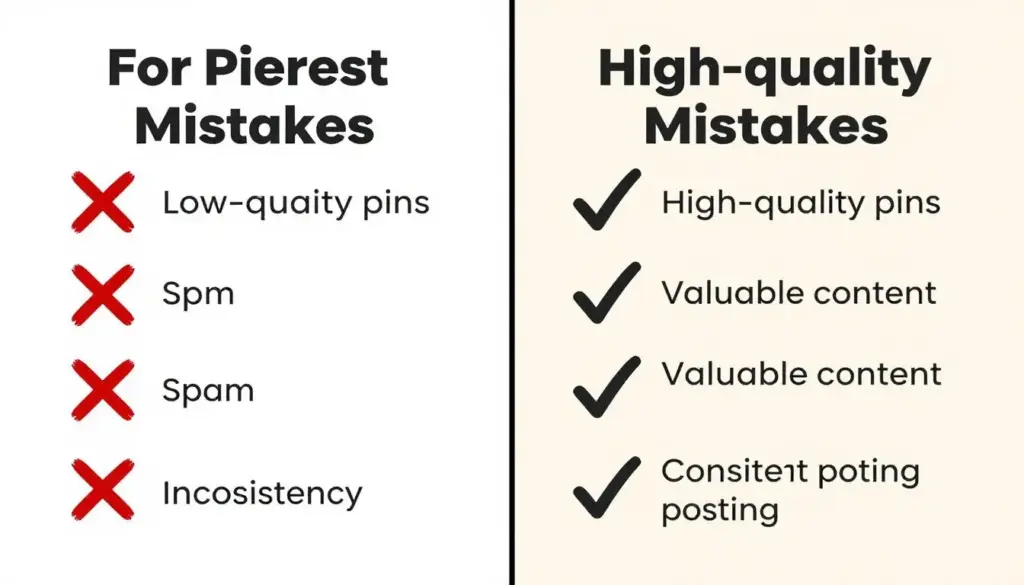
Common Mistakes That Limit Pinterest Income
Understanding what doesn’t work saves months of wasted effort. These common mistakes prevent many aspiring Pinterest entrepreneurs from achieving their income goals.
Prioritizing Followers Over Engagement
Many beginners obsess over follower counts, but Pinterest rewards engagement more than raw follower numbers. An account with 500 active, engaged followers who regularly save and click your pins generates more income than an account with 50,000 passive followers who never interact.
Focus on creating content that solves specific problems for your target audience. When your pins provide genuine value, saves and clicks naturally follow. These engagement metrics signal Pinterest to show your content to more users, creating organic growth.
Inconsistent Posting Patterns
Pinterest algorithms favor accounts that demonstrate consistent activity. Posting twenty pins one day then nothing for two weeks confuses the algorithm and reduces your content’s reach. Steady, regular pinning performs better than erratic bursts of activity.
If time constraints make daily pinning unrealistic, schedule content in advance during your available work time. Even posting three times weekly consistently outperforms irregular patterns with higher total volume.
Neglecting Mobile Optimization
Over 85% of Pinterest users access the platform via mobile devices. Pins that look perfect on desktop but feature tiny, unreadable text on phones fail to convert. Always preview your pin designs on a mobile device before publishing.
Mobile-friendly pins feature large, bold text that remains readable on small screens. Avoid placing important text at the very top or bottom of pins, as Pinterest’s interface sometimes crops these areas on mobile displays.
Ignoring SEO Basics
Pinterest functions as a search engine, yet many creators write pin descriptions and titles without considering keywords. This oversight severely limits content discoverability.
Every pin, board title, and board description offers opportunities for keyword optimization. Include relevant search terms naturally in these fields. Research which keywords your target audience uses and incorporate them strategically throughout your content.
Warning: Avoid keyword stuffing. Pinterest’s algorithm detects and penalizes unnatural keyword repetition. Write for humans first, optimizing for search engines second.
Giving Up Too Soon
Pinterest operates differently from instant-gratification platforms like Instagram or TikTok. Building momentum takes time. Most successful Pinterest accounts see little traction for the first 3-4 months before experiencing exponential growth.
This delayed gratification frustrates beginners who expect immediate results. Pins you create today might not reach peak performance for 3-6 months. This long-term value creates sustainability but requires patience and consistent effort.
Scaling Your Pinterest Income Over Time
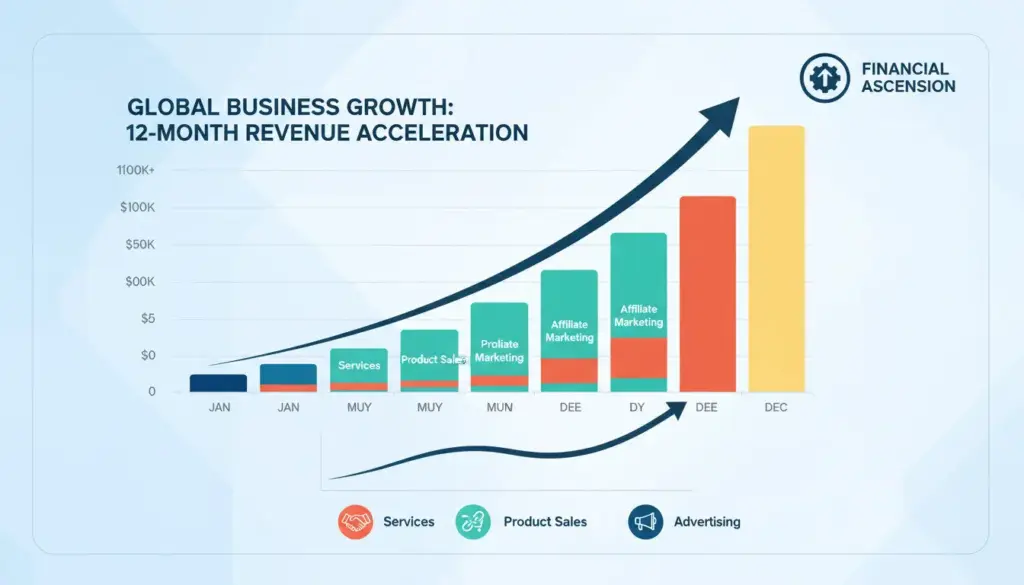
Initial Pinterest income often starts modest, but the platform offers clear paths to significant earnings as your account matures and you implement advanced strategies.
Diversifying Income Streams
Relying on a single monetization method creates income vulnerability. Successful Pinterest entrepreneurs typically combine three to five income sources that work together synergistically.
A mature Pinterest business might include:
- Affiliate commissions from product recommendations
- Ad revenue from blog traffic generated by Pinterest
- Digital product sales through an Etsy shop
- Sponsored content partnerships with brands
- Pinterest management services for small businesses
Each stream supports and enhances the others. Blog content provides material for pins, which drive traffic that generates ad revenue and affiliate sales. Your success with these methods attracts brands offering sponsored opportunities. This interconnected approach creates stability and growth potential.
Reinvesting in Your Business
As you generate income, strategic reinvestment accelerates growth. Consider allocating a percentage of earnings to tools, education, and services that save time or improve results.
Smart investments for growing Pinterest businesses include:
- Upgraded scheduling tools with advanced analytics
- Stock photo subscriptions for higher-quality pin images
- Courses teaching advanced Pinterest strategies
- Virtual assistant help for routine tasks
- Pinterest ads to amplify top-performing content
Pinterest advertising deserves special consideration once you identify which pins convert well organically. Promoted pins appear in more feeds and search results, multiplying your reach. Start with small budgets ($5-10 daily) promoting your best-performing pins to similar audiences.
Building an Email List
Email subscribers represent your most valuable asset. Unlike Pinterest followers who you never truly own, email addresses let you communicate directly with interested people regardless of platform algorithm changes.
Offer valuable free resources to encourage email signups. Create printables, checklists, templates, or mini-courses related to your niche. Promote these lead magnets through Pinterest pins that link to landing pages with signup forms.
Email marketing platforms like ConvertKit, MailerLite, or MailChimp provide free plans for lists under 1,000 subscribers. As your list grows, the small monthly fees pay for themselves through increased sales to your engaged audience.
Legal and Tax Considerations
Treating your Pinterest income as a legitimate business from the start prevents legal and tax complications down the road. Even small earnings require proper handling.

FTC Disclosure Requirements
Federal Trade Commission regulations require clear disclosure of affiliate relationships and sponsored content. Failing to disclose these relationships violates federal law and damages trust with your audience.
Include disclosure statements in every pin description containing affiliate links. Simple phrases like “This post contains affiliate links” or “Sponsored by [Brand Name]” satisfy legal requirements. Place disclosures early in descriptions, not buried at the end.
Your blog or website also needs a disclosure policy page explaining your affiliate relationships and how you may earn commissions from recommendations. This page should be easily accessible, typically linked in your site footer.
Tax Implications of Pinterest Income
Income from Pinterest qualifies as self-employment income in the United States. The IRS requires reporting all income regardless of amount, though specific tax obligations vary based on total earnings.
Best practices for managing Pinterest business taxes include:
- Open a separate bank account for business income and expenses
- Track all business expenses including software subscriptions, website hosting, and advertising costs
- Set aside 25-30% of earnings for quarterly estimated tax payments
- Maintain records of all transactions and receipts
- Consider consulting a tax professional once annual income exceeds $10,000
Many business expenses related to your Pinterest work are tax-deductible. Software subscriptions, website hosting, home office space, and even a portion of internet bills may qualify as legitimate business expenses that reduce your taxable income.
Real Success Stories from Stay-at-Home Moms
Countless mothers have transformed their Pinterest presence into meaningful income. These real examples demonstrate what’s possible with consistent effort and smart strategy.

Sarah, a mother of three, started pinning meal prep ideas in her spare time. Within eight months, her pins drove enough blog traffic to qualify for Mediavine ads. She now earns $3,000-4,000 monthly from ad revenue alone, plus affiliate commissions from kitchen product recommendations.
Jennifer created printable planners for busy moms and promoted them exclusively through Pinterest. Her Etsy shop now generates over $2,000 monthly in passive income from digital downloads. She spends approximately 10 hours weekly creating new products and designing pins.
Michelle pivoted her Pinterest account to focus on home organization when her initial crafts niche gained little traction. This strategic shift aligned better with high-demand searches. Her affiliate income from organization products now averages $1,500 monthly with room for continued growth.
These success stories share common elements: patience, consistency, willingness to adjust strategies based on results, and focus on providing genuine value rather than quick profits.
Your Action Plan to Start Making Money Today
Knowledge means nothing without action. This practical roadmap guides you through launching your Pinterest money-making journey starting immediately.
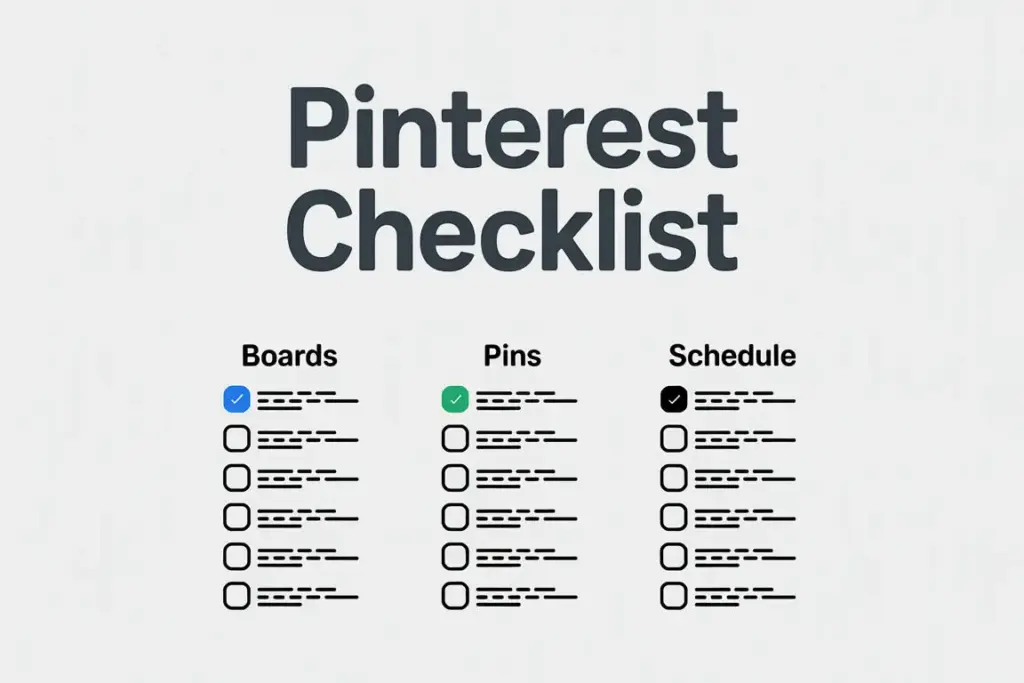
Week One: Foundation Building
Your first week focuses on establishing basic infrastructure. These foundational steps position you for long-term success.
- Convert your Pinterest account to a business account if you haven’t already
- Choose your niche based on interests, knowledge, and market research
- Optimize your profile with keywords, clear description, and professional image
- Create 5-10 boards relevant to your niche with keyword-optimized titles
- Join 2-3 affiliate programs aligned with your niche
- Set up free accounts for Canva and Pinterest Analytics
- Research and document 20 keywords your target audience searches for
Week Two: Content Creation Launch
Week two shifts to creating and publishing your first pins. Focus on quality and learning the process rather than perfection.
- Design 10 pins in Canva using templates and your researched keywords
- Write compelling descriptions for each pin including affiliate disclosures
- Publish your first 5 pins spacing them across the week
- Request to join 3-5 active group boards in your niche
- Engage with other creators by saving and commenting on relevant pins
- Set up a simple content calendar planning your next month of pins
- Document what you learn about the pin creation process
Month One: Establishing Consistency
The first month establishes routines and patterns that support long-term growth. Consistency matters more than volume during this phase.
Goals for month one include:
- Publish at least 3 new pins weekly (12-15 total for the month)
- Create 10-15 boards covering different aspects of your niche
- Join at least 5 active group boards and contribute regularly
- Learn basic Pinterest Analytics by checking stats weekly
- Experiment with different pin designs to identify what resonates
- Make your first affiliate commission (even $5 counts as validation)
Months Two and Three: Optimization and Growth
Months two and three involve analyzing your results and doubling down on what works while eliminating what doesn’t.
Use Pinterest Analytics to identify your top-performing pins. Create variations of these successful pins testing different images, headlines, and descriptions. This iterative approach compounds your results over time.
Consider launching a simple blog if traffic and income goals justify the investment. Blogs amplify Pinterest income potential by providing space for multiple monetization methods and building your email list.
Join Our Community of Pinterest Moms
Get weekly Pinterest tips, exclusive templates, and support from other stay-at-home moms building successful Pinterest businesses. Plus, receive our Pinterest Quick-Start Guide immediately when you join.
Building Your Pinterest Income Journey
Making money on Pinterest as a stay-at-home mom offers genuine potential for meaningful income with remarkable flexibility. The strategies outlined in this guide work because they’re built on Pinterest’s fundamental purpose: helping people discover ideas and products that improve their lives.

Your success won’t happen overnight. Most Pinterest accounts require 3-6 months of consistent effort before seeing substantial traffic and income. This timeline frustrates people seeking quick wins, but it rewards those willing to play the long game.
Start small and focus on mastering one monetization method before adding others. Whether you choose affiliate marketing, digital products, or blog traffic, commit to excellence in that single area first. Depth produces better results than scattered surface-level efforts across multiple methods.
Remember that every successful Pinterest entrepreneur started exactly where you are now: uncertain, learning, making mistakes, and wondering if the effort would pay off. The difference between those who succeed and those who quit is simply consistency over time.
The Pinterest opportunity remains strong heading into 2026 and beyond. While some platforms rise and fall, Pinterest’s search-based model and user intent create sustainable advantages. People will always seek inspiration, solutions, and products, making Pinterest valuable for years to come.
Your journey to make money on Pinterest as a stay-at-home mom begins with a single pin. Create that first pin today. Optimize your profile this afternoon. Join your first affiliate program tonight. Small actions compound into remarkable results when repeated consistently.
The flexibility to work around your children’s needs, the ability to leverage your creativity and knowledge, and the potential for passive income make Pinterest uniquely suited for mothers managing household responsibilities. This isn’t just about money. It’s about proving to yourself that you can build something meaningful while prioritizing your family.
Take action today. Your future self will thank you for starting now rather than waiting for the “perfect” time that never arrives. The Pinterest opportunity exists right now, and you have everything you need to begin.